
Little Women (1994)
Story overview
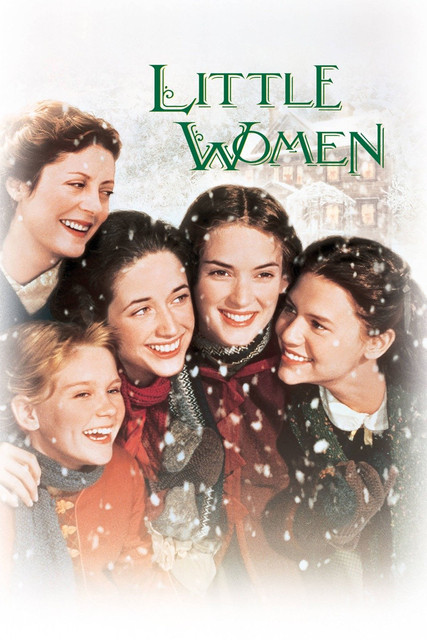
Little Women is a 1994 film adaptation of Louisa May Alcott's classic novel about the four March sisters—Meg, Jo, Beth, and Amy—growing up in Civil War-era New England. The story follows their journey from adolescence to adulthood as they navigate love, loss, ambition, and family bonds. Through their individual struggles and triumphs, the film explores themes of independence, creativity, and the enduring strength of sisterhood.
Parent Guide
A gentle period drama about family, growth, and societal expectations with minimal concerning content.
Content breakdown
Brief references to war off-screen, no combat shown. One character becomes seriously ill.
A character's illness and death are portrayed emotionally but not graphically. Some tense family moments.
No offensive language. Period-appropriate polite dialogue.
No sexual content or nudity. Romantic relationships are portrayed chastely with hand-holding and brief kisses.
No substance use shown. Period-appropriate social drinking may be implied at gatherings.
Strong emotional themes including illness, death, family conflict, and romantic disappointment handled sensitively.
Parent tips
Little Women is a family-friendly period drama suitable for most children, though younger viewers may need guidance with some emotional themes. The film portrays illness and death in a gentle, non-graphic manner that reflects 19th-century realities. Parents should be prepared to discuss historical context and the limited opportunities available to women during that era.
Parent chat guide
Parent follow-up questions
- Which sister did you like best and why?
- What was your favorite part of the movie?
- How did the sisters help each other?
- What games did the sisters play together?
- How did the family show they loved each other?
- How were the sisters different from each other?
- Why was it hard for Jo to be a writer back then?
- How did Beth's illness affect the family?
- What did you learn about life long ago?
- Which sister made the biggest change from beginning to end?
- How did the time period limit the sisters' choices?
- What sacrifices did characters make for their family?
- How did the film show growing up and changing dreams?
- What does the story say about balancing family and personal goals?
- How did the sisters support each other's ambitions?
- How does the film portray women's independence versus societal expectations?
- What commentary does the story make about artistic ambition versus practical life?
- How are romantic relationships portrayed differently for each sister?
- What timeless themes about family and identity does the story explore?
- How does the historical setting influence the characters' decisions and opportunities?
🎭 Story Kernel
At its core, 'Little Women' explores the tension between artistic ambition and societal expectations through the March sisters' diverging paths. Jo's fierce independence clashes with Meg's conventional desires, Beth's quiet fragility, and Amy's pragmatic social climbing. The film isn't just about growing up—it's about the compromises women make to claim their place in a world that offers limited scripts for female success. The dual timeline structure reveals how childhood dreams either calcify or transform under the pressure of adulthood, with marriage, money, and mortality serving as constant negotiators between personal fulfillment and family duty.
🎬 Visual Aesthetics
Greta Gerwig employs a warm, painterly aesthetic for the childhood sequences—golden hour lighting, rich autumnal tones, and fluid camerawork that captures the sisters' kinetic energy. The adult timeline adopts a cooler, more restrained palette with blues and grays, reflecting their constrained options. The editing brilliantly mirrors memory's non-linearity, cutting between timelines during emotional peaks. Visual motifs include windows (separating interior domesticity from exterior possibility) and the recurring image of Jo writing—her pen scratching against paper becomes the film's heartbeat, emphasizing creation as both escape and burden.
🔍 Details & Easter Eggs
💡 Behind the Scenes
Saoirse Ronan and Timothée Chalamet's natural chemistry stems from their previous collaboration in 'Lady Bird,' with Gerwick specifically writing their scenes to capitalize on their established rapport. The Concord, Massachusetts locations included Louisa May Alcott's actual family home, Orchard House. Florence Pugh, playing 12-year-old Amy in flashbacks while visibly older, embraced the challenge by studying childlike physicality rather than attempting literal youth. The screenplay's non-linear structure was Gerwig's innovation, allowing her to contrast the sisters' idealized memories with their complicated adult realities in a single narrative breath.
Where to watch
Choose region:
- Netflix
- Netflix Standard with Ads
- Amazon Video
- Apple TV
- Google Play Movies
- YouTube
- Fandango At Home
Trailer
Trailer playback is unavailable in your region.