
Liz and the Blue Bird (2018)
Story overview
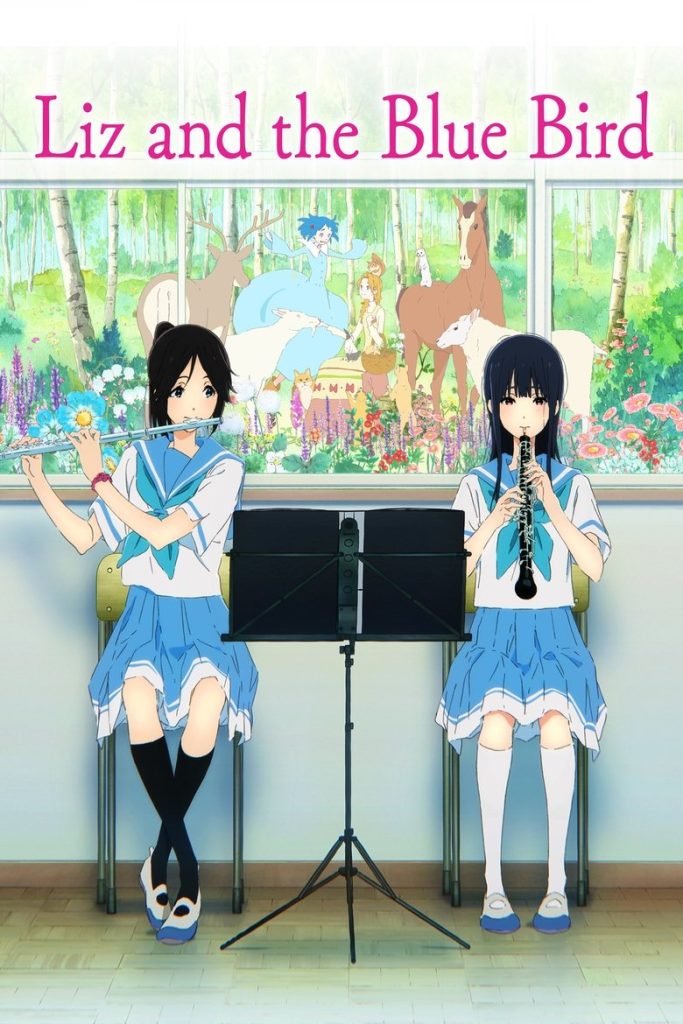
Liz and the Blue Bird is a 2018 Japanese animated drama about two high school girls in their final year who are members of their school's brass band club. Their friendship is explored through their musical performance of a piece inspired by a fairy tale. The film gently examines themes of growing up, changing relationships, and the bittersweet nature of transitions.
Parent Guide
A gentle, artistic animated film about friendship and growing up, suitable for older children and teens who appreciate character-driven stories.
Content breakdown
No violence, action sequences, or physical peril present in the film.
No frightening or disturbing content; the film maintains a calm, reflective tone throughout.
No offensive language or inappropriate dialogue.
No sexual content, romantic situations, or nudity.
No depiction of alcohol, drugs, or tobacco use.
Contains subtle emotional themes about friendship changes and growing up that may resonate with sensitive viewers.
Parent tips
This is a quiet, character-driven animated film that focuses on emotional relationships rather than action or comedy. The pacing is deliberate and reflective, which may require patience from younger viewers accustomed to faster-paced entertainment. The film explores friendship dynamics and the natural changes that occur as people grow up, which could resonate with older children and teenagers experiencing similar transitions in their own lives.
Parent chat guide
Parent follow-up questions
- What was your favorite part of the movie?
- Did you like the music in the movie?
- What colors did you see in the animation?
- How did the characters feel in the story?
- Would you like to play an instrument like the characters?
- What did you notice about how the two main characters interacted?
- How do you think the fairy tale connected to their friendship?
- What emotions did you see the characters experiencing?
- Have you ever had a friendship that changed over time?
- What did you think about the way the story ended?
- How did the music help tell the story of the characters' friendship?
- What do you think the film was saying about growing up and changing relationships?
- How did the animation style contribute to the mood of the film?
- Have you ever felt torn between supporting a friend and pursuing your own interests?
- What did you think about the way the characters communicated their feelings?
- How does the film explore the tension between closeness and independence in friendships?
- What did you think about the film's portrayal of non-verbal communication and subtle emotions?
- How does the fairy tale metaphor enhance your understanding of the main characters' relationship?
- What insights did the film offer about transitions and letting go?
- How did the film's pacing and visual style contribute to its emotional impact?
🎭 Story Kernel
At its core, 'Liz and the Blue Bird' is a poignant exploration of unspoken emotional distance and the fear of separation that defines a deep but fragile friendship. The film uses the fairy tale of Liz and the blue bird as a direct allegory for the relationship between Mizore and Nozomi—two high school musicians whose bond is tested by impending graduation. Mizore's obsessive attachment and Nozomi's subtle desire for independence create a tension that drives the narrative. The movie isn't about dramatic confrontations but about the quiet moments of misunderstanding and the painful, beautiful process of learning to let go while still cherishing what was.
🎬 Visual Aesthetics
Naoko Yamada's direction employs a distinct visual language where subtlety speaks volumes. The animation uses soft, pastel color palettes and meticulous attention to small gestures—averted eyes, hesitant hand movements, the space between characters. Scenes are often framed to emphasize isolation within shared spaces. The fairy tale segments feature a different, more whimsical animation style with watercolor-like textures, visually separating the metaphor from reality. Camera work focuses on intimate close-ups, making every slight expression carry emotional weight, while wider shots highlight the characters' loneliness even when together.
🔍 Details & Easter Eggs
💡 Behind the Scenes
The film is a spin-off of the 'Sound! Euphonium' series but stands alone with a distinct directorial style by Naoko Yamada, known for her work on 'A Silent Voice.' Composer Kensuke Ushio created a minimalist score that mirrors the characters' emotions, using sparse piano and oboe melodies. Voice actors Atsumi Tanezaki (Mizore) and Nao Tōyama (Nozomi) recorded their lines separately to capture the characters' emotional distance, then together for the final harmonious scenes. The fairy tale segments were animated by a different team to achieve a storybook aesthetic.
Where to watch
Choose region:
- Amazon Prime Video
- Crunchyroll
- HBO Max
- HBO Max Amazon Channel
- Crunchyroll Amazon Channel
- Amazon Prime Video with Ads
- Amazon Video
- Fandango At Home
- The Roku Channel
- Pluto TV
- Amazon Prime Video Free with Ads
- Kanopy
- Hoopla
- Plex
- Plex Channel
Trailer
Trailer playback is unavailable in your region.