
Lock, Stock and Two Smoking Barrels (1998)
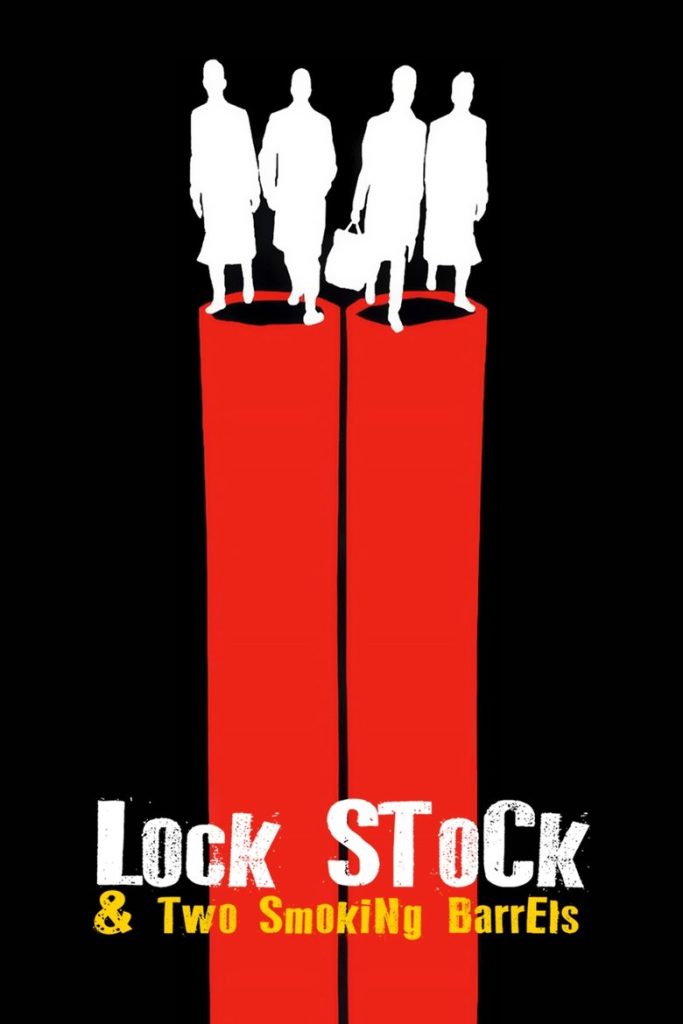
Story overview
This British crime comedy follows a group of friends who find themselves in deep debt after a rigged poker game. To solve their financial crisis, they plan to rob their criminal neighbors, setting off a chaotic chain of events involving multiple gangs. The film features fast-paced dialogue, dark humor, and interconnected criminal schemes that collide in unexpected ways.
Parent Guide
A stylized crime comedy with strong language and violence, recommended for mature teens due to its complex themes and adult content.
Content breakdown
Shootings, physical fights, and threats occur, often with comedic exaggeration rather than graphic detail. Characters face dangerous situations and criminal peril.
Some tense moments and criminal situations, but generally presented with humor rather than horror. No particularly frightening imagery.
Frequent strong profanity throughout, including crude sexual references and offensive terms. Dialogue features consistent adult language.
Some sexual references and innuendo in dialogue, but no explicit sexual scenes or nudity. Occasional crude humor.
Characters smoke cigarettes and drink alcohol regularly. References to drug dealing and use, though not shown in detail.
Fast-paced plot creates tension, but humor lightens the mood. Characters face high-stakes situations that create suspense.
Parent tips
This R-rated film contains strong language throughout, with frequent profanity and crude dialogue. Violence includes shootings, beatings, and threats, though often presented with comedic exaggeration rather than graphic realism. The criminal lifestyle is glamorized to some degree, with characters engaging in illegal activities portrayed as clever or charismatic.
Parents should be aware that substance use is depicted, including characters smoking, drinking, and references to drug dealing. The film's tone balances crime drama with dark comedy, which might confuse younger viewers about the seriousness of criminal behavior. The complex plot with multiple intersecting storylines requires attention to follow.
Parent chat guide
After watching, focus conversations on the difference between movie entertainment and real-life consequences. Ask what your child thought about how the film balanced humor with serious criminal situations. Discuss whether the characters' solutions to problems were realistic or responsible.
Parent follow-up questions
- Did you see any people being mean to each other?
- What was your favorite part of the movie?
- How did the movie make you feel?
- Did you see anything that confused you?
- What colors or sounds did you notice most?
- Why do you think the characters made the choices they did?
- How did the movie mix funny moments with serious situations?
- What would you do differently if you were in their situation?
- Did any parts of the movie seem unrealistic to you?
- What did you learn about how friends help each other?
- How does the film's comedy affect how we view criminal behavior?
- What consequences did characters face for their actions?
- How realistic do you think the criminal schemes were?
- What messages does the film send about solving money problems?
- How did the different storylines connect to each other?
- How does the film use language and humor to characterize different social groups?
- What commentary might the film be making about crime and economics?
- How does the director balance entertainment with depicting criminal activity?
- What cinematic techniques made the complex plot understandable?
- How does this film compare to other crime comedies in its portrayal of violence?
🎭 Story Kernel
The film explores the brutal economics of London's criminal underworld through domino-effect chaos. It's not about master criminals but about desperate men making increasingly poor decisions under pressure. Each character believes they're playing chess while actually playing Jenga with their lives. The driving force isn't greed but survival—everyone's trying to climb out of holes they've dug themselves into. The real theme is how small failures cascade into catastrophe when combined with testosterone and poor planning. Ritchie shows that in this world, the only thing more dangerous than a criminal is a desperate amateur.
🎬 Visual Aesthetics
Ritchie's visual language mirrors the narrative chaos through kinetic, whip-pan transitions and Dutch angles that keep viewers off-balance. The color palette shifts from the warm, pub-like tones of the protagonists' world to the cold, sterile blues of Hatchet Harry's office, visually marking the class divide in the criminal ecosystem. Action sequences feel messy and un-choreographed—fights are clumsy, gunshots are deafeningly loud and inaccurate. This isn't stylized violence but ugly, consequential violence. The recurring motif of characters framed through windows and doorways emphasizes how everyone's watching everyone else, creating constant paranoia.
🔍 Details & Easter Eggs
💡 Behind the Scenes
The film was shot on a shoestring £1.3 million budget, with many actors working for scale. Jason Statham was cast because Ritchie saw him selling counterfeit jewelry on the street—his real-life hustle mirroring his character's. The iconic shot of the guns flying through the air was achieved by throwing them off a roof and filming with a telephoto lens. Most pub scenes were shot in The Crown in Clerkenwell, which became a pilgrimage site for fans. The film's success launched not just Ritchie's career but essentially created the 'British gangster film' genre revival of the late 90s.
Where to watch
Choose region:
- Amazon Video
- Apple TV
- Google Play Movies
- YouTube
- Fandango At Home
- Spectrum On Demand
Trailer
Trailer playback is unavailable in your region.