
Lonely Castle in the Mirror (2022)
Story overview
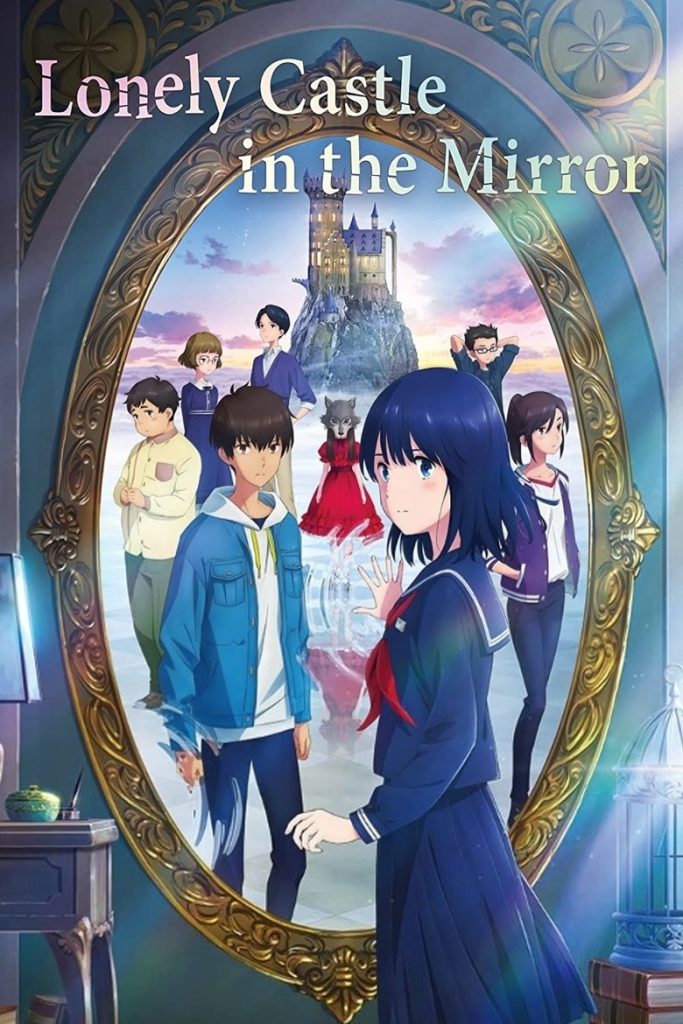
Lonely Castle in the Mirror follows Kokoro, a shy student who avoids school and discovers a magical portal in her bedroom mirror. She enters an enchanting castle where she meets six other students, and they are invited by a mysterious girl in a wolf mask to play a game. The teens must work together to uncover their shared connection while following strict rules, with the threat that rule-breakers will be eaten by a wolf. This animated film blends fantasy, mystery, and drama to explore themes of friendship, isolation, and personal challenges.
Parent Guide
A thoughtful animated fantasy that addresses adolescent anxiety and friendship through magical storytelling, best for mature children and pre-teens.
Content breakdown
Fantasy peril with the threat of being 'eaten by a wolf' for breaking rules, but no graphic violence shown. Some tense moments as characters face consequences.
The wolf mask character and rule consequences may be unsettling for sensitive viewers. Themes of isolation and anxiety could be emotionally challenging for some children.
No offensive language noted in the provided information.
No sexual content or nudity indicated.
No substance use shown or mentioned.
Deals with themes of school avoidance, social anxiety, and adolescent struggles that may resonate strongly with viewers experiencing similar emotions. The fantasy elements provide some distance from real-world intensity.
Parent tips
This film deals with themes of social anxiety, school avoidance, and the emotional struggles of adolescence, which may resonate with children experiencing similar feelings. The fantasy elements and magical castle setting provide an engaging backdrop, but the threat of being 'eaten by a wolf' for breaking rules creates tension that could be unsettling for sensitive viewers. Parents should be aware that the story addresses serious emotional issues while maintaining a generally gentle tone appropriate for older children and pre-teens.
The 116-minute runtime requires sustained attention, and the mystery elements may be complex for younger viewers. The animation style is typical of Japanese anime, with expressive characters and detailed fantasy environments. While not rated, the content is comparable to PG-level films that address mature themes through fantasy storytelling.
Parent chat guide
After the movie, focus conversations on the characters' teamwork and problem-solving rather than the scary elements. Ask what they learned about friendship and facing challenges from the story. If your child seems particularly affected by the themes of isolation or anxiety, use the film as an opportunity to discuss healthy coping strategies and remind them that everyone faces difficult emotions sometimes.
Parent follow-up questions
- What was your favorite part of the castle?
- How did the friends help each other in the story?
- What colors did you see in the magic mirror?
- Was there anything that made you feel happy in the movie?
- What game would you play in a magic castle?
- Why do you think Kokoro was avoiding school?
- How did the characters work together to solve problems?
- What would you do if you found a magic portal in your mirror?
- What did you learn about friendship from this story?
- How did the characters show bravery in the movie?
- What do you think the castle and game represented in the story?
- How did the characters' personal struggles affect how they worked together?
- What message do you think the film was trying to share about facing challenges?
- How did the fantasy elements help tell a story about real emotions?
- What would you have done differently if you were in the characters' situation?
- How does the film use fantasy to explore themes of social anxiety and isolation?
- What commentary does the story make about the pressures teenagers face?
- How effective were the mystery elements in developing the characters' relationships?
- What did you think about the balance between fantasy threats and emotional realism?
- How might this story help viewers understand their own or others' emotional struggles?
🎭 Story Kernel
At its core, 'Lonely Castle in the Mirror' is about the profound isolation of adolescence and the desperate search for belonging. The film explores how trauma, bullying, and societal pressure force children to construct elaborate psychological fortresses. The seven students aren't just escaping school—they're fleeing the versions of themselves that have become unbearable to inhabit. The castle's magical rules create a pressure cooker where their suppressed fears and desires must finally surface. The narrative masterfully reveals that the real treasure isn't the wish-granting key, but the courage to be vulnerable with others who understand your pain. The film argues that healing begins not when we find answers, but when we stop hiding our questions.
🎬 Visual Aesthetics
The film employs a deliberate visual dichotomy between the muted, desaturated reality of the characters' daily lives and the warm, golden-hued castle interiors. Director Keiichi Hara uses careful framing to emphasize isolation—characters are often shot through windows, doorways, or reflected in surfaces, visually trapped even in shared spaces. The castle itself becomes a character through its shifting architecture, with corridors that seem to breathe and rooms that respond to emotional states. The magical elements are presented with matter-of-fact cinematography, making the supernatural feel like a natural extension of the characters' psychological landscapes. The color palette evolves throughout, mirroring the characters' emotional journeys from cold blues to warmer tones as connections deepen.
🔍 Details & Easter Eggs
💡 Behind the Scenes
The film is based on Mizuki Tsujimura's award-winning novel, with director Keiichi Hara ('Miss Hokusai') carefully adapting the psychological depth for animation. Voice casting was particularly deliberate—Kokoro's voice actress Ami Touma had to balance fragility with growing resilience across the emotional arc. Production involved extensive research into adolescent psychology and school refusal syndrome in Japan. The castle's design drew inspiration from both European architecture and traditional Japanese castle elements, creating a culturally hybrid space that feels both familiar and alien. The score by Harumi Fuuki uses leitmotifs for each character that gradually intertwine as their stories connect.
Where to watch
Choose region:
- HBO Max
- HBO Max Amazon Channel
- Amazon Video
- Apple TV
- Google Play Movies
- YouTube
- Fandango At Home
- Plex
Trailer
Trailer playback is unavailable in your region.