
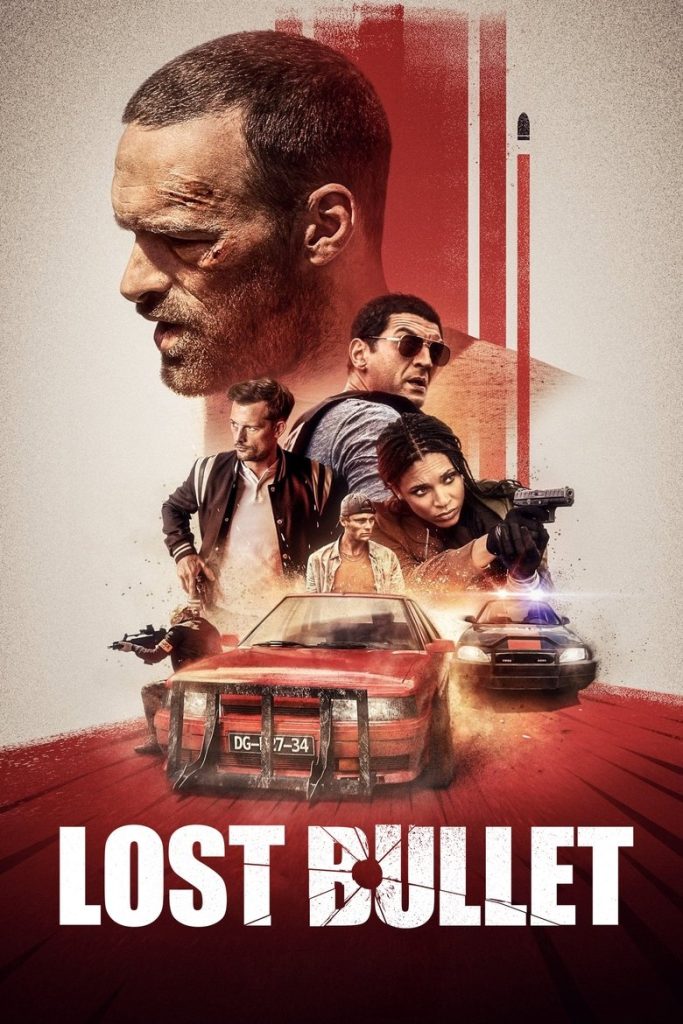
Lost Bullet (2020)
Story overview
A former delinquent working as a police mechanic for a specialized task force must prove his innocence after his mentor is murdered by corrupt officers, leading to intense action sequences and moral dilemmas.
Parent Guide
Intense French action thriller with police corruption themes, frequent violence, and strong language. Recommended for mature audiences only.
Content breakdown
Multiple shootings with blood, intense car chases with crashes and explosions, fistfights, characters killed on screen, police brutality depicted, high-stakes peril throughout
Betrayal by authority figures, murder of mentor figure, tense chase sequences, corrupt police themes, characters in constant danger
Frequent strong profanity in French (with English subtitles), including f-words and other explicit language
Brief suggestive dialogue, no nudity or explicit sexual scenes
Characters shown drinking alcohol in social settings, smoking cigarettes, references to drug trafficking as part of criminal plot
High-stakes betrayal, wrongful accusation, mentor death, constant tension and danger, moral dilemmas about justice and corruption
Parent tips
This French action thriller features frequent violence, strong language, and criminal themes. Best suited for mature teens and adults due to intense car chases, shootings, and corruption themes. Parents should preview for younger viewers.
Parent chat guide
Parent follow-up questions
—
—
- Why do you think some police officers become corrupt?
- How did the main character change from being a delinquent to helping police?
- What would you do if someone accused you of something you didn't do?
- How does the film portray the justice system's flaws?
- What motivates the different characters' choices between loyalty and morality?
- How realistic are the action sequences compared to real police work?
- What does the film say about redemption and second chances?
🎭 Story Kernel
At its core, 'Lost Bullet' is less about police corruption and more about the dignity of craftsmanship in a world that values shortcuts. Lino, the mechanic genius framed for murder, doesn't just seek to clear his name—he's fighting to prove that his hands, stained with oil and methodical precision, are more trustworthy than any badge. The film explores how institutional systems often crush individual talent while rewarding political maneuvering. What drives Lino isn't revenge but restoration: of his garage, his reputation, and the belief that honest work matters. Even the corrupt cops are motivated by preserving their fragile power structures rather than pure malice, making their downfall feel like systemic collapse.
🎬 Visual Aesthetics
The film's visual language is grounded in gritty, tactile realism with a distinct automotive aesthetic. Camera work emphasizes tight close-ups on mechanical parts—gears turning, engines revving—mirroring Lino's meticulous mindset. Action sequences are brutally practical, favoring weighty car chases through industrial zones over flashy CGI. The color palette leans into greasy blues and concrete grays, punctuated by the violent red of brake lights and blood. Symbolism emerges through vehicles themselves: Lino's modified cars become extensions of his body, while the police cruisers represent oppressive, uniform systems. Shaky handheld shots during confrontations enhance the visceral urgency of his race against time.
🔍 Details & Easter Eggs
💡 Behind the Scenes
Alban Lenoir, who plays Lino, performed nearly all his own driving stunts after intensive training with professional racers. The garage set was built from scratch in an abandoned warehouse outside Paris, filled with real engine parts donated by local mechanics. Director Guillaume Pierret insisted on practical effects for crashes, using modified Peugeots and Citroëns instead of expensive sports cars to maintain the film's working-class authenticity. Notably, the script was inspired by real French police corruption scandals, though names and specifics were fictionalized to avoid legal issues.
Where to watch
Choose region:
- Netflix
- Netflix Standard with Ads