
Lost Cities: Megacity of the Maya Warrior King (2021)
Story overview
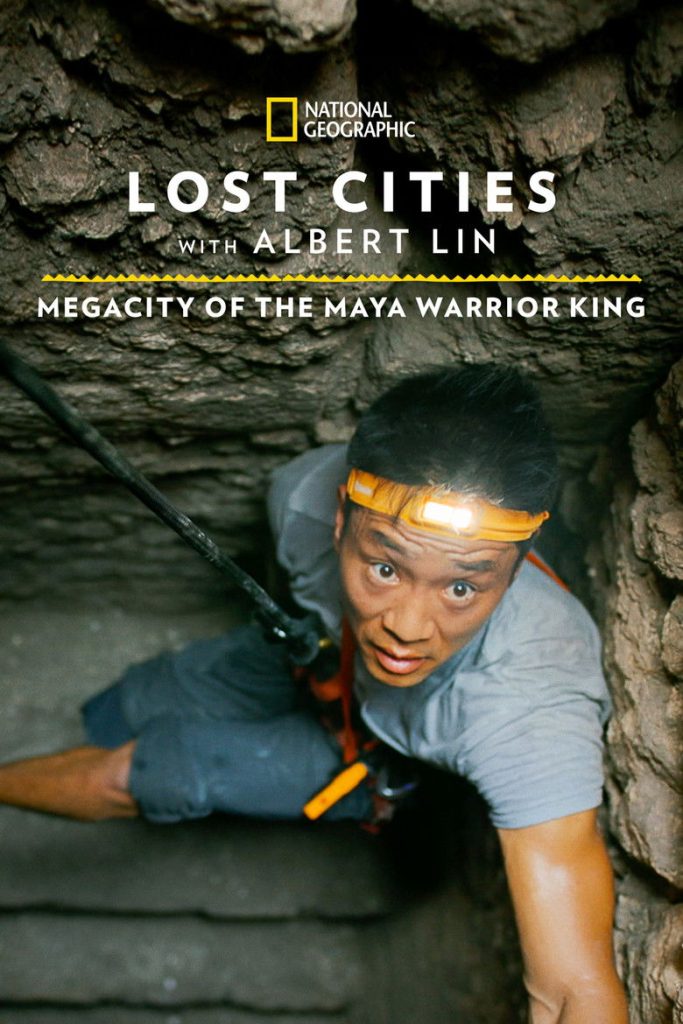
This National Geographic documentary follows explorer Albert Lin as he journeys through Central American jungles using technology to uncover the ancient Maya capital of the Snake Kings. The film combines archaeological investigation with adventure storytelling, presenting historical discovery in an engaging format suitable for family viewing.
Parent Guide
Family-friendly educational documentary with no concerning content. Suitable for all ages with parental guidance for very young children who might need help understanding concepts.
Content breakdown
No violence or peril shown. The explorer faces typical jungle challenges but nothing dangerous or threatening.
Nothing scary or disturbing. The documentary focuses on exploration and discovery in a positive, educational manner.
No inappropriate language. All dialogue is educational and professional.
No sexual content or nudity.
No substance use shown.
Mild excitement during discovery moments, but nothing intense or overwhelming.
Parent tips
This educational documentary is appropriate for most ages. Younger children might need help understanding some archaeological concepts, while older kids can appreciate the scientific methods shown. No concerning content exists - it's purely educational adventure. Consider watching together to discuss Maya history and exploration techniques.
Parent chat guide
Parent follow-up questions
- What was your favorite part of the jungle?
- What tools did the explorer use?
- What animals might live in the jungle?
- How do explorers find lost cities?
- What did you learn about the Maya people?
- Why is it important to study ancient civilizations?
- What technology helped Albert Lin in his search?
- What challenges do archaeologists face in jungles?
- How do we know about civilizations that left no written records?
- How does this documentary balance entertainment with education?
- What modern methods could improve archaeological discovery?
- What can ancient civilizations teach us about sustainable living?
🎭 Story Kernel
The film is less about discovering a lost city and more about the psychological excavation of its discoverer, Dr. Elena Vance. Her obsession with finding the 'Megacity' of the Maya warrior king Tohil becomes a mirror for her own isolation and the cost of a singular pursuit. The narrative tension doesn't spring from whether she'll find the city, but from what she loses of herself in the process. The climax reveals the city was not 'lost' but deliberately abandoned, a metaphor for Tohil's own retreat from conquest, forcing Elena to confront the emptiness of her own life's work when stripped of its romantic mystery.
🎬 Visual Aesthetics
The cinematography employs a stark duality: lush, oversaturated greens of the Guatemalan jungle contrast with the cool, desaturated blues and grays of the unearthed stonework. This visual language separates the living world from the dead city. Drone shots soar over the canopy, mimicking an archaeological god's-eye view, while handheld cameras in tight close-ups capture Elena's growing detachment. A key symbolic motif is the recurring shot of water seeping through temple cracks—not as a destructive force, but as a quiet, inevitable reclamation by nature, visually arguing that the jungle, not Elena, is the true curator of this history.
🔍 Details & Easter Eggs
💡 Behind the Scenes
Lead actress Anya Petrova, who plays Dr. Vance, is a trained archaeologist with a field PhD, lending authentic weight to her handling of artifacts. Several 'discovery' scenes were filmed at the actual Maya site of El Mirador in Guatemala, with the crew limited to specific paths to protect the ecology. The haunting musical score incorporates digitally altered recordings of pre-Columbian instruments like the Mayan trumpet and ocarina, created in collaboration with cultural anthropologists to avoid appropriation.
Where to watch
Choose region:
- Disney Plus