
Love Actually (2003)
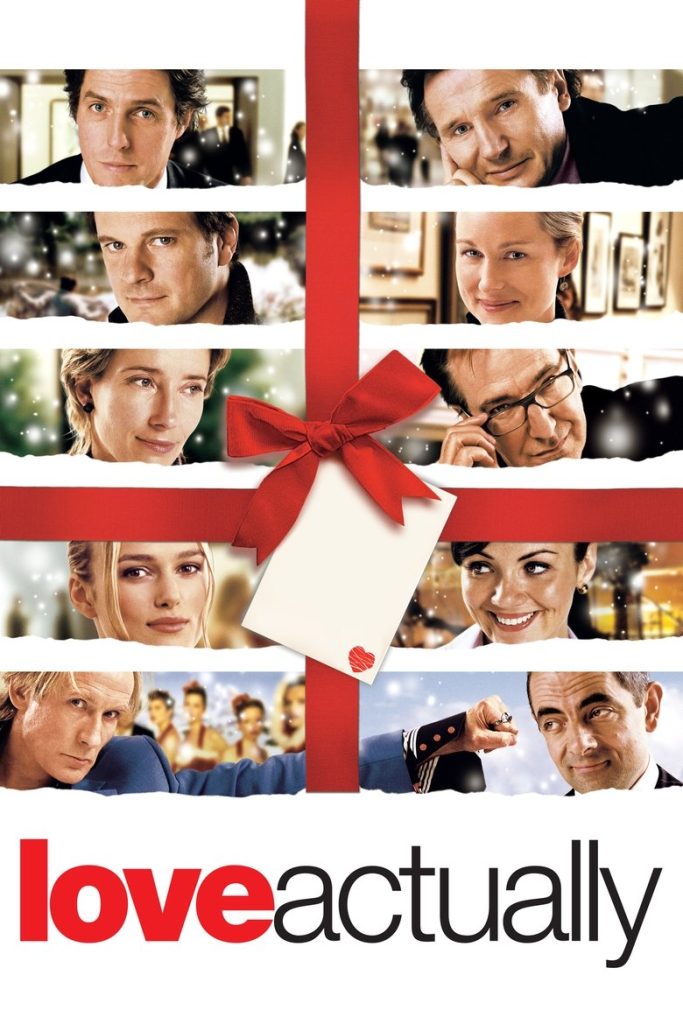
Story overview
Love Actually is a 2003 romantic comedy-drama that weaves together multiple storylines about love, relationships, and human connections during the Christmas season in London. The film explores various forms of love—romantic, familial, platonic, and unrequited—through eight loosely connected narratives featuring characters from different walks of life.
Parent Guide
Love Actually contains mature romantic themes, sexual content, strong language, and emotional complexity that make it most suitable for older teenagers. While rated R primarily for sexual content and language, the film's exploration of relationships can provide valuable discussion opportunities for mature viewers.
Content breakdown
No physical violence. Some emotional peril in relationship conflicts and one scene where a character is briefly chased by security. A storyline involves a character traveling alone to another country which might raise safety concerns for younger viewers.
Some emotionally intense scenes including infidelity revelations and relationship breakdowns. One character deals with grief over a deceased spouse. A subplot involves a character with a terminal illness. The film has a generally uplifting tone despite these elements.
Frequent use of 'f**k' and other strong language throughout. Sexual references and crude humor. Some derogatory terms. The language is typical of R-rated romantic comedies and reflects adult conversations.
Multiple scenes with sexual content including implied sexual acts, passionate kissing, and sexual references. Partial nudity (bare backs, shoulders). A storyline involves a married man's attraction to a younger coworker. Another involves a couple filming a sex scene for a movie. Sexual humor throughout.
Social drinking in parties and gatherings. Characters shown with wine and champagne at celebrations. No drunkenness or substance abuse depicted. Smoking shown in a few scenes.
High emotional content dealing with love, rejection, infidelity, grief, and relationship conflicts. Several emotionally charged scenes including a wife discovering her husband's infidelity and a man grieving his deceased wife. The film balances these with humor and uplifting moments.
Parent tips
This film contains mature themes including infidelity, sexual content, strong language, and emotional situations. While rated R, many parents find it appropriate for mature teenagers with guidance. The interconnected stories provide opportunities to discuss relationships, honesty, and consequences. Some storylines involve workplace relationships and age gaps that may require context.
Parent chat guide
Parent follow-up questions
—
- What was your favorite story in the movie?
- How do the characters show they care about each other?
- What does Christmas mean to the people in the movie?
- Why do you think the director chose to tell so many different stories?
- Which relationship do you think was healthiest and why?
- How do the characters deal with disappointment in love?
- How does the film portray the complexity of adult relationships?
- What commentary does the film make about modern love and connections?
- How do cultural differences affect relationships in the film?
- What ethical questions does the film raise about infidelity and honesty?
🎭 Story Kernel
The film is less about romance and more about the performance of love in a modern, media-saturated world. Characters aren't driven by pure emotion, but by societal scripts—the Prime Minister's grand public gesture, Mark's silent video confession, Colin's American adventure fantasy. It explores how love is often a desperate act of communication through inadequate channels: cue cards, pop songs, badly translated Portuguese. The driving force is the gap between genuine feeling and the clumsy, sometimes humiliating, attempts to express it. The interconnected stories highlight love's universality not as a sweet truth, but as a shared, often awkward, human compulsion.
🎬 Visual Aesthetics
The film employs a warm, slightly saturated color palette, often using golds and reds, creating a cozy, Christmas-card aesthetic that ironically contrasts with the emotional chaos. The editing is key—rapid cuts between stories mimic the fractured, overlapping nature of modern life and relationships. Camera work is generally intimate and handheld in private moments (like Jamie and Aurelia's kitchen), shifting to more composed, wide shots for public spectacles (the airport finale). The recurring motif of characters watching—through windows, on screens, from a distance—visually reinforces the theme of love as something often observed or performed rather than directly experienced.
🔍 Details & Easter Eggs
💡 Behind the Scenes
The famous airport finale scene at Heathrow was filmed guerrilla-style with hidden cameras, using real passengers' reactions to the actors' embraces. Many supporting actors were well-known UK comedians in straight roles, like Martin Freeman and Joanna Page. The role of the Prime Minister was written specifically for Hugh Grant after director Richard Curtis saw his real-life nervous, bumbling speech at a film premiere. Several storylines were based on Curtis's own experiences or those of friends, grounding the farcical elements in emotional truth.
Where to watch
Choose region:
- Amazon Prime Video
- Peacock Premium
- Amazon Prime Video with Ads
- Amazon Video
- Apple TV Store
- Google Play Movies
- YouTube
- Fandango At Home
Trailer
Trailer playback is unavailable in your region.