
Love Is Color Blind (2021)
Story overview
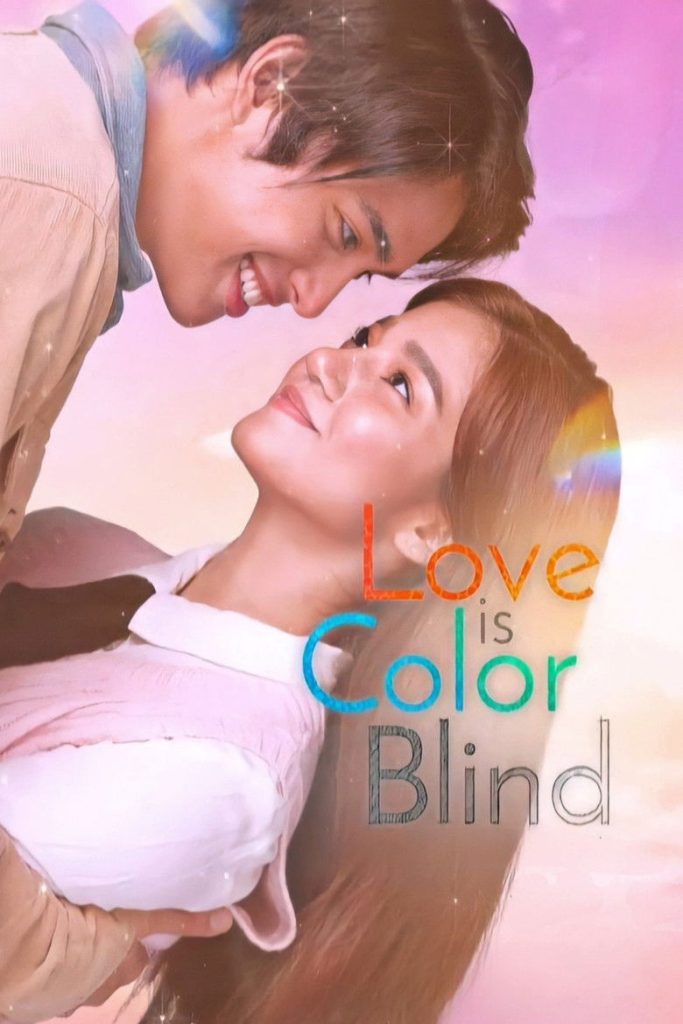
A Filipino romantic comedy about a young artist who becomes color blind after an accident. His best friend dedicates herself to helping him rediscover color in his life while secretly hoping he'll realize her romantic feelings. Their friendship faces challenges when a potential love rival appears, creating emotional tension and comedic situations as they navigate love, friendship, and personal growth.
Parent Guide
A lighthearted romantic comedy focusing on friendship, love, and overcoming challenges. Suitable for most children with parental guidance for younger viewers due to romantic themes.
Content breakdown
Only brief, non-graphic reference to an accident that caused color blindness. No physical violence shown.
No scary or disturbing content. The tone is consistently light and romantic.
No offensive language. Typical conversational dialogue appropriate for general audiences.
No sexual content or nudity. Romantic moments consist of holding hands, brief hugs, and emotional conversations.
No depiction of alcohol, drugs, or tobacco use.
Mild emotional moments related to friendship conflicts, unexpressed feelings, and romantic tension. No intense crying scenes or dramatic breakdowns.
Parent tips
This is a gentle romantic comedy suitable for most families. The main themes involve friendship turning into romance, dealing with disability (color blindness), and emotional honesty. There are no intense scenes of violence, substance use, or sexual content. The emotional moments focus on relationships and personal realization rather than intense drama. Good for discussions about friendship, empathy, and expressing feelings appropriately.
Parent chat guide
Parent follow-up questions
- What colors did you see in the movie?
- How were the friends being kind to each other?
- What made you smile in the movie?
- Why was it hard for the friends to tell each other their feelings?
- How did the color blindness change how the artist saw the world?
- What does it mean to be a supportive friend?
- How did the characters handle jealousy in their friendship?
- What responsibilities do friends have when someone has a disability?
- How did the movie show that love can be expressed in different ways?
- How realistic were the relationship dynamics in the film?
- What does the movie say about societal expectations in romantic relationships?
- How did the characters' personal growth affect their relationships with others?
🎭 Story Kernel
At its core, 'Love Is Color Blind' explores the psychological prison of prejudice, not through grand societal statements, but through the intimate, self-inflicted wound of its protagonist. The film's true driver is the protagonist's internalized bias—the belief that love must be conditional on a specific, visual trait. The narrative arc isn't about a miraculous cure, but about the painful, deliberate process of unlearning. The love interest becomes a mirror, reflecting back not just acceptance, but the protagonist's own flawed perception. The climax is less about romantic union and more about the protagonist achieving self-awareness, realizing the barrier was never in their eyes, but in their mind.
🎬 Visual Aesthetics
The film employs a deliberate, almost clinical color palette in its first act, with muted tones and stark lighting that visually isolates the protagonist, mirroring their condition. As the protagonist's perspective begins to shift, the camera work becomes less rigid, incorporating more handheld shots and warmer, softer lighting during key intimate moments. A recurring visual motif is the use of shallow focus, blurring backgrounds to force the viewer—and symbolically, the protagonist—to concentrate on the emotional essence of a person rather than superficial details. The final scenes are bathed in a natural, golden-hour glow, visually representing clarity and emotional warmth achieved.
🔍 Details & Easter Eggs
💡 Behind the Scenes
The lead actor reportedly spent time with individuals who have various forms of color vision deficiency to understand the subjective experience, focusing on the emotional and social implications rather than just the visual mechanics. Key outdoor scenes were filmed in a specific botanical garden chosen for its diverse, textured greenery that reads similarly in monochrome, ensuring the 'color blind' perspective was cinematically coherent. The director insisted on using practical lighting effects for the visual distortion sequences rather than pure CGI, to maintain an organic, subjective feel. The film's original script was significantly shorter; the extended, quieter moments of character interaction were developed through improvisation workshops with the cast.
Where to watch
Choose region:
- Netflix
- Netflix Standard with Ads
Trailer
Trailer playback is unavailable in your region.