
Lu Over the Wall (2017)
Story overview
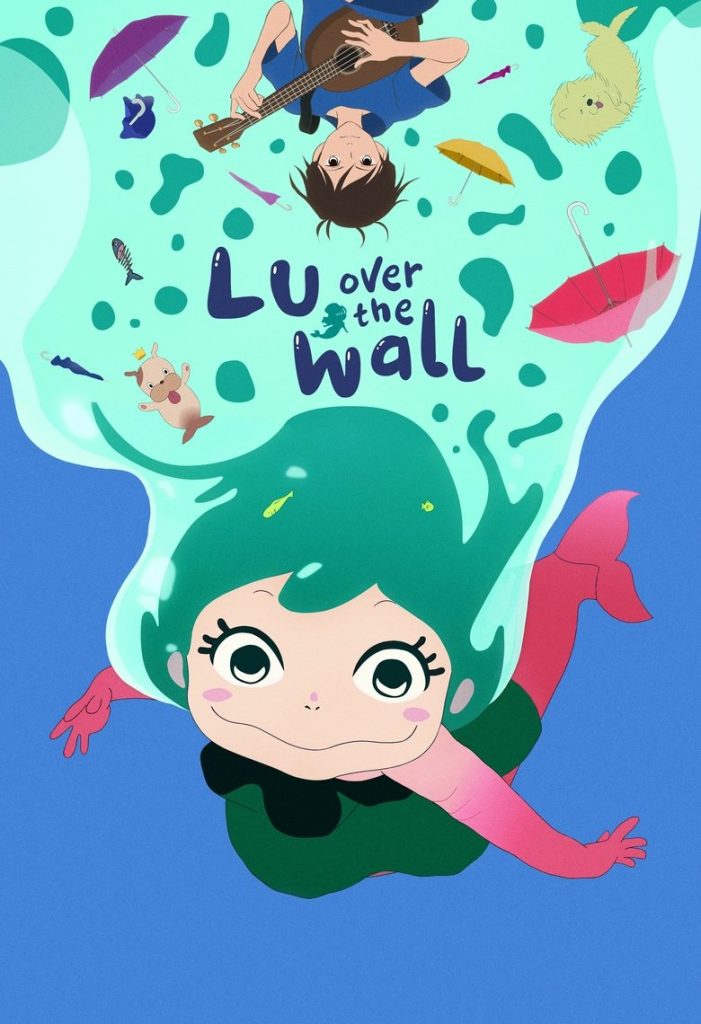
Lu Over the Wall is a 2017 Japanese animated film about a lonely middle school student named Kai who lives in a small fishing village. When he meets a cheerful mermaid named Lu, his life transforms through music and friendship. The story follows their adventures as they navigate challenges and bring joy to the community.
Parent Guide
A colorful animated adventure about friendship and acceptance with mild fantasy elements.
Content breakdown
Some fantasy peril scenes with characters in mild danger, all resolved positively.
Mildly intense emotional moments and fantasy situations that might briefly worry sensitive viewers.
No concerning language noted.
No sexual content or nudity.
No substance use depicted.
Themes of loneliness and acceptance create mild emotional moments throughout.
Parent tips
This PG-rated animated film contains mild fantasy peril and some emotional moments that might be intense for very young viewers. The movie explores themes of friendship, loneliness, and community acceptance through colorful animation and musical sequences. Parents should be aware that there are scenes where characters face mild danger and emotional challenges, though everything resolves positively.
Parent chat guide
Parent follow-up questions
- What was your favorite part with the mermaid?
- How did the music make you feel?
- What colors did you like in the movie?
- Was anyone being a good friend?
- How did Kai feel at the beginning of the story?
- What did Lu teach the people in the village?
- Why was music important in the movie?
- How did the characters help each other?
- What does this movie say about accepting people who are different?
- How did the characters show courage when facing challenges?
- What role does community play in the story?
- How does music connect people in the film?
- How does the film explore themes of loneliness and connection?
- What cultural elements might be specific to Japanese storytelling?
- How do the fantasy elements serve the story's themes?
- What messages about friendship and acceptance resonate most?
🎭 Story Kernel
At its core, 'Lu Over the Wall' is a critique of modern alienation and the performative nature of community. Kai's initial isolation in the fishing town of Hinashi isn't just teenage angst—it's a symptom of a society that has lost its connection to nature and myth. Lu's arrival doesn't simply bring magic; she exposes how quickly people commodify wonder for profit, as seen when the town immediately tries to monetize her singing. The real conflict isn't human versus mermaid, but authenticity versus exploitation. The film argues that true connection requires vulnerability, as shown when Kai must literally dive into the unknown ocean depths to save Lu, abandoning the safety of the shore.
🎬 Visual Aesthetics
Masaaki Yuasa's signature psychedelic animation creates a world where reality and fantasy violently collide. The color palette sharply divides: Hinashi's land scenes use muted, washed-out blues and grays, reflecting the town's emotional stagnation, while Lu's underwater realm explodes in neon pinks and electric yellows. Camera language becomes fluid and unmoored during musical sequences, with impossible spinning shots that mimic being caught in a whirlpool. The transformation sequences are particularly brilliant—when characters become merfolk, their bodies contort in painful, non-linear ways that feel more like melting than metamorphosis, visually arguing that change is disruptive, not graceful.
🔍 Details & Easter Eggs
💡 Behind the Scenes
Director Masaaki Yuasa intentionally avoided traditional mermaid designs, instead modeling Lu's appearance on primitive sea creature fossils. The film's unique water animation required a custom digital tool that simulated 'viscous light.' Voice actress Kanon Tani recorded Lu's songs while actually submerged in a water tank to capture authentic breathless vocals. Production was notably rushed—the entire film was completed in just 18 months, leading to some intentionally crude background art that contrasts with detailed character animation.
Where to watch
Choose region:
- HBO Max
- HBO Max Amazon Channel
- Amazon Video
- Apple TV
- Fandango At Home
- Hoopla
Trailer
Trailer playback is unavailable in your region.