
Ludo (2020)
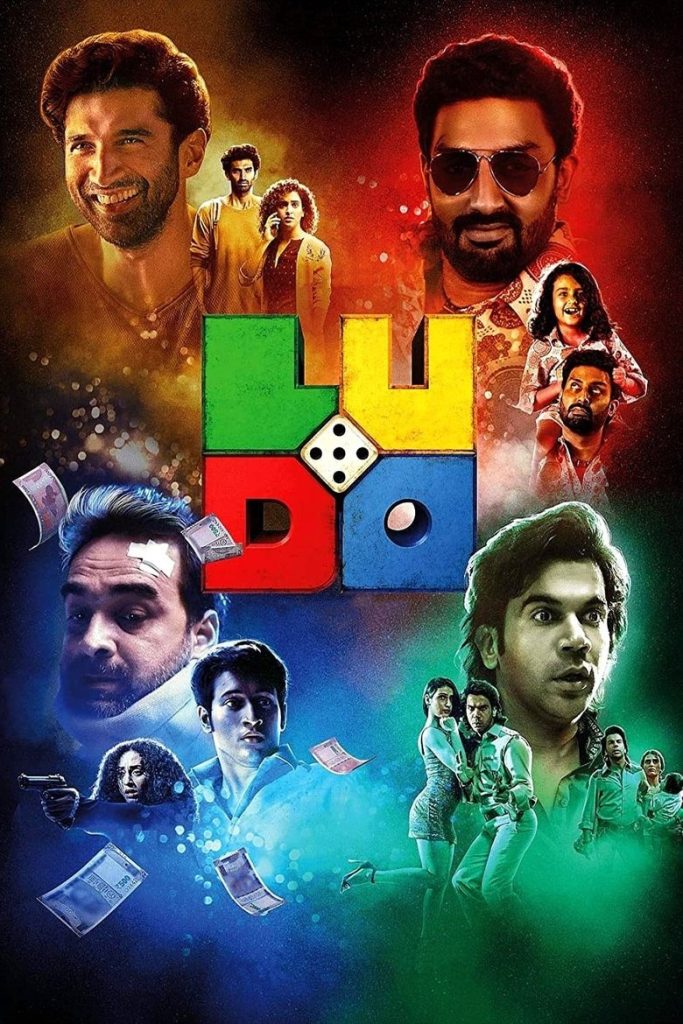
Story overview
Ludo is a 2020 Indian crime comedy film that follows multiple interconnected stories involving characters whose lives become entangled through chance encounters and a mysterious game. The film blends dark humor with crime elements as various characters navigate unexpected situations, misunderstandings, and criminal activities. Through its ensemble cast and non-linear storytelling, it explores themes of fate, coincidence, and the unpredictable nature of life.
Parent Guide
TV-MA rated crime comedy with adult themes and content. Conservative recommendation due to rating and genre combination.
Content breakdown
Contains crime-related violence typical of the genre, though specifics unknown without detailed content review.
May contain tense situations related to criminal activities, but comedy elements likely moderate intensity.
TV-MA rating suggests stronger language than PG-13 films, though exact content unknown.
Possible adult references or situations given rating and genre, but specifics unknown.
May contain references to substance use given crime comedy genre, but details unknown.
Combination of crime elements and interconnected dramatic storylines may create emotional complexity.
Parent tips
Ludo is rated TV-MA, indicating it's intended for mature audiences and may not be suitable for children under 17. As a crime comedy, it contains adult themes, violence, and language that parents should consider before viewing with younger teens. The film's complex narrative structure with multiple storylines might be challenging for younger viewers to follow.
Parents should be aware that the TV-MA rating typically includes stronger content than PG-13 films. The crime elements combined with comedic treatment of serious situations could be confusing or inappropriate for children. Consider previewing the film or checking detailed content reviews before deciding if it's appropriate for your family.
Parent chat guide
You could explore the film's use of dark humor to address serious situations and whether this approach makes difficult topics more accessible or trivializes them. Discuss the moral choices characters make and how the film presents consequences for different types of behavior. These conversations can help young viewers think critically about storytelling and ethical decision-making.
Parent follow-up questions
- What was your favorite part of the movie?
- Did you see any characters being kind to each other?
- What colors did you notice in the movie?
- How did the music make you feel?
- Can you tell me about one character you remember?
- How were the different stories connected in the movie?
- What did you think about how the characters solved their problems?
- Did any parts of the movie confuse you?
- What would you do differently if you were one of the characters?
- How did the movie make you feel at different times?
- What do you think the film was saying about luck or fate?
- How did the different storylines work together to tell one bigger story?
- What moral choices did characters face, and how did they decide?
- How did the comedy elements affect how serious situations were presented?
- What did you think about how the movie ended for different characters?
- How effectively did the film balance crime elements with comedy?
- What commentary did the film make about modern society or human nature?
- How did the non-linear storytelling affect your understanding of the plot?
- What themes about interconnectedness or coincidence did you notice?
- How did the film handle consequences for characters' actions?
🎭 Story Kernel
At its core, 'Ludo' is a darkly comedic exploration of how chance and coincidence govern our lives, exposing the fragile narratives we construct to maintain a sense of agency. The characters are not driven by grand ambitions but by base, often pathetic, desires: lust, greed, revenge, and a desperate need for validation. The film posits that life is a chaotic game of 'Ludo' where the dice are always rolling, and our attempts to strategize are laughably futile. We watch as their meticulously planned schemes—Akash's blackmail, Bittu's revenge, Rahul's elopement—are constantly upended by random intersections and absurd twists. The real driver is the universe's indifferent sense of humor, reducing human drama to interconnected farce where the only winning move is, perhaps, to stop playing by your own rules and accept the chaos.
🎬 Visual Aesthetics
The film employs a vibrant, almost garish color palette—electric blues, hot pinks, and saturated yellows—that mirrors the heightened, cartoonish reality of its characters' desperate situations. This isn't naturalism; it's a graphic novel come to life. The camera work is restless and kinetic, using whip-pans and dynamic tracking shots to visually stitch together the disparate narratives, mimicking the dice rolling and pieces moving on a game board. Action sequences, particularly those involving Sattu, are shot with a darkly comic brutality; the violence feels sudden, messy, and absurd rather than stylized. The recurring visual motif of the actual Ludo board, with its four colored tracks, serves as a direct, unsubtle metaphor for the characters' parallel journeys toward a center they never truly reach, trapped in their own colored squares of fate.
🔍 Details & Easter Eggs
💡 Behind the Scenes
Director Anurag Basu, known for his improvisational style, reportedly encouraged significant ad-libbing from the ensemble cast, particularly from the comedic actors like Rajkummar Rao and Pankaj Tripathi, to enhance the chaotic, spontaneous feel. The film was shot extensively in the bylanes and markets of Mumbai, but its stylized look comes from deliberate production design that painted real locations in the film's signature bold colors. A fun bit of casting Fatima Sana Shaikh and Sanya Malhotra, who play friends in the film, were reuniting after their breakout roles together in 'Dangal'.
Where to watch
Choose region:
- Netflix
- Netflix Standard with Ads