
M (1931)
Story overview
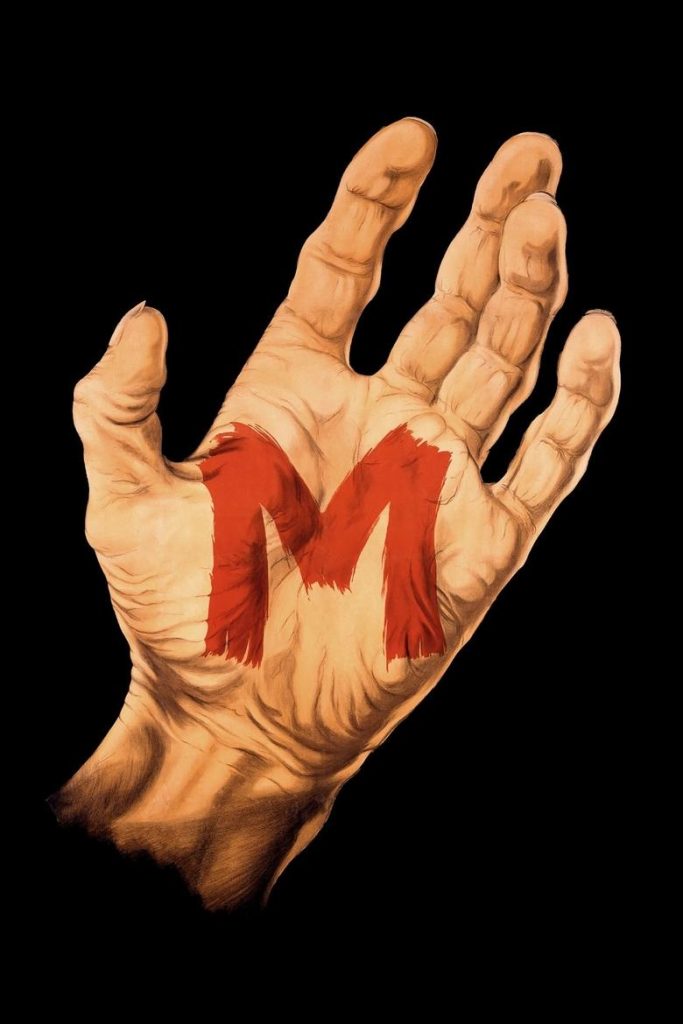
This classic German film from 1931 follows a serial killer who targets children, triggering a citywide manhunt by both police and criminal underworld figures. The story focuses on the intense pursuit and psychological tension as the murderer realizes he's being hunted. The film explores themes of justice, societal fear, and moral ambiguity through this suspenseful cat-and-mouse narrative.
Parent Guide
A psychologically intense thriller dealing with mature themes of serial murder and societal fear, suitable for older teens with parental guidance.
Content breakdown
The film deals with serial murder of children as its central premise, though violence is not shown graphically. There is psychological peril and intense pursuit sequences.
The subject matter of child murder and the psychological tension create a consistently disturbing atmosphere. The film builds suspense and fear through implication and mood.
Occasional tense dialogue related to criminal activity, but no strong profanity by modern standards.
No sexual content or nudity present.
No substance use depicted.
High psychological tension and anxiety throughout, with themes that may provoke strong emotional responses about safety, justice, and fear.
Parent tips
This film deals with mature themes of child murder and serial killing that may be deeply disturbing for younger viewers. The psychological tension and suspense are central to the film's impact, creating an atmosphere of fear and anxiety throughout. Parents should consider the emotional maturity of their children before viewing, as the subject matter involves vulnerable victims and intense pursuit scenarios.
Parent chat guide
Parent follow-up questions
- What did you notice about how people worked together in the story?
- How did the music make you feel during different parts?
- What colors or scenes stood out to you most?
- Did you see any characters helping each other?
- How did different groups of people try to solve the problem in the story?
- What did you think about how the city responded to what was happening?
- How did the movie make you feel about keeping communities safe?
- What did you notice about how people communicated in the film?
- What different approaches to justice did you see in the film?
- How did the film show the impact of fear on a community?
- What did you think about how different groups pursued the same goal?
- How did the film create tension without showing graphic violence?
- How does the film explore moral ambiguity between different groups seeking justice?
- What commentary does the film make about societal responses to fear and crime?
- How does the psychological tension reflect broader themes about human nature?
- What historical context might influence how we interpret the film's themes today?
🎭 Story Kernel
Fritz Lang's 'M' explores how collective hysteria and systemic failure create the very monsters they claim to hunt. The film isn't about a child murderer—it's about a society so consumed by fear that it becomes indistinguishable from the criminal it pursues. The police and criminal underworld operate as parallel institutions, both using surveillance, informants, and organized violence. When the underworld captures Beckert, they conduct a 'trial' that mirrors the legal system they supposedly oppose. The film's genius lies in showing how moral panic erodes civilization from within, making ordinary citizens complicit in mob justice while the actual legal system proves impotent.
🎬 Visual Aesthetics
Lang's visual language creates a claustrophobic urban nightmare through oppressive shadows and innovative sound design. The famous whistle motif becomes a psychological weapon—we never see the murders, but that recurring sound creates more terror than any graphic violence could. The camera often adopts surveillance-like perspectives, peering through windows and down streets, making viewers complicit in the hunt. The final trial scene's lighting transforms ordinary criminals into a grotesque parody of judicial authority, with Beckert's face emerging from darkness like a cornered animal. The city itself becomes a character through expressionist architecture that seems to lean in judgment.
🔍 Details & Easter Eggs
💡 Behind the Scenes
Fritz Lang fought German censors who wanted to soften the film's critique of police incompetence. Peter Lorre, a Jewish actor, would flee Nazi Germany just two years later—making his performance as a persecuted 'other' tragically prescient. The iconic whistle was composer Edvard Grieg's 'In the Hall of the Mountain King,' chosen because its simple melody could be remembered by audiences as psychological trigger. Lang shot much of the film on Berlin's actual streets during daylight, using filters and careful framing to create perpetual night—a technique that influenced film noir for decades.
Where to watch
Choose region:
- HBO Max
- HBO Max Amazon Channel
- Criterion Channel
- TCM
- Amazon Video
- Apple TV
- Fandango At Home
- Mometu
- Tubi TV
- Kanopy
- Plex
- Plex Channel
- Fawesome
Trailer
Trailer playback is unavailable in your region.