
Ma Rainey’s Black Bottom (2020)
Story overview
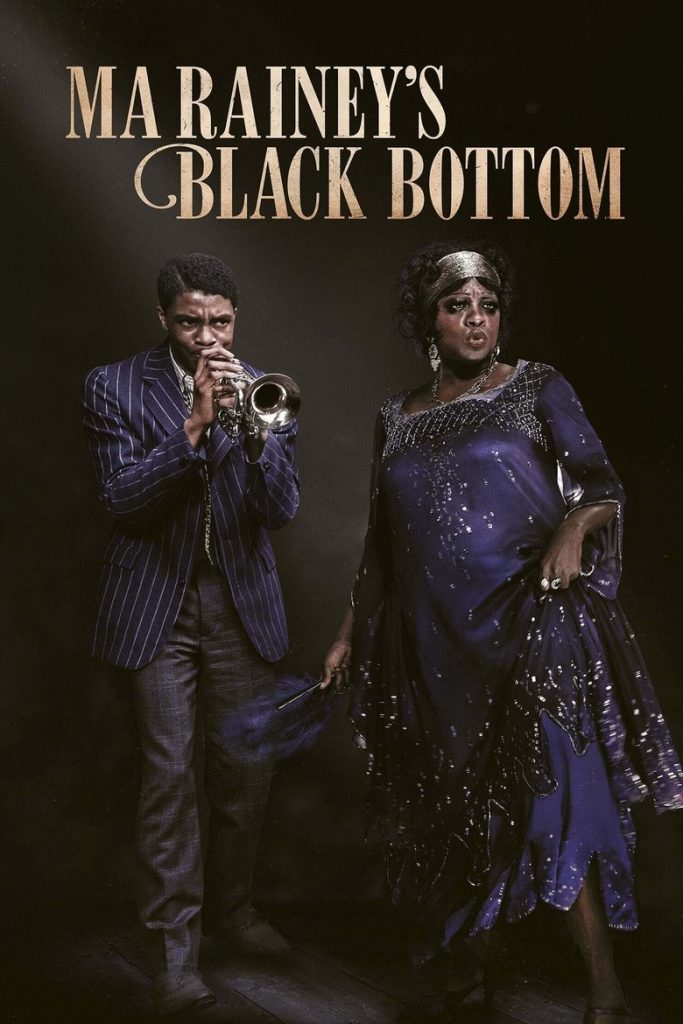
Ma Rainey's Black Bottom is a 2020 American drama film directed by George C. Wolfe, based on August Wilson's 1982 play of the same name. Set in 1927 Chicago, the film follows the legendary 'Mother of the Blues' Ma Rainey (Viola Davis) and her band during a tense recording session. As Ma asserts her artistic control and demands respect in a white-dominated industry, tensions escalate with her ambitious trumpeter Levee (Chadwick Boseman), whose dreams and frustrations lead to dramatic confrontations. The film explores themes of racial injustice, artistic integrity, generational conflict, and the exploitation of Black artists in early 20th century America.
Parent Guide
A powerful drama about racial injustice and artistic integrity with mature themes and strong language. Best for mature teens who can handle historical racism discussions.
Content breakdown
No physical violence shown, but there are tense confrontations, shouting matches, and references to past racial violence including lynchings and traumatic events. One character recounts a disturbing childhood memory involving racial violence.
Emotionally intense scenes with characters expressing deep anger, frustration, and trauma. Thematic elements about racism and exploitation may be disturbing. One character's tragic backstory involving racial violence is described in detail.
Frequent strong language including racial slurs (n-word used multiple times in historical context), f-words, s-words, and other profanity. The language reflects the time period and characters' frustrations.
Some sexual references and innuendo in dialogue. Ma Rainey is shown with her female companion in a suggestive but not explicit manner. No nudity or explicit sexual scenes.
Characters drink alcohol (whiskey, beer) throughout the recording session. Some smoking (cigarettes, cigars) typical of the period. No drug use shown.
High emotional intensity throughout with characters expressing anger, frustration, pain, and trauma. Themes of racism, exploitation, and artistic conflict create sustained tension. The climax involves tragic consequences and emotional devastation.
Parent tips
This film is rated R primarily for strong language and mature themes. Parents should know that it contains frequent use of racial slurs and profanity, intense emotional confrontations, and discussions of racial violence and trauma. While there's no graphic violence or sexual content, the film deals with heavy subject matter including racism, exploitation, and personal tragedy. The complex themes and historical context make it most appropriate for mature teenagers who can process the social commentary. Parents may want to watch with older teens to discuss the historical and racial issues presented.
Parent chat guide
Parent follow-up questions
—
—
- What kind of music did Ma Rainey sing?
- Why was the recording session so tense?
- What did you learn about how people were treated differently because of their skin color in the 1920s?
- How does the film portray the exploitation of Black artists in the 1920s music industry?
- What different strategies do Ma Rainey and Levee use to assert their dignity and control?
- How does the film use the recording studio setting to explore larger themes of confinement and freedom?
- What role does trauma play in shaping Levee's character and decisions?
- How does August Wilson's play adaptation comment on the relationship between art, commerce, and identity?
🎭 Story Kernel
The film is less about recording music than about the violent friction between Black artistry and white commodification. Ma Rainey understands her power is transactional and fleeting, so she wields her diva persona as armor and weapon. Levee, however, believes in the American myth of individual talent, that his 'new sound' can transcend the system. His tragedy is realizing the system only values Black creativity as a product to be owned, not as a soul to be heard. The recording studio becomes a pressure cooker where the heat isn't from the Chicago summer, but from the slow burn of dignity against exploitation.
🎬 Visual Aesthetics
Director George C. Wolfe and cinematographer Tobias A. Schliessler trap us in the sweaty, claustrophobic studio—a literal and metaphorical box. The color palette shifts from the warm, vibrant golds and reds of the opening juke joint to the oppressive, sickly greens and browns of the rehearsal room. Camera work is often static, letting the actors' explosive performances fill the frame, but it becomes handheld and urgent during Levee's final monologue. The most powerful visual metaphor is the contrast between the cramped, basement-level band room and the slightly more spacious, but equally controlling, recording booth above—a hierarchy made visible.
🔍 Details & Easter Eggs
💡 Behind the Scenes
Chadwick Boseman's powerhouse performance as Levee was his final film role, completed while he was privately battling colon cancer. The trumpet playing was performed by actor Michael Potts (Cutler), not Boseman. The film adapts August Wilson's play, preserving its theatrical, dialogue-driven intensity largely within a single location. Viola Davis wore prosthetic teeth and spent hours in makeup to physically transform into Ma Rainey, aiming for authenticity over glamour. The recording session is fictionalized, but based on Ma Rainey's actual 1927 Paramount recordings in Chicago.
Where to watch
Choose region:
- Netflix
- Netflix Standard with Ads
Trailer
Trailer playback is unavailable in your region.