
Maharaj (2024)
Story overview
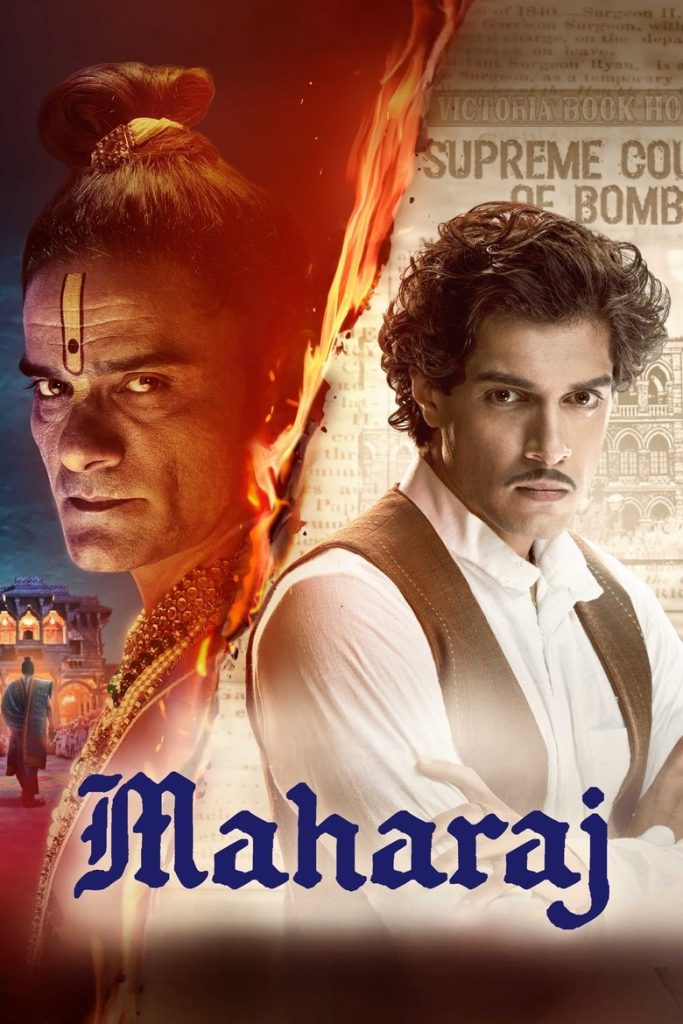
Maharaj is a 2024 Indian historical drama based on a real-life 1862 court case. The film follows a courageous journalist who investigates and publicly challenges a revered religious leader's alleged immoral behavior, sparking significant controversy and legal proceedings in colonial-era India. The story explores themes of truth, power, morality, and social justice.
Parent Guide
This mature historical drama deals with serious allegations against a religious leader and the resulting legal battle. While not graphically violent, the themes and emotional intensity make it most appropriate for mature teenagers and adults who can understand the complex social and ethical issues presented.
Content breakdown
Some tense courtroom scenes and social conflict. No physical violence shown, but there are verbal confrontations and threats. The peril comes from social ostracization and legal consequences rather than physical danger.
Themes of sexual misconduct allegations against a religious figure may be disturbing. Scenes of social tension, public shaming, and legal proceedings create emotional distress. The film deals with betrayal of trust by authority figures.
Some strong language in emotional scenes, including insults and accusations. No excessive profanity, but the dialogue includes heated exchanges appropriate to the dramatic context.
The central plot involves allegations of sexual misconduct, though nothing is shown explicitly. There are discussions of inappropriate relationships and references to sexual behavior, but no nudity or sexual scenes are depicted.
No depiction of substance use or abuse in the film.
High emotional intensity throughout as characters confront moral dilemmas, face social consequences, and engage in legal battles. Themes of betrayal, courage under pressure, and social justice create sustained dramatic tension.
Parent tips
This film deals with mature themes including allegations of sexual misconduct by a religious figure, legal proceedings, and social controversy. The historical setting and courtroom drama may be difficult for younger viewers to understand. Parents should be prepared to discuss issues of power, morality, and journalistic ethics with older children.
Parent chat guide
Parent follow-up questions
—
—
- What did you think about the journalist's decision to speak up?
- Why do you think some people in the story supported the leader even when there were problems?
- What does 'doing the right thing' mean in this story?
- How does the film handle the tension between religious devotion and ethical accountability?
- What contemporary parallels can you draw to this historical case?
- How does the film's portrayal of journalism compare to modern media?
- What ethical dilemmas do different characters face in the story?
🎭 Story Kernel
The film explores the historical 1862 Maharaj Libel Case, focusing on the ideological clash between social reformer Karsandas Mulji and the powerful religious figure Jadunathji Brijratanji Maharaj. It delves into the systemic exploitation of female devotees under the guise of 'Charan Seva,' a practice the film frames as a gross abuse of spiritual authority. Beyond the legal battle, the narrative examines the courage required to challenge entrenched orthodoxy within one's own community. It portrays the struggle of a lone journalist-reformer against a deified figure, highlighting the tension between traditionalist dogma and the burgeoning spirit of Indian Renaissance. The core expression is a plea for critical thinking and the separation of genuine spirituality from predatory institutional control, emphasizing that questioning authority is an act of devotion to truth.
🎬 Visual Aesthetics
Siddharth P. Malhotra utilizes a rich, saturated color palette to recreate 19th-century Bombay, contrasting the opulent, vibrant interiors of the Haveli with the more grounded, earthy tones of the common streets and the printing press. The cinematography by Rajeev Ravi emphasizes the physical distance and power dynamics between the characters; the Maharaj is often framed from low angles to underscore his perceived divinity and dominance, while Karsandas is frequently shown in cluttered, busy environments, reflecting his grassroots struggle. The use of lighting in the Haveli scenes creates a sense of claustrophobic sanctity, where shadows hide the moral decay behind the golden facade. Symbolism is found in the printing press—a machine of light and truth—standing against the dimly lit, incense-heavy chambers of the religious establishment, representing the mechanical force of progress.
🔍 Details & Easter Eggs
💡 Behind the Scenes
Maharaj marks the acting debut of Junaid Khan, son of Bollywood superstar Aamir Khan. The film faced significant legal hurdles prior to its release, with the Gujarat High Court initially staying its premiere on Netflix following petitions from members of the Pushtimarg sect who feared it might hurt religious sentiments. The stay was eventually vacated after the court viewed the film and determined it did not target the religion itself but focused on a specific historical legal battle. Jaideep Ahlawat underwent a significant physical transformation and weight loss to portray the titular Maharaj, aiming for a presence that was both charismatic and intimidating.
Where to watch
Choose region:
- Netflix
- Netflix Standard with Ads