
Making of House of Flying Daggers (2004)
Story overview
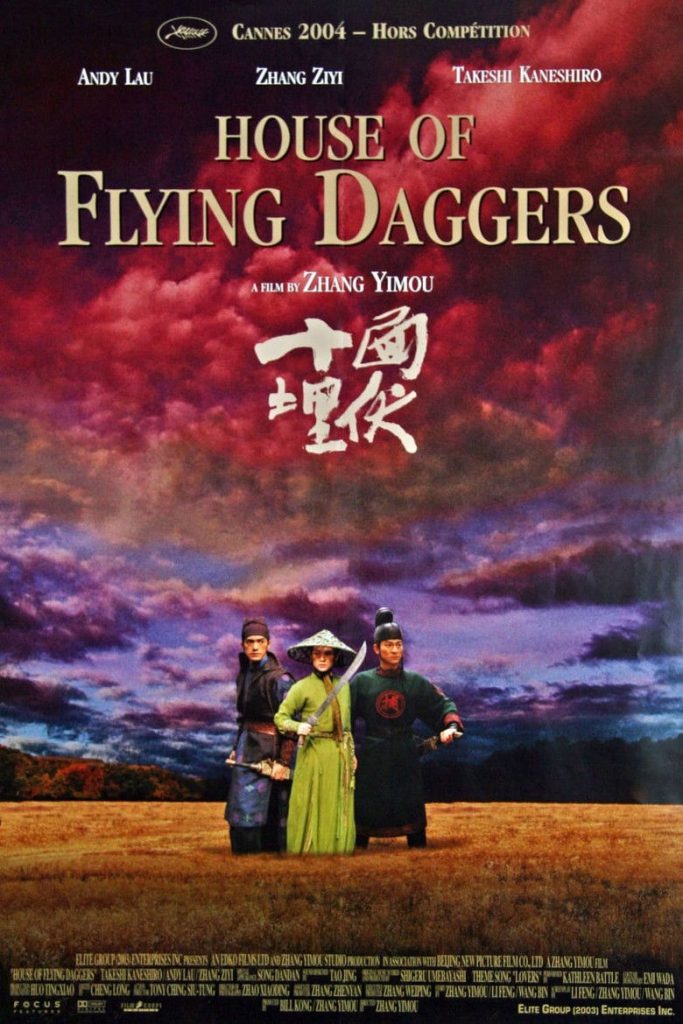
This documentary provides a behind-the-scenes look at the making of the 2004 film 'House of Flying Daggers,' focusing on key characters and performers. It features director Zhang Yimou and explores the roles of Xiao Mei (played by Zhang Ziyi), a dancer believed to be the blind daughter of a rebel leader; Jin (played by Takeshi Kaneshiro), a police captain acting as a double agent; and Leo (played by Andy Lau), a high-ranking policeman revealed as a rebel mole. The documentary covers production aspects without depicting the film's action or dramatic scenes.
Parent Guide
A mild documentary suitable for children aged 8 and up, focusing on film production without concerning content.
Content breakdown
No violence or peril depicted; only discusses characters from the fictional movie.
No scary or disturbing imagery; content is informational about filmmaking.
No offensive language noted; likely uses standard documentary narration.
No sexual content or nudity; mentions a brothel in character description but does not depict it.
No substance use shown or discussed.
Mild intensity from discussions of plot elements like spies and rebels, but no dramatic reenactments.
Parent tips
This documentary is suitable for most children as it focuses on filmmaking processes and character descriptions rather than intense content. No violence, scary scenes, or mature themes are shown. It may interest children curious about how movies are made, though younger viewers might find discussions of brothels and political intrigue confusing without context.
Parent chat guide
Parent follow-up questions
- Did you see people making a movie?
- What tools did they use to make the movie?
- What job in movie-making seemed most interesting to you?
- How do you think actors learn to play different characters?
- What challenges might filmmakers face when creating historical movies?
- How does a documentary differ from the actual movie it's about?
- How does this documentary highlight the collaboration needed in filmmaking?
- What insights did it provide about adapting stories to film?
🎭 Story Kernel
The making-of documentary for 'House of Flying Daggers' reveals that the film's true core isn't just a wuxia romance, but an exploration of artistic obsession and the fragile line between control and surrender. It shows director Zhang Yimou and his team as characters themselves, driven by a pursuit of visual poetry that borders on the fanatical. Their motivations mirror the film's themes: the desire to create perfect, fleeting moments of beauty (like the Echo Game sequence) and the acceptance that true artistry often requires embracing the unexpected—a stunt gone slightly wrong, a weather change—and weaving it into the tapestry. The documentary argues that the 'making' is as much a story of passion and sacrifice as the fictional narrative it documents.
🎬 Visual Aesthetics
The documentary's visual language is a fascinating meta-commentary. It contrasts the polished, saturated color palettes and sweeping crane shots of the final film with the gritty, behind-the-scenes reality: handheld cameras in muddy fields, the clinical glare of monitor screens, and the raw scaffolding of sets. This juxtaposition highlights the constructed nature of the movie's beauty. The camera lingers on the immense physical labor—the precise choreography of the bamboo forest fight, the painstaking placement of autumn leaves—transforming these actions into a different kind of dance. The color palette shifts from the film's operatic blues and reds to the utilitarian tones of rehearsal spaces, emphasizing the unglamorous work behind every poetic frame.
🔍 Details & Easter Eggs
💡 Behind the Scenes
The documentary reveals that the iconic 'echo game' sequence, where Ziyi's character dances and deflects beans, required over three weeks of rehearsal with a specialist choreographer to achieve the seamless rhythm. Much of the breathtaking autumn foliage seen in the film was artificially enhanced; the crew painstakingly dyed and placed individual leaves to achieve Zhang Yimou's desired painterly effect. Notably, Takeshi Kaneshiro performed most of his own horseback archery stunts after intensive training, reflecting the production's commitment to visceral authenticity. The bamboo forest fight, a highlight, was filmed in a national park in China under strict ecological guidelines, with every piece of bamboo manipulated by wires and pulleys to avoid damaging the natural environment.
Where to watch
Choose region:
- Netflix
- Netflix Standard with Ads
- Amazon Video
- Apple TV Store
- Google Play Movies
- YouTube
- Fandango At Home
- Microsoft Store