
Man on Fire (2004)
Story overview
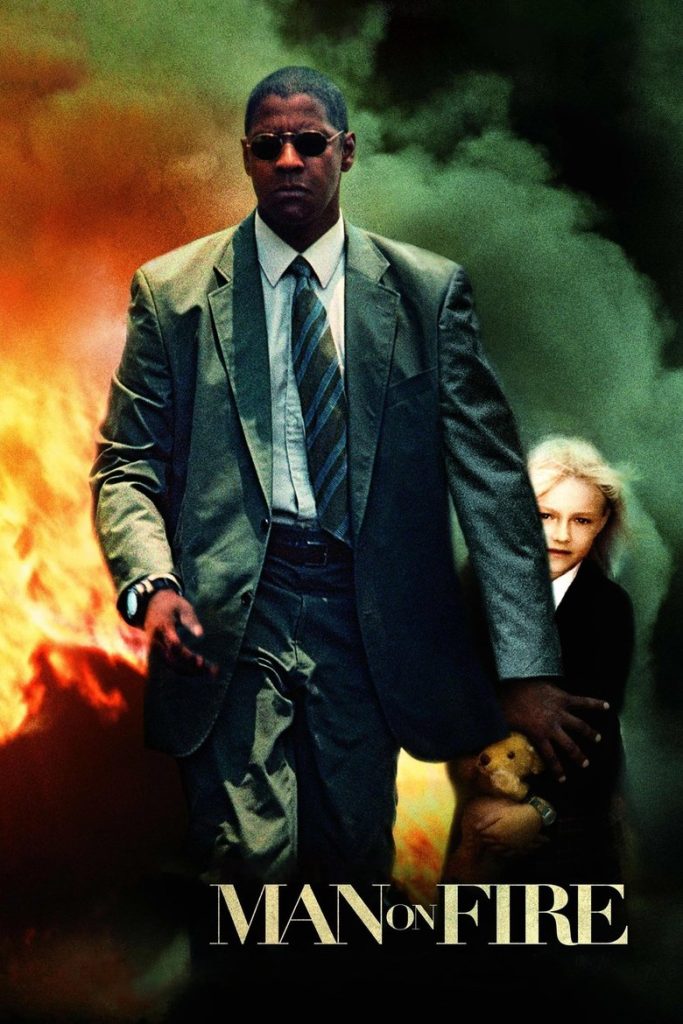
Man on Fire is a 2004 action thriller about a former CIA operative hired as a bodyguard for a young girl in Mexico City. When she is kidnapped, he unleashes a brutal campaign of vengeance against those responsible. The film explores themes of redemption, loss, and the extremes of protective violence. It combines intense action sequences with emotional drama about the bond between the bodyguard and the child.
Parent Guide
R-rated action thriller with intense violence, mature themes, and emotional content. Suitable only for mature teens with parental guidance.
Content breakdown
Graphic violence including shootings, torture, explosions, and brutal revenge sequences. Central plot involves child kidnapping and peril.
Intense scenes of danger, kidnapping, and violent consequences. Themes of loss and vengeance may be emotionally disturbing.
Some strong language and profanity throughout the film.
Minimal sexual content; some suggestive situations but no explicit scenes.
Characters shown drinking alcohol and smoking in social settings.
High emotional stakes involving child endangerment, grief, and moral conflicts about violence.
Parent tips
This R-rated film contains strong violence, intense peril, and mature themes unsuitable for younger viewers. The central plot involves child kidnapping and graphic revenge violence, which may be disturbing. Parents should consider the emotional maturity of their teens before viewing, as the film portrays brutal consequences and moral ambiguity in a gritty, realistic style.
Parent chat guide
Parent follow-up questions
- Did you see any people being kind to each other?
- What colors did you notice in the movie?
- Did you hear any loud noises that surprised you?
- What was your favorite part to watch?
- How did the movie make you feel?
- Why do you think the man wanted to protect the girl?
- How do you think the girl felt when she was in danger?
- What does it mean to keep someone safe?
- Have you ever wanted to help someone who was scared?
- What would you do if you saw someone being treated unfairly?
- Do you think violence is ever justified to protect someone?
- How does the movie show the consequences of revenge?
- What responsibilities do adults have toward children in their care?
- How do people cope with loss and grief in the story?
- What makes someone a hero versus just someone who uses violence?
- How does the film explore the morality of vigilante justice?
- What commentary does the movie make about corruption and systems failing to protect people?
- How does the relationship between the bodyguard and child evolve throughout the film?
- What psychological effects does violence have on the characters?
- How does the setting contribute to the themes of lawlessness and redemption?
🎭 Story Kernel
At its core, 'Man on Fire' is about the transformative power of paternal love in a world stripped of morality. John Creasy isn't driven by justice or money, but by the desperate need to atone for his own sins. The kidnapping of Pita gives him a purpose—to protect the one pure thing he's found. His brutal crusade isn't just revenge; it's a baptism by fire, where each act of violence purges his guilt. The film argues that in a corrupt system, the only meaningful code is personal loyalty, and that saving one child can redeem a lifetime of damnation.
🎬 Visual Aesthetics
Tony Scott's signature hyper-kinetic style turns Mexico City into a character—a sweaty, chaotic purgatory. The camera is restless, using rapid cuts, desaturated colors, and frantic handheld shots to mirror Creasy's fractured psyche. Action sequences aren't clean; they're visceral and messy, emphasizing the physical cost of violence. The recurring motif of water (baptism, rain, the pool) contrasts with fire, symbolizing Creasy's struggle between redemption and destruction. The final, washed-out color palette as he dies reflects a soul emptied of everything but purpose.
🔍 Details & Easter Eggs
💡 Behind the Scenes
Denzel Washington based Creasy's alcoholic tremors on a family member struggling with addiction. The infamous 'interrogation by explosive suppository' scene was almost cut but stayed because it perfectly illustrated Creasy's descent into brutal pragmatism. Much of the Mexico City footage was shot guerrilla-style without permits, adding to the film's gritty, immersive authenticity. The script sat dormant for years until Tony Scott's passionate vision brought it to life.
Where to watch
Choose region:
- Netflix
- YouTube TV
- Philo
- Netflix Standard with Ads
- Amazon Video
- Apple TV
- Google Play Movies
- YouTube
- Fandango At Home
Trailer
Trailer playback is unavailable in your region.