
Man vs. Shark (2019)
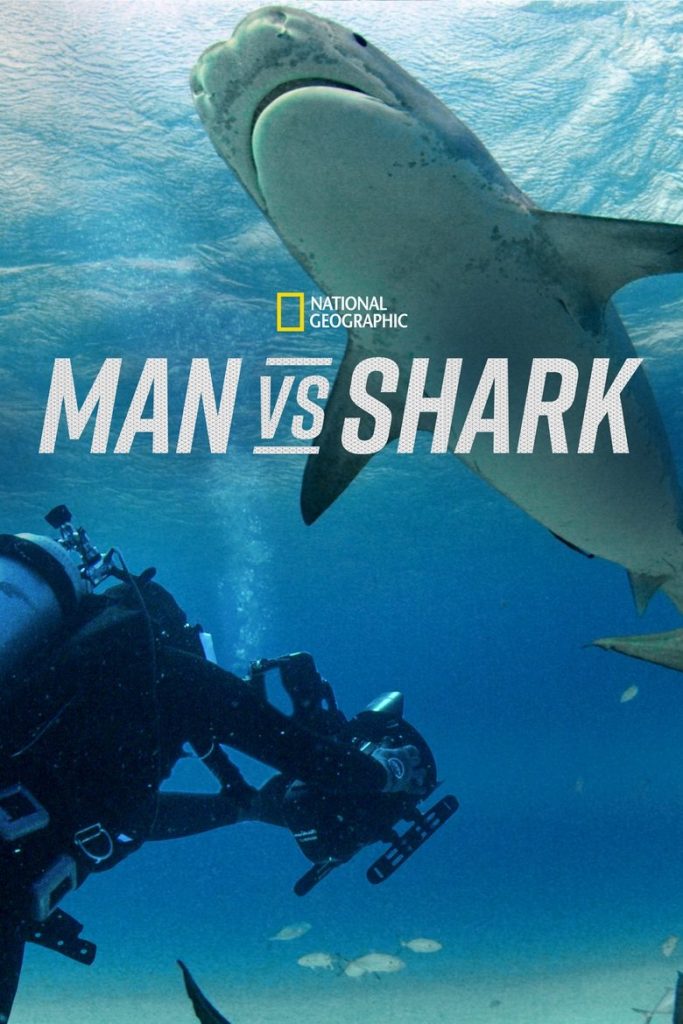
Story overview
This 2019 documentary TV movie follows marine biologist Jeremiah Sullivan as he tests his armored diving suits against sharks. Forty years after inventing protection against smaller sharks, he measures bite force and strength of hammerheads and tiger sharks, then creates new armor to withstand a 14-foot tiger shark's jaws in a controlled scientific experiment.
Parent Guide
Educational documentary about marine science and equipment testing with moderate intensity shark footage.
Content breakdown
Sharks bite armored equipment in controlled tests. No blood, injuries, or attacks on humans. Scientist remains safe inside protective gear. Some tension as sharks approach equipment.
Close-up footage of large sharks with open mouths may be startling. Underwater scenes create suspense. No jump scares or graphic content. Scientist maintains calm demeanor.
No offensive language. Professional scientific narration throughout.
No sexual content or nudity. Scientist wears standard diving gear.
No substance use shown or referenced.
Moderate tension during testing sequences. Educational tone balances intensity. Focus on scientific achievement rather than fear.
Parent tips
This documentary focuses on scientific testing of shark-resistant armor, not graphic attacks. Expect underwater footage of sharks biting equipment, but no blood or injuries. The marine biologist remains calm and professional throughout. Suitable for children interested in marine science, but may be intense for very sensitive viewers due to close-up shark encounters.
Parent chat guide
Parent follow-up questions
- What colors did you see on the sharks?
- Did the scientist look scared or brave?
- What tools did he use underwater?
- Why do you think the scientist wants to make better shark armor?
- How do you think he stays safe during the tests?
- What did you learn about how sharks eat?
- What scientific methods did the biologist use to measure shark strength?
- How might this research help both humans and sharks?
- Why is it important to test safety equipment thoroughly?
- What ethical considerations surround testing equipment on live animals?
- How does this documentary balance scientific curiosity with safety concerns?
- What engineering challenges might exist in creating shark-resistant materials?
🎭 Story Kernel
The film is less about a literal shark attack and more a psychological dissection of human hubris in the face of nature's indifference. Protagonist Mark's initial confidence—his high-tech gear, his survivalist bravado—is systematically dismantled. His drive isn't just to survive the shark, but to conquer it, to prove his dominance over the natural world. The narrative's true tension arises from watching this modern, rational man be reduced to his most primal instincts, forced to confront the terrifying reality that nature operates on a logic beyond human comprehension or control. The shark isn't malicious; it's simply efficient, making Mark's struggle a futile, tragic performance for an audience of one.
🎬 Visual Aesthetics
The cinematography masterfully uses perspective to create claustrophobia in the vast ocean. Early, wide, stable shots of Mark's boat establish his illusion of control. As the crisis unfolds, the camera becomes unmoored—subjective, shaky POV shots from the waterline, extreme close-ups on panicked eyes and grasping hands. The color palette drains from bright, optimistic blues and whites to muted, cold grays and the deep, ominous green of the water at dusk. Action is brutally practical; there are no elegant, balletic movements. Every thrash, every desperate scramble is shot with a visceral, documentary-like roughness, emphasizing the raw, ungainly physicality of survival.
🔍 Details & Easter Eggs
💡 Behind the Scenes
Lead actor shot all his ocean scenes in a massive water tank, with the 'shark' portrayed by a combination of a practical animatronic for close-ups and CGI for wider shots. The director, a former documentary filmmaker, insisted on using real storm footage, splicing it with the tank shots to achieve the film's unnerving authenticity. The most challenging sequence—the night swim—was filmed using only available light from a single waterproof lamp mounted on the actor's head, creating the profound darkness that defines the film's third act.
Where to watch
Choose region:
- Disney Plus