
Mank (2020)
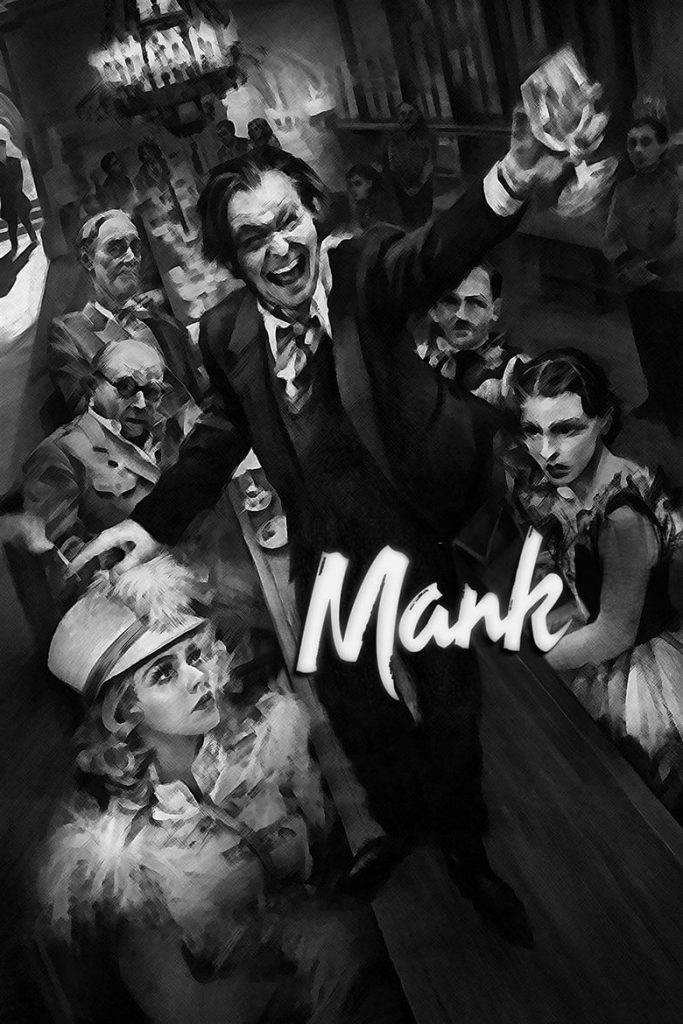
Story overview
Mank is a 2020 historical drama that explores 1930s Hollywood through the perspective of Herman J. Mankiewicz, a brilliant but troubled screenwriter. As he battles alcoholism and personal demons, he races against time to complete the screenplay for what would become the iconic film Citizen Kane. The movie delves into themes of artistic integrity, political corruption, and the complex dynamics of the film industry during that era.
Parent Guide
Mank is a sophisticated historical drama with mature themes. While not graphically violent or sexually explicit, its R rating is justified by strong language, pervasive alcohol abuse, and complex emotional content. The film requires attention to dialogue and historical context, making it most appropriate for older teens and adults.
Content breakdown
No physical violence is depicted. There are verbal confrontations and tense professional situations. One scene shows a character with minor injuries from a car accident (non-graphic). Political peril is discussed regarding 1930s events.
Some emotionally intense scenes involving addiction, professional pressure, and personal conflicts. The black-and-white aesthetic and period setting create a serious tone but aren't traditionally scary. Discussions of political manipulation might be unsettling for sensitive viewers.
Multiple uses of strong profanity including f-words, s-words, and other adult language. The dialogue reflects the time period and character personalities, with frequent harsh exchanges.
Minimal sexual content. Some flirtatious dialogue and references to affairs. No nudity or explicit sexual scenes. One scene shows characters in bed together (clothed, implied intimacy).
Pervasive alcohol consumption throughout the film. The main character is shown drinking excessively, often to the point of intoxication. Cigarette smoking is frequent (period-appropriate). The film portrays the negative consequences of alcoholism on health, relationships, and work.
High emotional stakes in creative and personal relationships. Themes of betrayal, artistic struggle, and personal decline. The protagonist's alcoholism creates tense family and professional dynamics. The film explores depression, regret, and redemption arcs.
Parent tips
This film is best suited for mature teens and adults due to its complex themes, historical context, and adult content. Parents should note the R rating primarily stems from strong language, alcohol abuse, and some intense emotional scenes. The film's black-and-white cinematography and dialogue-heavy narrative may not engage younger viewers. Consider watching with older teens to discuss Hollywood history, creative processes, and the consequences of addiction.
Parent chat guide
Parent follow-up questions
—
—
- What did you notice about how movies were made in the old days?
- How do you think the main character's drinking affected his life?
- What makes someone a good writer or storyteller?
- How does the film critique both Hollywood and politics of the 1930s?
- What does the movie suggest about the relationship between art and commerce?
- How does Mankiewicz's character development reflect broader themes of redemption?
- What contemporary parallels can you draw from the film's portrayal of media manipulation?
🎭 Story Kernel
At its core, 'Mank' explores the collision between artistic integrity and political power in Hollywood's golden age. The film dissects how Herman J. Mankiewicz's masterpiece 'Citizen Kane' became both his redemption and damnation—a brilliant critique of media mogul William Randolph Hearst that also exposed the industry's moral compromises. Through flashbacks, we see Mank's descent from witty insider to disillusioned outsider, driven by his growing awareness of how studio bosses like Louis B. Mayer manipulate both art and politics. The real conflict isn't about writing credits, but about whether truth-telling is possible in a system built on illusions.
🎬 Visual Aesthetics
Fincher meticulously recreates 1930s-40s Hollywood through deep focus cinematography, high-contrast black-and-white photography, and deliberate film grain that mimics period newsreels. The camera often observes characters through windows, mirrors, and doorways—visual metaphors for Hollywood's performative nature. Notice how Hearst's San Simeon estate appears both opulent and prison-like, with characters trapped in ornate frames. The cigarette smoke isn't just atmosphere; it represents the haze of memory and intoxication that clouds Mank's genius. Even the typewriter sounds become rhythmic punctuation to his deteriorating health and creative struggle.
🔍 Details & Easter Eggs
💡 Behind the Scenes
Gary Oldman prepared by studying Mankiewicz's actual radio interviews and correspondence, adopting his specific mid-Atlantic accent. The black-and-white cinematography used modern RED Helium cameras with vintage lenses to achieve period authenticity. Amanda Seyfried studied Marion Davies' home movies to capture her unique mannerisms. Most dialogue scenes were shot with single takes lasting up to 10 minutes, requiring perfect timing from the ensemble cast. The script by Jack Fincher (David's father) had been completed in the 1990s but wasn't filmed until Netflix provided the budget for its meticulous period recreation.
Where to watch
Choose region:
- Netflix
- Netflix Standard with Ads
Trailer
Trailer playback is unavailable in your region.