Marco Polo: One Hundred Eyes (2015)
Story overview
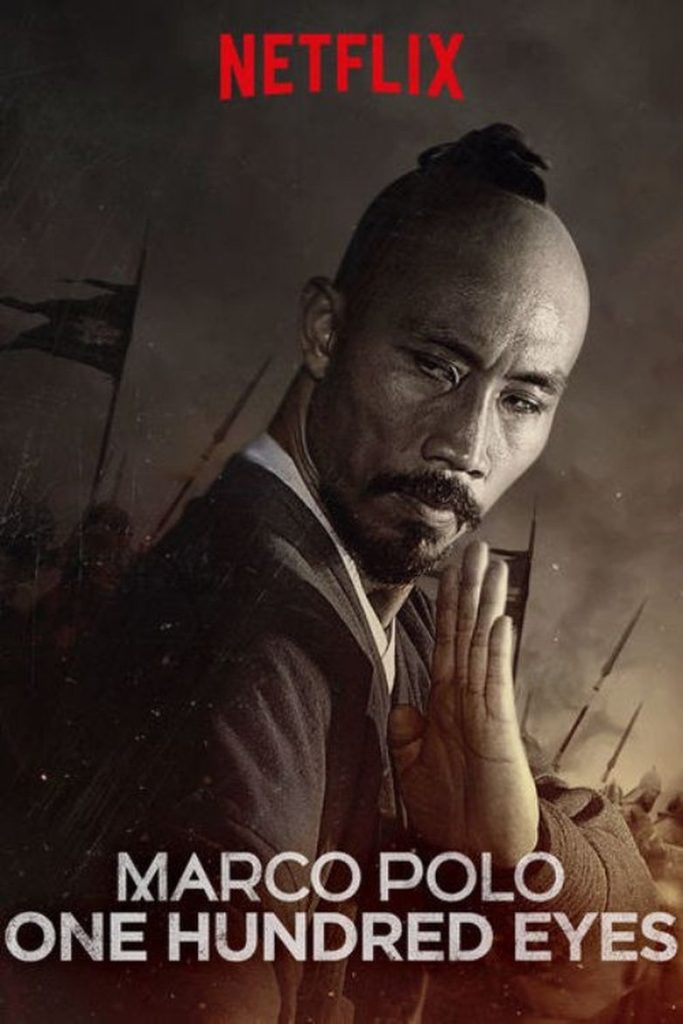
This 2015 historical action-drama is a Netflix special set in the world of Marco Polo, focusing on the character Hundred Eyes, a blind martial arts master. It explores themes of loyalty, mentorship, and power struggles within the Mongol Empire. The story blends martial arts sequences with political intrigue in a historical context.
Parent Guide
TV-MA historical action-drama with martial arts violence and mature themes.
Content breakdown
Martial arts combat sequences with historical weapons, some intense fighting scenes.
Historical war themes and power struggles may be intense for younger viewers.
General dialogue appropriate to historical drama context.
No significant sexual content or nudity noted.
No significant substance use depicted.
Themes of loyalty, betrayal, and power struggles create dramatic tension.
Parent tips
This TV-MA rated content is intended for mature audiences due to its action and dramatic intensity. Parents should preview it to assess suitability for their family, as it contains martial arts violence and themes of war and betrayal. Consider the historical setting and mature themes when deciding if it's appropriate for younger viewers.
Parent chat guide
Parent follow-up questions
- What did you think about the fighting scenes?
- How did the characters help each other?
- What colors or costumes did you notice most?
- What makes someone a good teacher like Hundred Eyes?
- How do the characters show bravery in the story?
- Why is loyalty important to the characters?
- How does the historical setting affect the characters' choices?
- What different ways do characters gain and use power?
- How do the action scenes serve the story beyond just entertainment?
- How does the film portray mentorship and its responsibilities?
- What commentary does the story make about power and leadership?
- How does the martial arts action reflect the characters' internal struggles?
🎭 Story Kernel
The film is less about the historical Marco Polo and more about the spiritual journey of Hundred Eyes, a blind monk whose martial arts mastery becomes a metaphor for inner vision. While serving Kublai Khan, his true conflict isn't political loyalty but maintaining his Buddhist principles within a world of violence. The narrative explores how true power comes from discipline and perception, not physical sight or political might. His final choice to walk away from court life reveals the film's core: enlightenment cannot be weaponized or owned, even by emperors.
🎬 Visual Aesthetics
The visual language emphasizes tactile sensation over spectacle, mirroring Hundred Eyes' blindness. Close-ups on hands, feet, and listening ears replace typical wuxia wide shots. The color palette shifts from warm, earthy monastery tones to the cold blues and grays of the Mongol court, visually tracking his spiritual displacement. Fight choreography is precise and economical—each movement has purpose, avoiding flashy wirework. Shadows play a crucial role, often obscuring more than they reveal, forcing viewers to 'see' like the protagonist.
🔍 Details & Easter Eggs
💡 Behind the Scenes
Actor Tom Wu performed nearly all his own martial arts sequences despite having no prior blindness training; he worked with a consultant to master blind movement. Filming occurred in Kazakhstan, standing in for 13th-century Mongolia. The 'hundred eyes' concept references the Buddhist deity Avalokiteśvara, who possesses infinite eyes of compassion. Director Alik Sakharov intentionally avoided green screens, using practical sets to maintain the gritty, tactile realism central to the protagonist's experience.
Where to watch
Choose region:
- Netflix
- Netflix Standard with Ads