
Marooned (2019)
Story overview
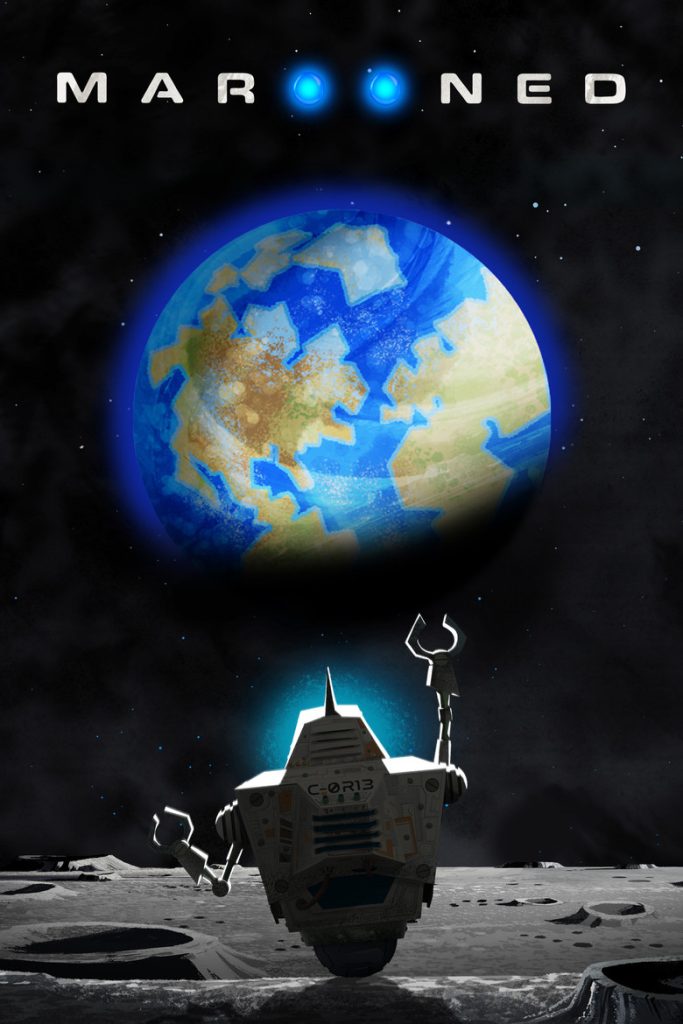
Marooned is a short animated adventure about a robot stranded on the Moon who, believing he is alone, discovers an eager helper. Together, they work to repair a rocket so the robot can return home to Earth. This G-rated film combines themes of friendship, problem-solving, and perseverance in a family-friendly science fiction setting.
Parent Guide
A completely safe, positive animated short with educational themes and no concerning content. Perfect for family viewing.
Content breakdown
No violence. The robot faces the mild peril of being stranded, but this is presented as a problem to solve rather than a threat.
Nothing scary or disturbing. The Moon setting is depicted in a friendly, cartoonish style.
No objectionable language. Communication is primarily through actions and possibly simple robotic sounds.
No sexual content or nudity.
No substance use.
Mild emotional moments related to loneliness and the joy of friendship, all handled gently.
Parent tips
This film is suitable for all ages with no concerning content. It's a positive story about cooperation and determination that may inspire interest in space and robotics. The short runtime makes it ideal for young viewers' attention spans.
Parent chat guide
Parent follow-up questions
- What was your favorite part of the movie?
- How did the robot feel when he was alone on the Moon?
- What did the helper do to help the robot?
- Why do you think the robot and helper became friends?
- What problems did they face while fixing the rocket?
- What would you do if you were stranded somewhere like the robot?
- What does this story teach us about teamwork?
- How did the characters show perseverance?
- What scientific concepts did you notice in the movie?
- How does this film represent problem-solving under pressure?
- What themes about isolation and connection did you notice?
- How realistic do you think the space/science elements were?
🎭 Story Kernel
At its core, 'Marooned' is less about surviving in space and more about the cold calculus of institutional failure. The astronauts' struggle against dwindling oxygen becomes a grim metaphor for how organizations abandon individuals when rescue becomes too costly or politically inconvenient. The characters are driven not by heroism but by desperation—each man confronting mortality in his own way, from stoic acceptance to panicked bargaining. The film's tension arises from Earth's agonizingly slow decision-making process, revealing how technological advancement hasn't solved humanity's tendency to sacrifice pawns on the chessboard of progress.
🎬 Visual Aesthetics
The film's visual language masterfully conveys isolation through tight, static shots inside the cramped spacecraft, contrasting with sweeping NASA control room sequences. A desaturated color palette—dominated by metallic grays and the cold blue of space—creates clinical detachment, while the astronauts' increasingly pale complexions visually track their oxygen depletion. The exterior space shots use minimalist special effects (for 1969) to emphasize vulnerability, with the tiny spacecraft appearing as a speck against infinite blackness. The most powerful visual motif is the silent, unmoving spacesuit of a deceased astronaut, floating as a permanent monument to failure.
🔍 Details & Easter Eggs
💡 Behind the Scenes
Released just months before Apollo 13's real-life crisis, 'Marooned' won the Academy Award for Best Visual Effects—remarkably achieved without CGI. The spacecraft interiors were built inside a rotating gimbal to simulate weightlessness, requiring actors to perform while dizzy. Gregory Peck took the role specifically to work with director John Sturges. NASA initially cooperated but withdrew support after reading the script's criticism of bureaucratic risk-taking, forcing the production to recreate control rooms independently.
Where to watch
Choose region:
- Peacock Premium
- Peacock Premium Plus
Trailer
Trailer playback is unavailable in your region.