
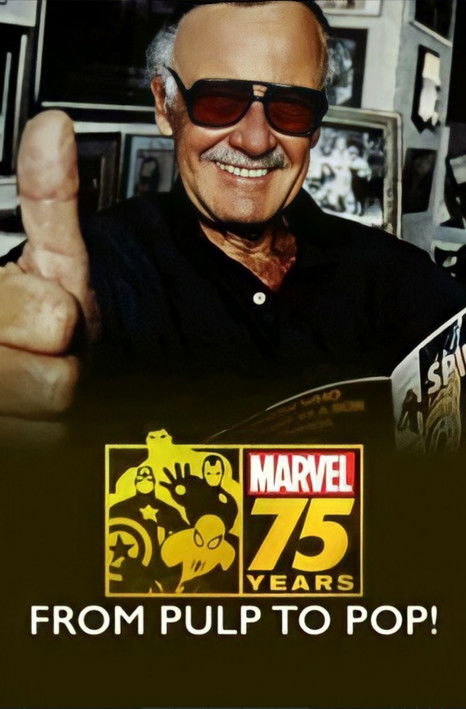
Marvel: 75 Years, from Pulp to Pop! (2014)
Story overview
This 42-minute documentary celebrates Marvel's 75th anniversary, tracing its evolution from a small comics publisher to a global entertainment powerhouse. Hosted by Emily VanCamp, it features interviews with Marvel legends like Stan Lee, actors such as Scarlett Johansson, and industry experts, offering insights into Marvel's history and a glimpse into its future projects.
Parent Guide
A mild, educational documentary suitable for all ages, with no concerning content. It's rated TV-PG for general viewing.
Content breakdown
No violence or peril depicted; the content is purely documentary-style, focusing on interviews and historical footage.
Nothing scary or disturbing; it's a celebratory look at Marvel's history without intense or frightening elements.
No offensive or strong language; the dialogue is professional and family-appropriate.
No sexual content or nudity; the documentary is focused on Marvel's creative and business aspects.
No depiction or reference to substance use; the content is clean and educational.
Mild emotional moments may arise from inspiring stories of Marvel's success, but nothing overly intense or distressing.
Parent tips
This documentary is family-friendly and suitable for most ages, focusing on Marvel's creative journey rather than action scenes. It's a great opportunity to discuss comic book history, storytelling, and media influence with kids. No concerning content is present, making it a safe watch for younger viewers interested in superheroes.
Parent chat guide
Parent follow-up questions
- Who is your favorite Marvel character?
- What colors do you see in the comics?
- Can you draw a superhero like in the show?
- How do you think Marvel makes its stories?
- Why do people like superheroes?
- What would you create if you made a comic?
- How has Marvel changed over 75 years?
- What makes a good superhero story?
- How do comics influence movies and TV?
- What cultural impact has Marvel had globally?
- How does Marvel balance creativity with business?
- What future trends might Marvel explore?
🎭 Story Kernel
The documentary's true narrative isn't about celebrating 75 years of history, but about Marvel's transition from scrappy underdog to corporate behemoth. It presents a sanitized version of this journey, carefully avoiding the messy legal battles, creator rights disputes, and financial struggles that defined much of its history. The driving force isn't the characters on screen, but the corporate need to legitimize Marvel's dominance by constructing a tidy origin story. We see executives and creators perform reverence for the past while the film's structure reinforces Marvel's current business model: repackaging nostalgia as innovation. The tension between artistic rebellion and commercial conformity pulses beneath every celebratory montage.
🎬 Visual Aesthetics
The visual language shifts dramatically between eras, revealing Marvel's aesthetic evolution. Archival footage appears gritty and authentic—grainy 1940s comic art, shaky 1970s TV clips—while contemporary segments are polished to corporate sheen with slick CGI transitions and studio-quality interviews. This creates a visual metaphor: Marvel's past as raw, unpredictable material versus its present as manufactured product. The color palette evolves from the primary boldness of classic comics to the muted, cinematic tones of the MCU. Camera work in modern segments favors controlled, hero-shot compositions of executives, subtly equating corporate leadership with the heroes they manage.
🔍 Details & Easter Eggs
💡 Behind the Scenes
The documentary was produced in-house by Marvel Studios, which explains its selective historical focus. Notably absent are interviews with key but contentious figures like Stan Lee's early collaborators who disputed credit, or filmmakers from failed pre-MCU adaptations. Much of the archival footage comes from a 2014 museum exhibit Marvel curated themselves, creating a self-referential loop. The film's release coincided with Marvel's aggressive expansion into streaming, functioning as both anniversary celebration and brand reinforcement. Several interviewees appear in Marvel-produced content, blurring the line between documentary subject and corporate spokesperson.
Where to watch
Choose region:
- Disney Plus
- Fandango At Home
Trailer
Trailer playback is unavailable in your region.