
Marvel’s Behind the Mask (2021)
Story overview
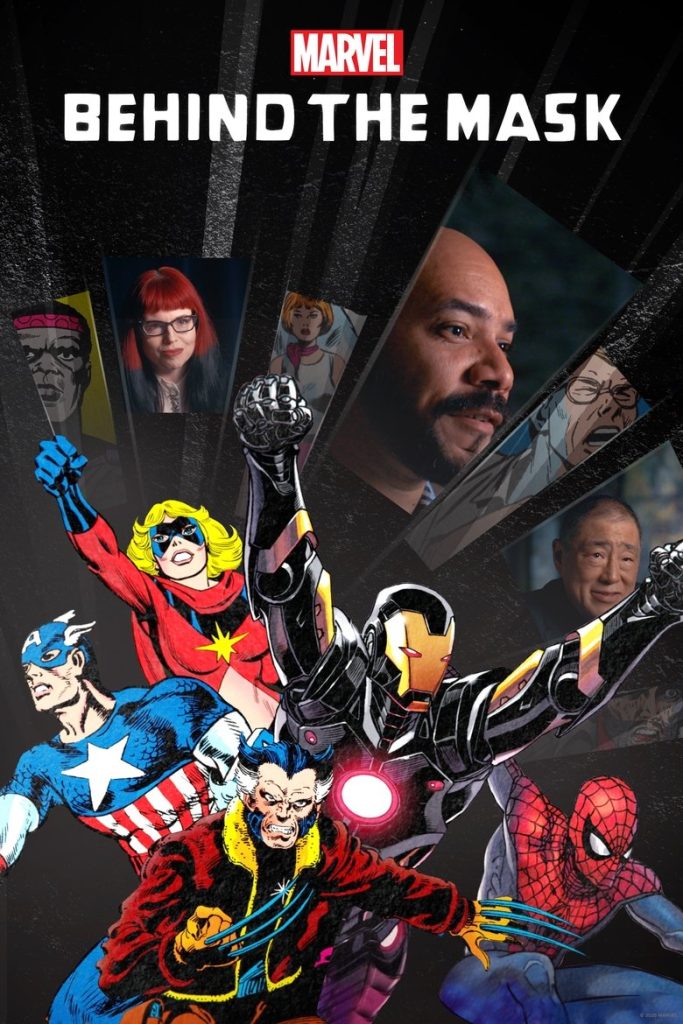
This documentary explores how Marvel superheroes reflect real-world identities and personal struggles, discussing their cultural impact and the creative process behind iconic characters.
Parent Guide
Educational documentary exploring identity and representation through Marvel superheroes. Contains discussions of social issues and historical context that may require parental guidance for younger viewers.
Content breakdown
Brief discussion of fictional superhero violence and conflict, but no graphic depictions. Some mention of real-world social struggles and discrimination.
Discussion of serious topics like racism, sexism, and social injustice that may be emotionally challenging for sensitive viewers.
No offensive language noted in documentary content.
No sexual content or nudity.
No depiction or discussion of substance use.
Emotional discussions about identity, representation, and overcoming adversity. May provoke thoughtful reflection about personal and societal issues.
Parent tips
This documentary discusses mature themes like identity, discrimination, and social issues through the lens of superhero stories. It's best for children who can understand abstract concepts and historical context. Parents may want to preview or watch together to discuss the content.
Parent chat guide
Parent follow-up questions
—
- What superpower would you want to have?
- Who is your favorite superhero and why?
- How do you think superhero stories reflect real-world issues?
- Why is it important for different types of people to see themselves in superheroes?
- How has Marvel's approach to character diversity evolved over time?
- In what ways do superhero narratives both challenge and reinforce societal norms?
🎭 Story Kernel
The film's core theme isn't about superhero origins, but about the origins of identity itself. It argues that the mask is not a tool for hiding, but a crucible for becoming. Characters are driven not by a desire to conceal their humanity, but by the need to forge a new, more potent version of it. The documentary posits that the 'secret identity' is the true self, and the public persona is the constructed ideal one aspires to embody. This creates a fascinating tension where the costume becomes more 'real' than the person wearing it, exploring how external symbols catalyze internal transformation.
🎬 Visual Aesthetics
The visual language masterfully contrasts the glossy, high-fidelity Marvel Cinematic Universe footage with intimate, often grainy behind-the-scenes and archival material. This creates a dialectic between myth and maker. Interviews are framed in shallow focus, isolating creators and actors against dark backgrounds, visually reinforcing the solitary burden of character creation. The color palette shifts thematically: warm, saturated tones accompany discussions of heroism and legacy, while cooler, desaturated segments analyze vulnerability and the weight of the mask. The editing rhythm mimics comic book pacing—quick cuts for action insights, lingering shots for emotional revelations.
🔍 Details & Easter Eggs
💡 Behind the Scenes
The documentary features rare, previously unreleased test footage of early costume designs, including a much bulkier, more militaristic version of the Spider-Man suit that was scrapped for being 'too intimidating.' Several key interviews, like with Chadwick Boseman, were sourced from archival press junkets and reshaped to serve the film's narrative, creating a poignant, posthumous commentary on legacy. Much of the analysis on the cultural impact of Black Panther's mask draws from unpublished notes by costume designer Ruth E. Carter, who spoke of the mask as a 'crown for a new kingdom.'
Where to watch
Choose region:
- Disney Plus
Trailer
Trailer playback is unavailable in your region.