
Mary Poppins Returns (2018)
Story overview
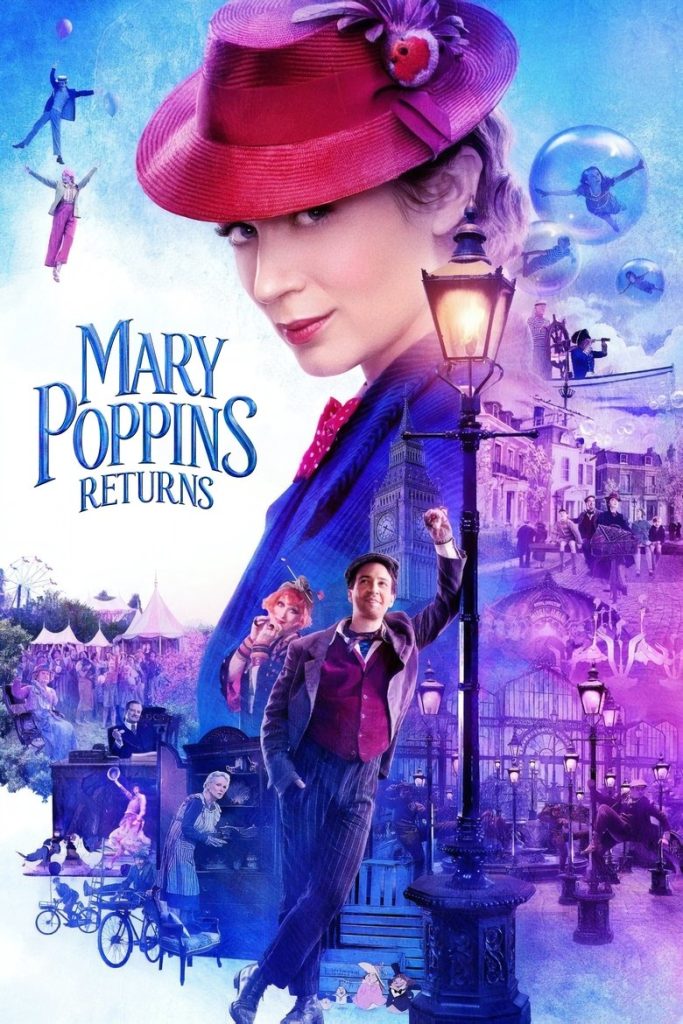
Mary Poppins Returns is a 2018 fantasy musical comedy directed by Rob Marshall, starring Emily Blunt as the magical nanny. Set in 1930s London, Mary Poppins returns to help the now-adult Banks children, Michael and Jane, who are struggling with personal loss and financial difficulties. Through enchanting adventures filled with music, animation, and whimsy, she teaches them to rediscover joy and hope, while caring for Michael's three children. The film blends live-action with animated sequences, offering a nostalgic yet fresh take on the classic character.
Parent Guide
Mary Poppins Returns is a family-friendly musical fantasy with positive messages, but includes mild peril and emotional themes suitable for children ages 8 and up. Younger children may enjoy the music and magic but need guidance on the plot.
Content breakdown
Some scenes involve mild peril, such as characters in a collapsing house or facing a threatening figure, but all situations are resolved quickly with magic and no one is harmed. The tone remains lighthearted.
A few moments might be slightly intense for very young children, including a dark, animated sequence with a wolf-like character and scenes where adults express sadness or worry. Nothing graphic or prolonged.
No profanity or offensive language. The dialogue is polite and family-appropriate throughout.
No sexual content or nudity. The film focuses on family relationships and magical adventures.
No depiction of substance use. Characters are shown drinking tea or in social settings without alcohol or drugs.
Themes of grief, financial stress, and family responsibility are present, but handled gently with a hopeful tone. Some children might feel sad during emotional scenes, but these are balanced by joyful musical numbers.
Parent tips
This film is suitable for most children but has some emotional themes. Consider these tips: 1) The movie deals with themes of grief and financial stress, which may require explanation for younger viewers. 2) Some scenes involve mild peril, such as characters in dangerous situations that are quickly resolved magically. 3) The runtime is over 2 hours, so younger children may need breaks. 4) The musical numbers are lively and engaging, but the plot may be complex for very young children. 5) Positive messages about family, resilience, and imagination are prominent.
Parent chat guide
Parent follow-up questions
- What was your favorite song in the movie?
- Did you like the animated parts with the animals?
- How did Mary Poppins make things magical?
- What was the funniest thing you saw?
- Why did Mary Poppins come back to help the Banks family?
- How did the children feel when their dad was sad?
- What did the characters learn about working together?
- Which adventure would you want to go on with Mary Poppins?
- How does the movie show the importance of imagination in tough times?
- What differences did you notice between this movie and the original Mary Poppins?
- How did the music help tell the story?
- What does the film teach about dealing with loss and change?
- How does the film handle themes of adulthood and responsibility versus childhood wonder?
- What cultural or historical elements did you notice in the 1930s setting?
- How does Emily Blunt's portrayal compare to Julie Andrews' original?
- What message does the film convey about nostalgia and moving forward?
🎭 Story Kernel
The film's core theme is the collision between childhood wonder and adult reality, expressed through the Banks family's financial crisis. Michael Banks, now a widowed father, represents adulthood's crushing weight—grief, debt, and the loss of imagination. Mary Poppins returns not to rescue children from neglect, but to remind adults how to see magic in mundane struggle. The driving force isn't a villain but time itself—the threat of losing their home symbolizes how adulthood can evict joy. Ultimately, it's about reclaiming imagination not as escape, but as a tool for resilience, showing that wonder and responsibility must coexist.
🎬 Visual Aesthetics
The film employs a deliberate visual dichotomy: the gray, Depression-era London of the adult world contrasts sharply with the vibrant, hand-drawn animated sequences. Director Rob Marshall uses sweeping crane shots during musical numbers to create a theatrical, larger-than-life feel, while intimate close-ups capture emotional breakdowns. The color palette shifts from muted blues and browns in reality to explosive yellows and pinks in fantasy realms. Symbolically, the cracked bowl from Michael's childhood represents his fragmented memories, visually mending as he reconnects with his past. The camera often tilts or spins during magical moments, disorienting viewers to mirror the characters' awe.
🔍 Details & Easter Eggs
💡 Behind the Scenes
Emily Blunt studied Julie Andrews' performance but avoided imitation, instead basing her Mary Poppins on the original P.L. Travers books, emphasizing a 'slightly more stern' demeanor. The animated sequences required over 100 animators and blended hand-drawn techniques with CGI to homage the 1964 style. Lin-Manuel Miranda's lamplighter character, Jack, was specifically written for him after producers saw 'Hamilton,' with his song 'Trip a Little Light Fantastic' featuring choreography inspired by old Hollywood musicals. Filming used practical sets at Shepperton Studios, with the cherry blossom tree scene created using real blossoms shipped from Japan.
Where to watch
Choose region:
- Disney Plus
- Amazon Video
- Apple TV Store
- Google Play Movies
- YouTube
- Fandango At Home
Trailer
Trailer playback is unavailable in your region.