
Maui Shark Mystery (2022)
Story overview
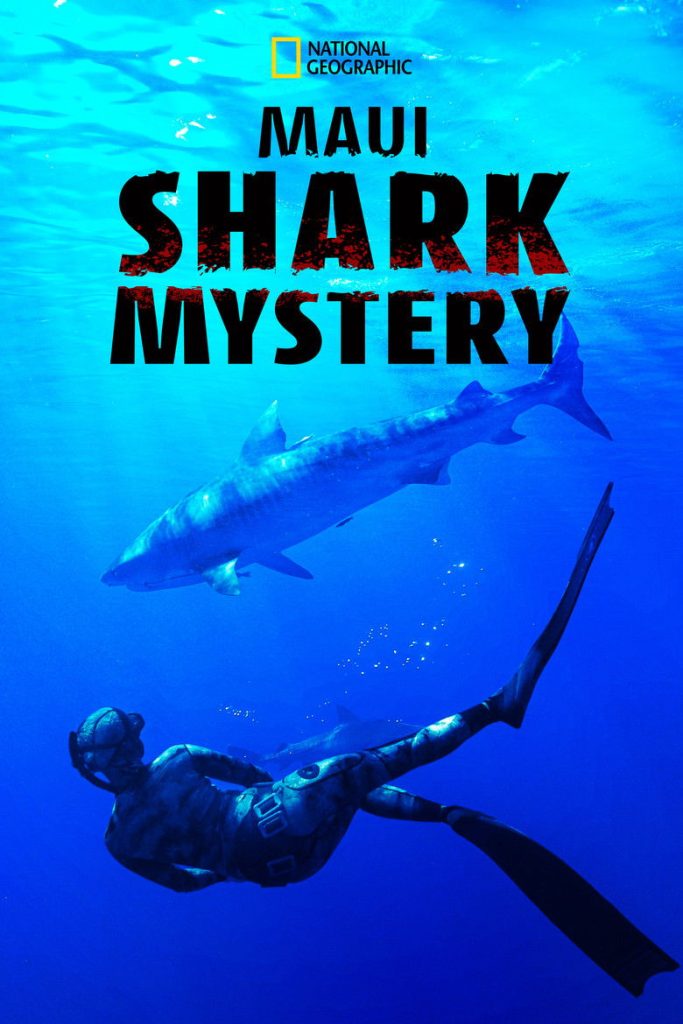
This documentary explores the annual gathering of tiger sharks in Maui, following a team of female shark scientists as they conduct hands-on, unprotected research through free diving to understand this decade-long mystery.
Parent Guide
Educational documentary about shark research with some tense underwater sequences. Suitable for children interested in marine science with parental guidance for younger viewers.
Content breakdown
No violence shown. Some peril as divers swim close to large tiger sharks without protective cages. Sharks are shown swimming near humans but no attacks or aggressive behavior depicted.
Close-up footage of large sharks may be intense for some children. Underwater scenes with sharks swimming near divers create suspense. No graphic or gory content.
No offensive language. Scientific and educational dialogue throughout.
No sexual content or nudity. Divers wear standard wetsuits.
No substance use shown.
Moments of tension during close shark encounters. Overall tone is educational and adventurous rather than frightening.
Parent tips
This documentary showcases real shark research with close-up underwater footage. It emphasizes scientific curiosity and female empowerment in STEM fields, but includes scenes of divers interacting with large predators without cages or protection.
Parent chat guide
Parent follow-up questions
- What do sharks eat?
- Why are the scientists swimming with sharks?
- What color are tiger sharks?
- Why do sharks gather in Maui every year?
- How do scientists stay safe around sharks?
- What tools do they use to study sharks?
- What scientific methods are they using to solve the mystery?
- Why is this shark gathering important to study?
- What risks do the researchers take and why?
- What ecological factors might cause shark aggregations?
- How does this research contribute to marine conservation?
- What ethical considerations exist in this type of hands-on research?
🎭 Story Kernel
At its core, 'Maui Shark Mystery' is less about a monstrous shark and more about the monstrous greed of human developers. The shark's attacks serve as a violent, bloody metaphor for nature's revenge against the environmental destruction caused by a corrupt resort project. The characters are driven not by heroism, but by self-preservation and financial desperation—the local biologist to protect his research, the developer to protect his investment, and the tourists to simply survive the consequences of encroaching on a wild habitat they never understood. The film's real tension comes from watching which human flaw will prove more fatal: arrogance or avarice.
🎬 Visual Aesthetics
The film employs a stark visual dichotomy. The above-water scenes are bathed in the saturated, postcard-perfect blues and greens of a tourism brochure, creating a false sense of paradise. This sharply contrasts with the murky, handheld, and claustrophobic underwater sequences, where the color palette drains to monochrome blues and grays. The shark is often shown through quick, disorienting cuts and POV shots, emphasizing its nature as an unseen, environmental force rather than a character. The most potent visual symbolism is the recurring shot of pristine beachfront violently churned with blood and mud, mirroring the corruption seeping from the development site into the natural world.
🔍 Details & Easter Eggs
💡 Behind the Scenes
The shark effects were a mix of practical animatronics and CGI, with the production famously using a 'guillotine' rig on a real underwater set to create the shocking scene where the shark severs a support pylon. To cut costs, several supporting roles were played by local Hawaiian actors and crew members. The film was shot primarily on location in Hawaii, but the key 'lagoon' set for the third act was actually a large tank constructed in a Los Angeles studio, with the Maui coastline added via compositing in post-production.
Where to watch
Choose region:
- Disney Plus