
Mel Brooks: Live at the Geffen (2015)
Story overview
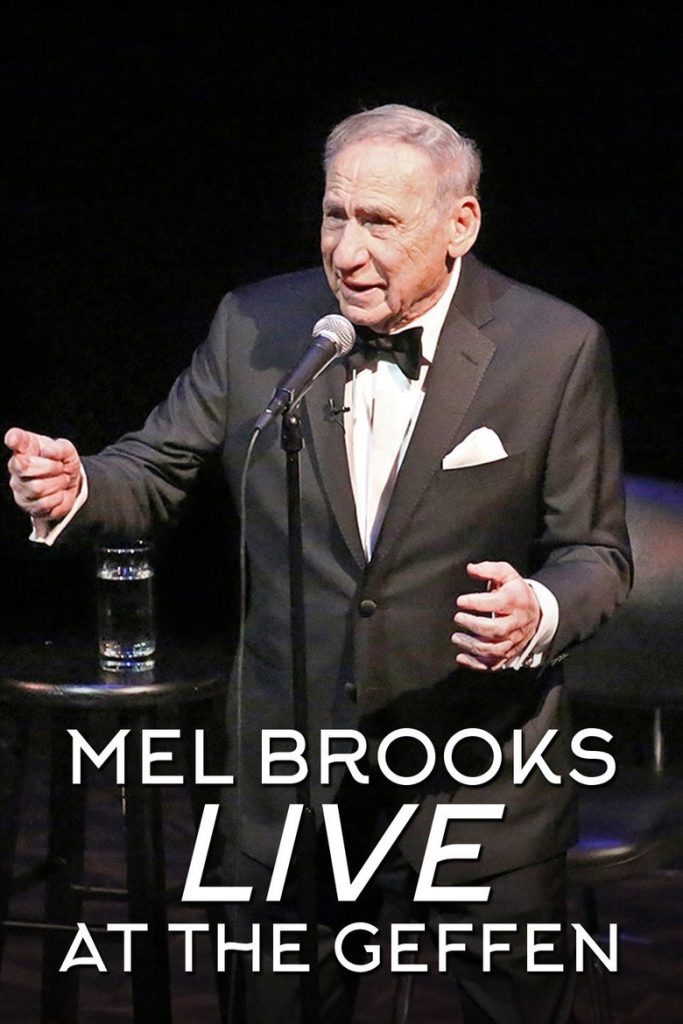
Mel Brooks: Live at the Geffen is a 2015 comedy special featuring legendary comedian Mel Brooks in a one-man show. Brooks performs in a tuxedo on stage, delivering jokes, songs, and humorous anecdotes from his long career. The special showcases his signature wit and comedic style in a clean, theatrical format suitable for family viewing with a TV-PG rating.
Parent Guide
A clean comedy special suitable for family viewing with minimal concerns. The TV-PG rating accurately reflects mild suggestive humor and occasional mature references handled tastefully. Best for children who can understand verbal humor and storytelling.
Content breakdown
No violence, peril, or physical conflict. The entire special consists of Mel Brooks speaking and performing on stage.
Nothing scary or disturbing. The tone is consistently lighthearted and humorous throughout.
Occasional mild language or suggestive phrases typical of TV-PG comedy. No strong profanity. Humor relies more on wordplay and innuendo than explicit language.
Some jokes contain mild sexual references or innuendo, presented in a comedic context. No nudity, sexual situations, or explicit content.
No depiction or reference to substance use. The special focuses entirely on comedy performance.
Low emotional intensity. The special maintains a consistently upbeat, humorous tone without dramatic tension or emotional highs and lows.
Parent tips
This comedy special is appropriate for most families with children ages 8 and up. The humor is verbal and situational rather than visual or physical. Parents should be aware that some jokes may reference adult topics indirectly, but nothing is explicit. The pacing is conversational, making it accessible for older children who can follow storytelling. Consider watching together to explain any historical or cultural references your child might not understand.
Parent chat guide
Parent follow-up questions
—
- What was the funniest part for you?
- Can you remember any of the songs Mel Brooks sang?
- Why do you think Mel Brooks has remained popular for so long?
- What makes his comedy style different from modern comedians?
- How does Mel Brooks use his persona and career history in his comedy?
- What cultural or historical references did you notice, and how do they enhance the humor?
🎭 Story Kernel
The film isn't a traditional narrative but a story about the endurance of genius and the contract of live performance. The driving force is Brooks himself, a man wrestling with his legacy in real time. He's not just delivering jokes; he's testing them, feeling the audience's pulse, and revealing the machinery of his comedy. The real plot is the audience's journey from spectators to co-conspirators, as Brooks breaks the fourth wall with stories of 'Blazing Saddles' and 'Young Frankenstein,' making his cinematic history feel like shared, living memory. The tension comes from whether his vintage material can still detonate in a new century, and his triumphant energy provides the answer.
🎬 Visual Aesthetics
The visual language is deceptively simple, prioritizing intimacy over spectacle. Static, medium shots hold on Brooks, making the stage feel like a confessional. The color palette is warm, dominated by the rich browns of the wood-paneled Geffen and the spotlight's golden hue, which isolates Brooks like a museum exhibit of comedy itself. There's no cutting away; the camera forces you to sit with his pauses and physicality—the shrugs, the eyebrow raises—turning each gesture into punctuation. The only 'action' is the kinetic energy between performer and crowd, captured in cutaway reactions that show jokes landing like physical blows.
🔍 Details & Easter Eggs
💡 Behind the Scenes
Filmed in 2015 at the Geffen Playhouse in Los Angeles, this special was directed by Brooks's longtime collaborator, Alan J. Levi. Notably, the performance was a one-night-only event, capturing a unique, unrepeatable energy. The stage was kept deliberately sparse—just a stool and a microphone—at Brooks's insistence, to focus entirely on the material and the connection with the audience. This was one of his last major extended solo live performances, adding a layer of historical significance as a capstone to a direct link with classic vaudeville and Broadway comedy traditions.
Where to watch
Choose region:
- HBO Max
- HBO Max Amazon Channel
Trailer
Trailer playback is unavailable in your region.