
Memories of Murder (2003)
Story overview
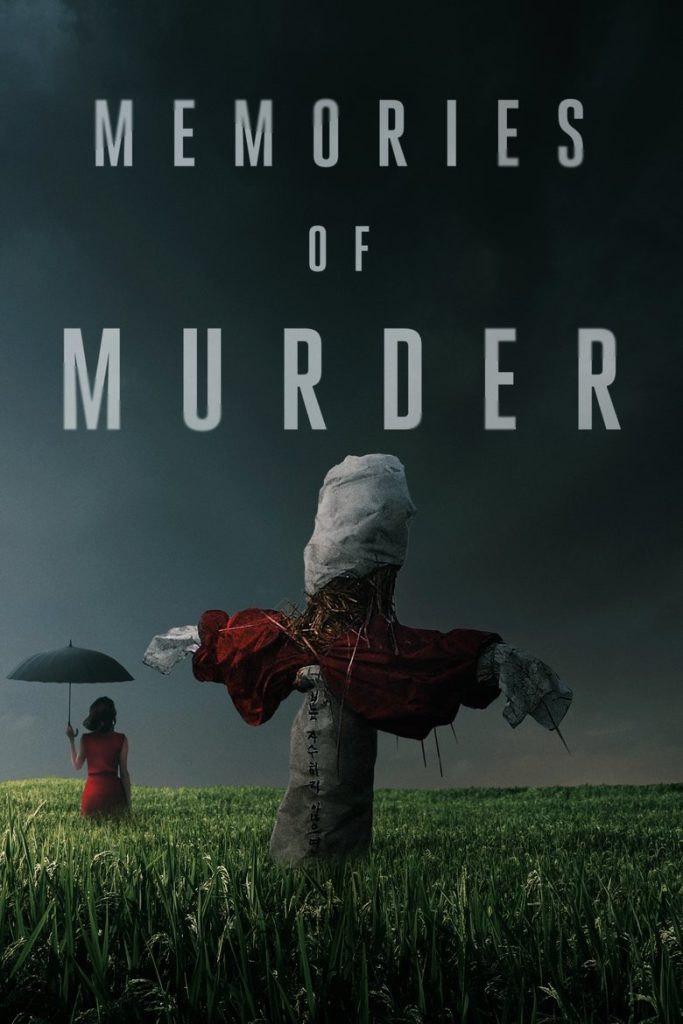
Memories of Murder is a 2003 South Korean crime thriller based on true events. The film follows two detectives in rural South Korea during the late 1980s as they investigate a series of brutal attacks on women. With limited resources and outdated methods, they struggle to catch what becomes the country's first documented serial killer. The tension builds as the detectives piece together clues while the community lives in fear.
Parent Guide
A tense crime thriller based on true events, suitable only for mature teenagers due to serious themes and disturbing content.
Content breakdown
Violence is mostly implied or shown indirectly, with crime scene depictions and tense situations. Some physical confrontations and interrogation scenes.
Themes of serial murder and community fear create sustained tension. Crime scene images and victim discussions may be disturbing.
Some strong language in subtitles, typical of crime drama intensity. No excessive profanity.
References to sexual violence as part of crimes, though not shown explicitly. Some suggestive content related to investigations.
Occasional smoking and drinking by adult characters in social or stressful situations.
High tension throughout with themes of frustration, fear, and the emotional toll of unsolved crimes. Somber atmosphere.
Parent tips
This film contains mature content unsuitable for younger viewers. It deals with serious crime investigation involving violence against women, though not shown in explicit detail. The overall tone is tense and somber, with themes of frustration and systemic failure that may be difficult for children to process.
Parents should be aware that while the most graphic violence occurs off-screen or is implied, there are scenes showing crime scenes, victims, and intense interrogations that could be disturbing. The film's realistic portrayal of police work under pressure creates a consistently dark atmosphere.
Due to the subject matter and emotional intensity, this film is best suited for mature teenagers who can handle complex themes about justice, failure, and societal issues. Younger viewers may find the content too frightening or confusing.
Parent chat guide
During viewing, be available to pause if needed to discuss scenes that might be confusing or upsetting. The film's pacing and cultural context may require some explanation for viewers unfamiliar with Korean history or police procedures.
After watching, talk about how the film portrays the challenges of solving crimes with limited resources. Discuss themes of justice, persistence, and how communities respond to fear. For mature viewers, conversations might extend to how societies handle unsolved cases and the emotional toll on investigators.
Parent follow-up questions
- What do police officers do to help people?
- How do people work together to solve problems?
- What makes you feel safe?
- Who can you talk to if you feel scared?
- What are some ways to be kind to others?
- Why is it important for police to solve crimes?
- How do detectives look for clues?
- What does it mean when people work as a team?
- How can communities help each other during difficult times?
- Why is it important to tell the truth?
- What challenges might detectives face when solving crimes?
- How does the setting (time and place) affect the story?
- What does the film show about how people react to fear?
- Why is persistence important when facing difficult problems?
- How do different characters approach solving the mystery?
- How does the film portray the limitations of investigative methods?
- What themes about justice and failure does the film explore?
- How does the historical context influence the story?
- What does the film suggest about how societies handle unsolved crimes?
- How do the detectives' personal approaches affect the investigation?
🎭 Story Kernel
At its core, 'Memories of Murder' explores institutional failure and the erosion of humanity within systems of power. The film isn't about solving a crime but documenting how desperation transforms decent men into monsters. Detective Park's journey from confident investigator to broken man mirrors South Korea's own transition from military dictatorship to democracy - both processes are messy, violent, and leave permanent scars. The characters aren't driven by justice but by the need to maintain authority in a society where truth is whatever those in power declare it to be. The real mystery isn't who killed the women, but how a society creates conditions where such violence becomes possible and remains unsolved.
🎬 Visual Aesthetics
Bong Joon-ho's visual language creates a world perpetually stuck in transition. The muddy, rain-soaked fields aren't just locations but characters themselves - indifferent landscapes that swallow evidence and witnesses. The camera often observes from a distance, making us complicit spectators rather than engaged detectives. Notice how the color palette shifts from warm yellows in early scenes to cold blues as hope diminishes. The famous tunnel chase scene uses shaky, handheld camerawork not for excitement but to convey disorientation and futility. Most telling are the close-ups on characters' faces during moments of realization - we see not epiphanies but the slow death of certainty.
🔍 Details & Easter Eggs
💡 Behind the Scenes
Song Kang-ho prepared for his role by spending time with actual detectives in a rural police station. The film's rural setting was based on Hwaseong, where the real murders occurred between 1986-1991. Bong Joon-ho insisted on using period-accurate police equipment, even sourcing 1980s handcuffs and notebooks. The American DNA analysis scene was filmed before such technology existed in South Korea, making the detectives' frustration historically accurate. Most hauntingly, the real killer remained unidentified during filming and wasn't caught until 2019, 16 years after the movie's release.
Where to watch
Choose region:
- Amazon Video
- Google Play Movies
- YouTube
- Fandango At Home
- Tubi TV
Trailer
Trailer playback is unavailable in your region.