
Memory Box: Echoes of 9/11 (2021)
Story overview
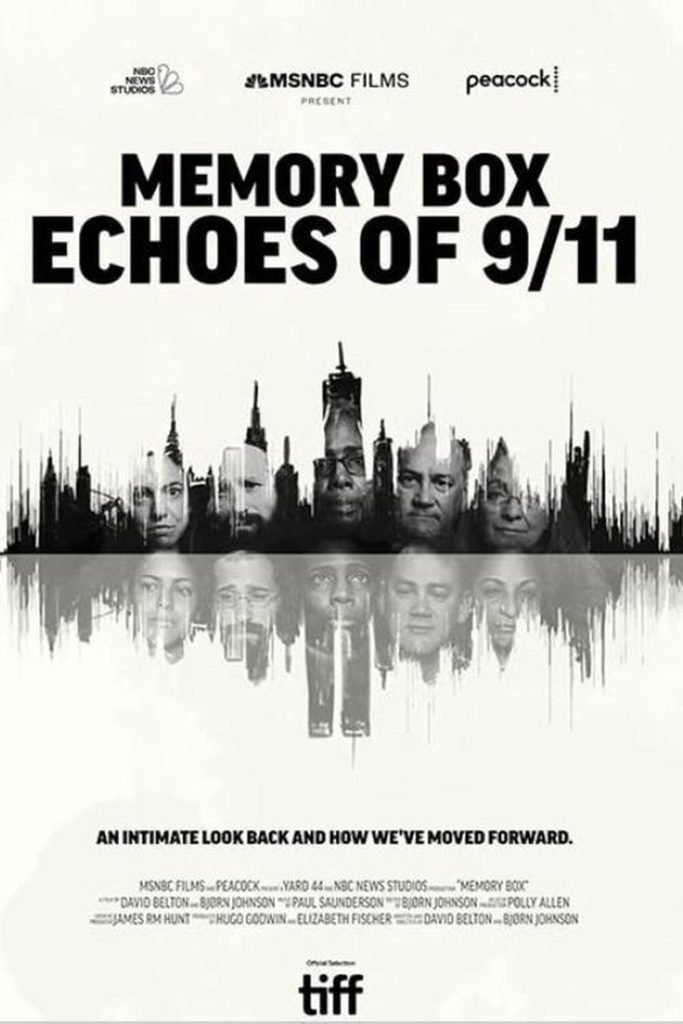
Memory Box: Echoes of 9/11 is a 2021 documentary that presents a unique historical perspective on the September 11, 2001 terrorist attacks. The film combines raw, immediate accounts recorded in the months following the tragedy with present-day reflections from the same eyewitnesses. This dual-timeline approach creates a powerful exploration of memory, trauma, and resilience over two decades. The documentary focuses on personal stories rather than graphic imagery, offering a human-centered examination of how individuals process and remember collective trauma.
Parent Guide
A thoughtful documentary about 9/11 that focuses on personal narratives and memory rather than graphic content. Suitable for mature children with parental discussion.
Content breakdown
No graphic violence shown, but discussions of terrorist attacks, death, and destruction. References to planes hitting buildings and people dying. Emotional descriptions of traumatic experiences.
The subject matter is inherently disturbing as it deals with mass casualty terrorism. Emotional testimonies about fear, loss, and trauma. Discussions of death and destruction. No jump scares or horror elements, but the reality-based content can be emotionally unsettling.
Occasional mild language in emotional testimonies. Possible use of words like 'hell' or 'damn' in context of describing experiences. No strong profanity expected in documentary context.
No sexual content or nudity. This is a documentary focused on historical events and personal testimonies.
No depiction or discussion of substance use. The focus is entirely on the 9/11 events and their aftermath.
High emotional intensity throughout. Features people recounting traumatic experiences, grief, fear, and loss. The dual-timeline approach adds layers of reflection on trauma and memory. May trigger strong emotional responses, especially for those with personal connections to 9/11 or other traumas.
Parent tips
This documentary deals with mature themes of terrorism, trauma, and loss. While it avoids graphic violence, the emotional content is intense. Recommended for ages 10+ with parental guidance. Watch together and be prepared to discuss the historical context and emotional impact. Consider your child's sensitivity to discussions of death and tragedy before viewing. The film may trigger anxiety in children who have experienced trauma or loss.
Parent chat guide
Parent follow-up questions
—
- What do you think it means to be brave?
- How do people help each other when something scary happens?
- What makes you feel safe when you're worried?
- Why do you think people remember the same event differently over time?
- How do you think sharing stories helps people heal?
- What can we learn from how communities responded to this tragedy?
- How does this documentary change your understanding of historical memory?
- What role does media play in shaping collective memory of traumatic events?
- How do personal narratives complement or challenge official historical accounts?
🎭 Story Kernel
The film is less about the event of 9/11 itself and more about the fragmented, non-linear way trauma is processed and inherited. It explores how memory functions not as a coherent narrative but as a sensory archive—a box of echoes. The characters are driven by a desperate need to assemble meaning from the shards of a day that shattered linear time, seeking connection not through a shared, singular truth, but through the shared act of remembering disparate, visceral fragments. The core tension lies in the conflict between the official, monolithic history of the day and the deeply personal, often contradictory, memories that survivors and descendants carry.
🎬 Visual Aesthetics
The visual language is one of deliberate fragmentation and sensory immersion. The camera often adopts a shaky, intimate, almost first-person perspective during memory sequences, contrasting with sterile, static shots of present-day interviews. A desaturated, grayish-blue palette dominates the 'present,' while flashes of memory are rendered in warmer, yet jarringly vivid tones—the blinding orange of flame, the choking beige of dust. Symbolism is grounded in realism: recurring motifs of falling papers, interrupted television broadcasts, and the physical 'memory boxes' themselves serve as tangible anchors for intangible loss, avoiding heavy-handed metaphor for authentic, artifact-based storytelling.
🔍 Details & Easter Eggs
💡 Behind the Scenes
The film's 'memory boxes' are composed of actual, unarchived artifacts donated by 9/11 families and first responders, curated by the directors. Key interview segments were filmed in the homes of participants, often at the exact location where they experienced the events of that day, to evoke authentic emotional recall. The directors, known for documentary work, employed a hybrid crew of cinematographers who had filmed in conflict zones to capture the visceral, chaotic quality of the memory sequences without sensationalism.
Where to watch
Choose region:
- Peacock Premium
- Peacock Premium Plus
Trailer
Trailer playback is unavailable in your region.