
Metropolis (1927)
Story overview
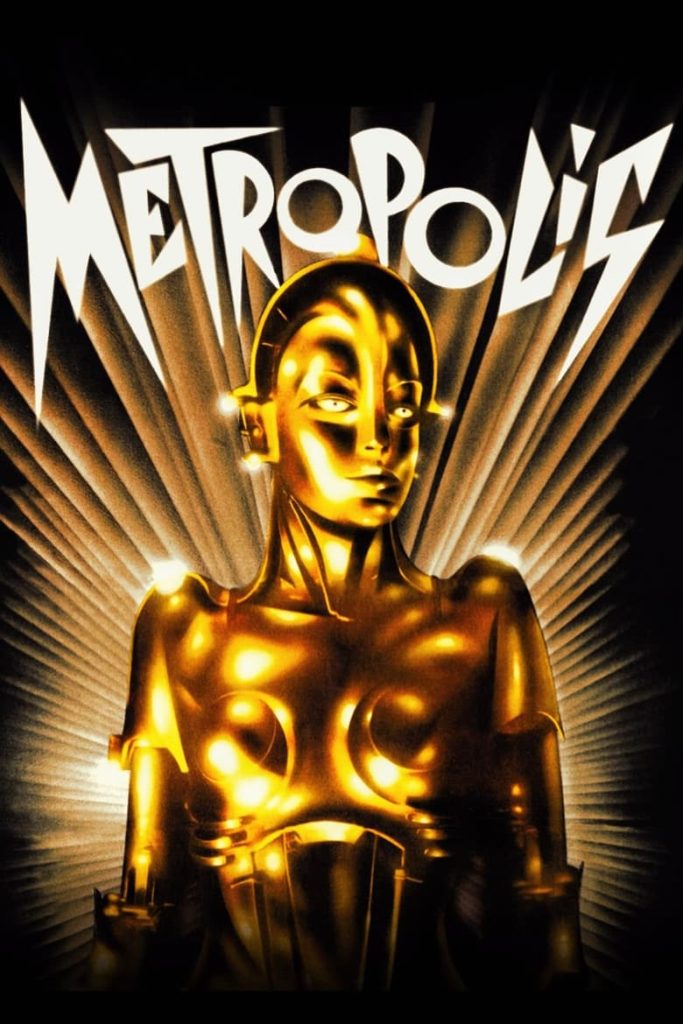
Metropolis is a silent science fiction film set in a futuristic city with a stark division between wealthy elites and oppressed workers. The story follows the privileged son of the city's ruler as he discovers the harsh realities of the working class and encounters a prophetic figure. This classic explores themes of social inequality, technology, and the search for harmony between different societal groups.
Parent Guide
A classic silent sci-fi film with intense visual sequences and mature themes about social inequality.
Content breakdown
Scenes of large-scale destruction, workers in dangerous conditions, and mechanical threats. No graphic violence but peril is visually intense.
Imagery of mechanical monsters, catastrophic flooding, and oppressive industrial settings. The silent film style may heighten unease for some viewers.
This is a silent film with no spoken dialogue, only title cards and musical score.
No sexual content or nudity present in the film.
No depiction of substance use.
Strong emotional tension around themes of oppression, class conflict, and technological control. The visual storytelling creates atmospheric intensity.
Parent tips
Metropolis is a groundbreaking silent film from 1927 with significant historical importance in cinema. The film contains intense imagery including large-scale destruction, mechanical monsters, and scenes of workers in perilous conditions that might be frightening for younger viewers. While there's no spoken dialogue, the visual storytelling and musical score create strong emotional tension around themes of class conflict and technological control.
Parent chat guide
Parent follow-up questions
- What was your favorite part of the movie?
- How did the music make you feel during different scenes?
- What colors did you notice most in the movie?
- Did any parts seem scary to you?
- What do you think the city looked like?
- What did you notice about how the rich people and workers lived differently?
- How did the movie show feelings without people talking?
- What made some parts of the movie feel exciting or scary?
- What do you think the message of the story might be?
- How is this movie different from movies made today?
- What social problems does the movie show between different groups of people?
- How does the film use visual symbols to represent ideas about technology and society?
- What emotions did the music and images create during tense scenes?
- Why do you think this movie from 1927 is still important today?
- How does the film explore the relationship between humans and machines?
- How does Metropolis comment on class divisions and social justice issues?
- What visual techniques did the filmmakers use to create tension and emotion without dialogue?
- How does the film's portrayal of technology reflect concerns of its time period?
- What connections can you make between the film's themes and contemporary social issues?
- How does the film use architecture and city design to represent social structures?
🎭 Story Kernel
Fritz Lang's 'Metropolis' is less about class warfare than about the dehumanizing cost of progress and the dangerous allure of false messiahs. The real conflict isn't between workers and elites, but between authentic human connection and the cold logic of systems that treat people as interchangeable parts. Freder's journey from privileged observer to empathetic bridge exposes how both the ruling class and the oppressed are trapped by their roles. The film's famous conclusion—'The mediator between head and hands must be the heart'—isn't a call for harmony but a warning: without genuine empathy, any social structure becomes a soul-crushing machine.
🎬 Visual Aesthetics
Lang creates a vertical hell where camera angles enforce hierarchy—low angles for the ruling class in their skyscrapers, oppressive high angles crushing the workers below. The city's Art Deco splendor isn't just set dressing; its geometric precision mirrors the rigid social order. Watch how the machine Moloch sequence uses expressionist distortion—workers aren't just entering a factory but being consumed by industrial appetite. The most chilling visual isn't the robot Maria's transformation, but how identical the real Maria and her mechanical double appear during the riot scenes, suggesting how easily authentic movements can be hijacked by manufactured rage.
🔍 Details & Easter Eggs
💡 Behind the Scenes
The film's staggering scale nearly bankrupted UFA studio—the massive set required 37,000 extras, including 750 child actors for the flood scene. Brigitte Helm performed both Maria roles but required completely different acting approaches: as the robot, she studied mechanical dolls at Berlin's toy museums. Lang's wife and co-writer Thea von Harbou based the worker's city on her visits to New York's Lower East Side tenements. The original 153-minute cut was butchered by distributors worldwide; the nearly complete version we know today was reconstructed in 2001 using fragments found in Argentina and New Zealand archives.
Where to watch
Choose region:
- fuboTV
- FlixFling
- TCM
- Eternal Family
- Kino Film Collection
- Amazon Video
- Apple TV
- Google Play Movies
- YouTube
- Fandango At Home
- The Roku Channel
- Pluto TV
- Mometu
- Tubi TV
- Kanopy
- JustWatchTV
- Plex
- Plex Channel
- Darkroom
- Fawesome
- Artflix
Trailer
Trailer playback is unavailable in your region.