
Mickey’s Trailer (1938)
Story overview
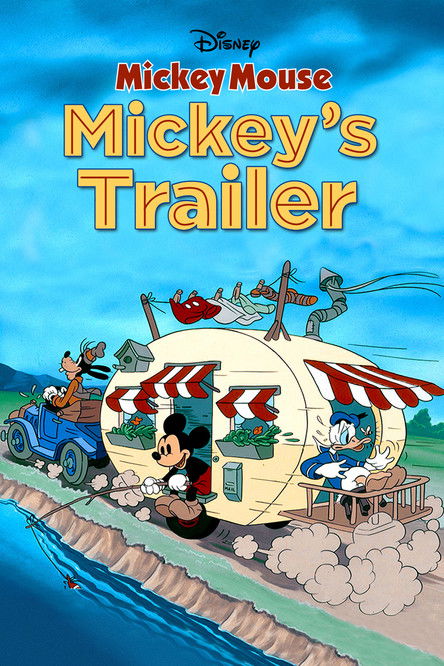
This classic 1938 animated short features Mickey Mouse, Donald Duck, and Goofy in a high-tech house trailer adventure. Goofy's careless driving and autopilot mistake lead the trailer onto a dangerous mountain road, creating a series of perilous situations. The characters narrowly avoid disaster multiple times through comedic mishaps and close calls. The film combines classic Disney animation with slapstick humor in a fast-paced seven-minute adventure.
Parent Guide
A classic Disney animated short with mild peril and slapstick humor suitable for most children.
Content breakdown
Perilous situations involving a trailer on dangerous mountain roads with close calls, but no actual violence or harm to characters.
Momentary suspense during dangerous situations, but resolved comically with no lasting scary elements.
No inappropriate language present in this classic animated short.
No sexual content or nudity present.
No substance use depicted.
Brief moments of excitement and suspense during perilous scenes, balanced with consistent comedic tone.
Parent tips
This short film contains mild peril and slapstick comedy that may be exciting for young viewers. The trailer's dangerous mountain journey and near-disasters create suspenseful moments, though everything resolves safely with no actual harm to characters. The humor comes from exaggerated situations and character mistakes rather than mean-spirited behavior.
Parents should note the 1938 animation style differs from modern cartoons, which could be either charming or dated for today's children. The fast-paced action and comedic timing make it engaging, but sensitive younger viewers might find the perilous situations momentarily concerning. The film's brevity makes it easy to watch and discuss in one sitting.
Parent chat guide
After watching, discuss how the characters' carelessness created problems but also led to teamwork solutions. You could talk about real-life safety lessons regarding vehicles and paying attention. For older children, you might discuss how animation techniques have evolved since 1938 while the core humor remains timeless.
Parent follow-up questions
- What was your favorite part of the trailer adventure?
- How did Mickey and Donald feel when their trailer was unhooked?
- What could Goofy have done differently to be safer?
- Which character made you laugh the most?
- Have you ever been on a fun car trip like this?
- Why do you think Goofy made so many mistakes with the trailer?
- How did the characters work together when they were in danger?
- What safety lessons could we learn from this cartoon?
- How is this animation different from cartoons you watch today?
- What would you have done if you were in that runaway trailer?
- How does the film use exaggeration for comedic effect?
- What does this cartoon show about friendship during challenging situations?
- How might this story be different if made with modern animation technology?
- What real-world consequences might result from similar careless actions?
- How do the character personalities contribute to the story's humor?
- How does this 1938 short reflect the animation styles and humor of its era?
- What themes about technology and human error does this story explore?
- How might this cartoon's pacing and structure influence modern animated shorts?
- In what ways does the peril serve the comedic narrative rather than create genuine tension?
- How do the character dynamics compare to contemporary animated team adventures?
🎭 Story Kernel
At its core, 'Mickey's Trailer' is a masterclass in situational comedy and the illusion of control. Mickey Mouse, playing the role of a modern pioneer with his compact, gadget-filled trailer, represents the human desire to master one's environment through technology and order. The driving force isn't a traditional plot, but the relentless, anarchic energy of Donald Duck and the physical world itself, which conspire to dismantle Mickey's carefully constructed domesticity. The film expresses the futility of imposing rigid order on a fundamentally chaotic universe, celebrating instead the humor found in surrender and adaptation. Mickey's calm determination versus Donald's explosive frustration becomes a timeless dance of opposing personalities trapped in shared misfortune.
🎬 Visual Aesthetics
The animation employs a stark, functional visual style that mirrors the trailer's supposed efficiency. The camera work is largely static, framing the trailer as a self-contained stage, which makes the sudden, violent movements—like the trailer hurtling down a mountain—all the more impactful. The color palette is utilitarian: muted greens and browns of the outdoors contrast with the clean, almost clinical whites and metals of the trailer's interior, highlighting the clash between nature and technology. The action style is pure, exaggerated rubber-hose physics, where objects and characters stretch, compress, and rebound with a chaotic, energetic logic that prioritizes comedic impact over realism, turning every disaster into a visual gag.
🔍 Details & Easter Eggs
💡 Behind the Scenes
'Mickey's Trailer' was directed by Ben Sharpsteen and released in 1938, part of a prolific period for Disney shorts. It features one of the earliest uses of the now-iconic, gadget-laden 'modern' trailer in animation, reflecting contemporary fascination with streamlined technology and mobile living. The short is celebrated for its intricate, cause-and-effect chain reaction gags, a comedic structure that would influence physical comedy for decades. Voice work by Walt Disney (Mickey) and Clarence Nash (Donald) captures their character dynamics at a peak, with Nash's improvisational squawks reportedly causing laughter breaks among the animation staff during recording.
Where to watch
Choose region:
- Disney Plus