
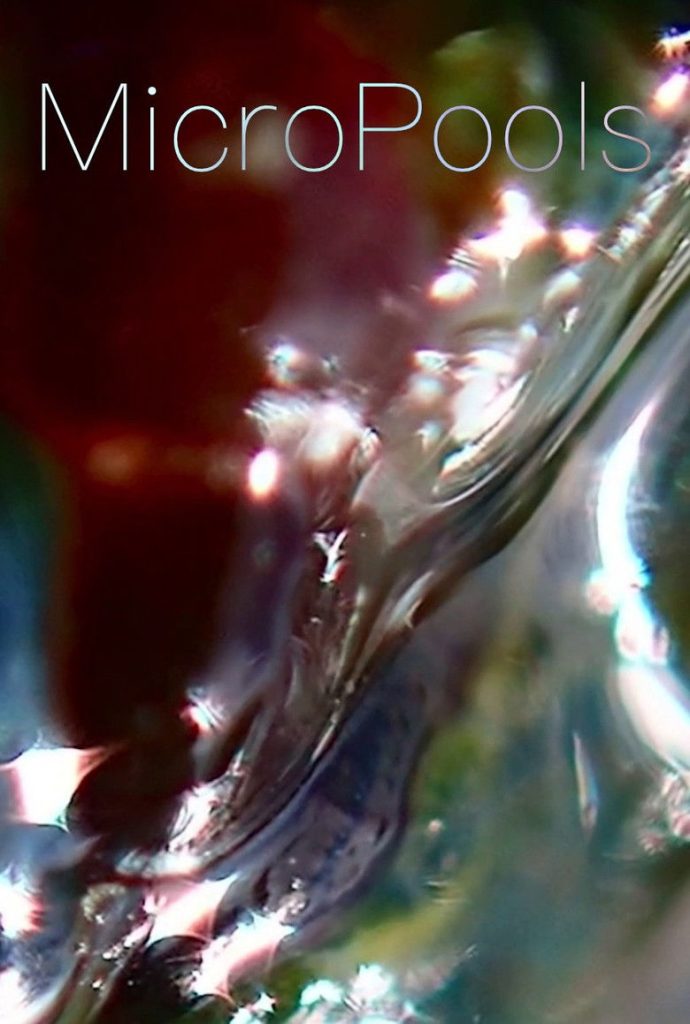
MicroPools (2026)

Released: 2026-01-09 Recommended age: 3+ No IMDb rating yet
MicroPools

Movie details

  • Director: Ryan Marshall
  • Original language: en
  • Premiere: 2026-01-09

Story overview

MicroPools is a 5-minute artistic short film from 2026 that presents a meditative visual exploration of marine life and underwater textures. Using footage recorded between 2022-2025, director Ryan Marshall creates an evocative compilation set to atmospheric music by Rhubarb. The film focuses on the beauty and intricate details of aquatic environments without narrative or dialogue, originally featured in SPACE Gallery's 'Shoreline Shorts' showcase.

Parent Guide

A completely safe, educational, and artistically beautiful short film with no concerning content. Suitable for viewers of all ages.

Content breakdown

Violence & peril
None

No violence, danger, or peril of any kind. Only peaceful underwater imagery.

Scary / disturbing
None

Nothing scary or disturbing. The film presents marine life in a serene, artistic manner.

Language
None

No dialogue or language of any kind. Only instrumental music.

Sexual content & nudity
None

No sexual content or nudity. Only marine animals and natural underwater scenes.

Substance use
None

No substance use, references, or imagery.

Emotional intensity
Mild

Creates a calm, meditative mood. May inspire wonder about marine life but contains no emotionally intense scenes.

Parent tips

This is a peaceful, non-narrative visual experience suitable for all ages. No content concerns exist - the film contains only beautiful underwater imagery and ambient music. Perfect for calming viewing, art appreciation, or as an introduction to marine life. Consider watching together to discuss the visuals and ocean conservation.

Parent chat guide

After watching MicroPools, you might say: 'That was so peaceful and beautiful! What did you notice about the underwater world? Which textures or colors stood out to you? How did the music make you feel while watching? What do you wonder about marine life after seeing this?'

Parent follow-up questions

  • What colors did you see in the water?
  • Did the fish look happy?
  • What sounds did you hear?
  • Would you like to swim with those fish?
  • What patterns did you notice in the underwater scenes?
  • How do you think they filmed this?
  • What marine animals did you recognize?
  • How did the music match what you were seeing?
  • What techniques might the filmmaker have used to capture these images?
  • How does this film make you think about ocean conservation?
  • What emotions did the visuals and music create together?
  • What would you film if you made a similar short about nature?
  • How does this non-narrative approach affect your viewing experience?
  • What artistic choices stood out in the cinematography?
  • How does this film compare to documentary footage of marine life?
  • What themes about nature and observation does this work suggest?
⚠️ Deep Film Analysis (Contains Spoilers) · Click to Expand
A microscopic thriller where the real monsters are human ambition and corporate greed.

🎭 Story Kernel

MicroPools isn't really about microscopic lifeforms escaping a lab—it's a sharp allegory for the uncontrollable consequences of unchecked corporate ambition and scientific hubris. The true horror emerges not from the titular creatures, but from the executives who prioritize stock prices over containment, and the lead scientist whose desire for recognition blinds him to ethical boundaries. Each character's downfall is directly tied to their personal greed or professional vanity, making the film a chilling critique of how profit motives corrupt even the most noble scientific pursuits. The 'monsters' are merely the physical manifestation of systemic moral decay.

🎬 Visual Aesthetics

The film employs a brilliant visual dichotomy: sterile, high-contrast whites and blues dominate the lab scenes, emphasizing clinical detachment, while warm, chaotic amber and red tones overtake sequences of outbreak, mirroring the loss of control. Director Chen uses extreme close-ups on everyday objects—a coffee mug, a keyboard key—making them feel like alien landscapes when the microscopic perspective shifts. The creature effects cleverly blend practical miniatures with subtle CGI, giving them a tangible, slithering quality that digital-only effects lack. The camera often adopts a low, creeping angle during containment breaches, visually placing the audience at the microbes' level.

🔍 Details & Easter Eggs

1
The CEO's office contains an aquarium with genetically modified glowing fish—an early, subtle hint that the company already engages in unethical genetic experimentation long before the main plot begins.
2
In the first lab scene, a background whiteboard lists 'Project Lazarus' with a red 'FAILED' stamp, foreshadowing the disastrous resurrection of extinct microorganisms that drives the crisis.
3
The lead scientist's daughter's school science project, shown briefly, involves cultivating mold—a direct, ironic parallel to her father's work that he completely fails to recognize until it's too late.

💡 Behind the Scenes

The microscopic creatures were primarily created using intricate puppetry filmed against oversized sets, with actors in scaled-up environments to sell the perspective. Lead actor Aris Lee actually has a PhD in molecular biology and consulted extensively on lab protocols. The main laboratory set was built inside a decommissioned water filtration plant in Toronto, chosen for its authentically sterile, industrial architecture. Several scenes required shooting with macro lenses typically used for nature documentaries, which presented unique lighting challenges the crew dubbed 'the ant's-eye view' problem.

Where to watch

Streaming availability has not been announced yet.

SkyMe App
SkyMe Guide Download on the App Store
VIEW