
Mind Game (2004)
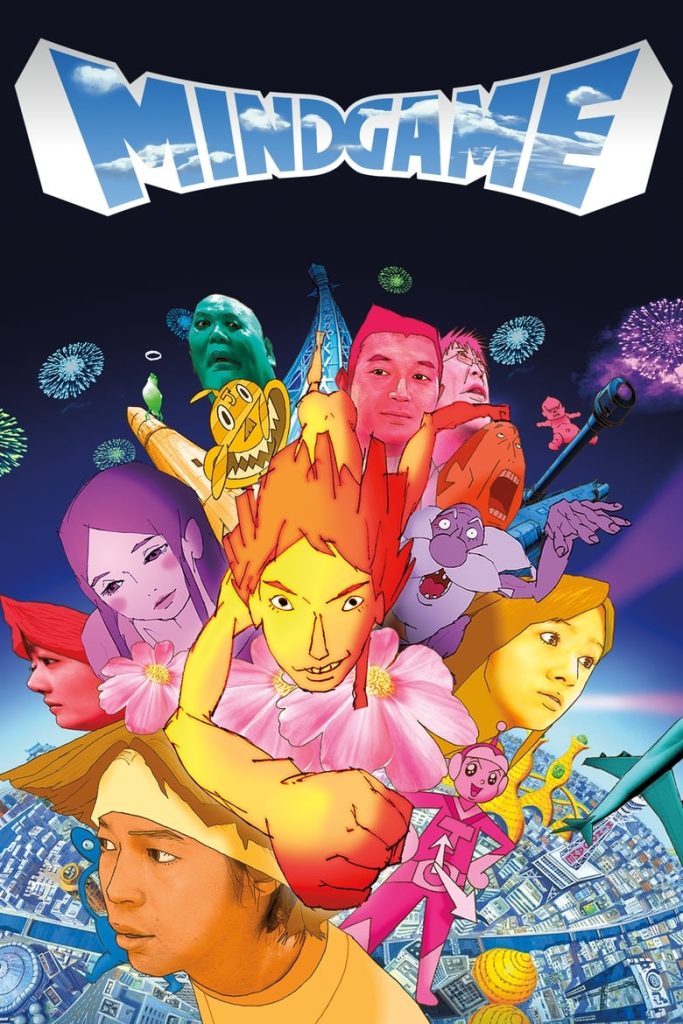
Story overview
Mind Game is an animated film about a young man named Nishi who feels stuck in his life. After a dangerous encounter, he experiences an extraordinary journey that takes him to unexpected places. The story explores themes of self-discovery, courage, and the meaning of life through surreal and imaginative sequences.
Parent Guide
An imaginative animated film with surreal sequences and mature themes about life choices, best suited for teens.
Content breakdown
Contains scenes of peril including encounters with threatening characters and dangerous situations, though not graphically violent.
Includes surreal and intense sequences that may be confusing or unsettling, with abstract visuals and dream-like scenarios.
May contain some mild language or expressions typical of adult conversations.
Contains romantic themes and some suggestive content, but no explicit nudity or sexual situations.
May include brief scenes with social drinking or smoking in background contexts.
Explores themes of life choices, regret, and personal growth that may provoke thoughtful discussion.
Parent tips
This Japanese animated film contains surreal and sometimes intense sequences that may be confusing or overwhelming for younger viewers. The animation style is unconventional and includes abstract visuals, rapid scene changes, and dream-like sequences. While not explicitly graphic, some scenes involve peril and mature themes about life choices and personal growth that are better suited for older children and teens.
Parent chat guide
Parent follow-up questions
- What colors did you see in the movie?
- Did you see any funny characters?
- Was there any music you liked?
- What was your favorite part?
- Did any parts make you feel happy?
- What was the main character trying to do?
- How did the animation look different from other cartoons?
- What did you think about the journey in the story?
- Were there any confusing parts?
- What lesson might the character have learned?
- What do you think the title 'Mind Game' means?
- How did the animation style affect the storytelling?
- What themes about life did you notice?
- How did the character change during his journey?
- What made this movie different from typical animated films?
- How does the film explore themes of self-discovery?
- What commentary does the film make about taking risks in life?
- How does the unconventional animation serve the story's themes?
- What did you think about the surreal elements?
- How does the film balance comedy with deeper philosophical ideas?
🎭 Story Kernel
At its core, 'Mind Game' is a radical celebration of life's infinite possibilities, rejecting nihilism and predetermined fate. The film argues that existence is not a linear path but a chaotic playground of choices, where even death can be a temporary setback. Nishi's journey from cowardice to god-like creation embodies this philosophy—his resurrection isn't about escaping mortality but embracing the absurd freedom that comes from having 'nothing left to lose.' The characters are driven by primal desires (love, survival, artistic expression) that become magnified in their confined whale stomach, transforming trauma into creative rebirth. The movie suggests that true living requires rejecting societal scripts and inventing your own reality, no matter how bizarre.
🎬 Visual Aesthetics
The visual language is a frenetic collage that mirrors the film's thematic chaos. Director Masaaki Yuasa employs wildly shifting animation styles—from rough pencil sketches to hyper-detailed realism, psychedelic watercolors to crude CGI—to represent characters' fluctuating mental states. The color palette violently shifts from muted browns during Nishi's initial timidity to explosive neon during moments of epiphany. Camera perspectives become subjective and distorted; the infamous 'bullet-time' sequence where Nishi's brain processes his shooting uses a 360-degree spiral to visualize consciousness stretching. Action scenes abandon physics for emotional logic, with bodies stretching, melting, and transforming to express liberation from physical and psychological constraints.
🔍 Details & Easter Eggs
💡 Behind the Scenes
Director Masaaki Yuasa storyboarded the entire film himself in just two weeks, drawing directly over live-action reference footage. The famous 'running through the whale's bloodstream' sequence required custom animation software to create the flowing liquid effects. Voice actor Kōji Imada (Nishi) recorded many lines while physically running to capture authentic breathlessness. The film's production was notoriously chaotic, with animators encouraged to draw in their personal styles—resulting in over 20 distinct visual approaches. It was initially a commercial failure in Japan but gained cult status through international festival screenings.
Where to watch
Choose region:
- HBO Max
- HBO Max Amazon Channel
- Amazon Video
- Apple TV
- Google Play Movies
- YouTube
- Fandango At Home
- Hoopla
Trailer
Trailer playback is unavailable in your region.