
Mine (2016)
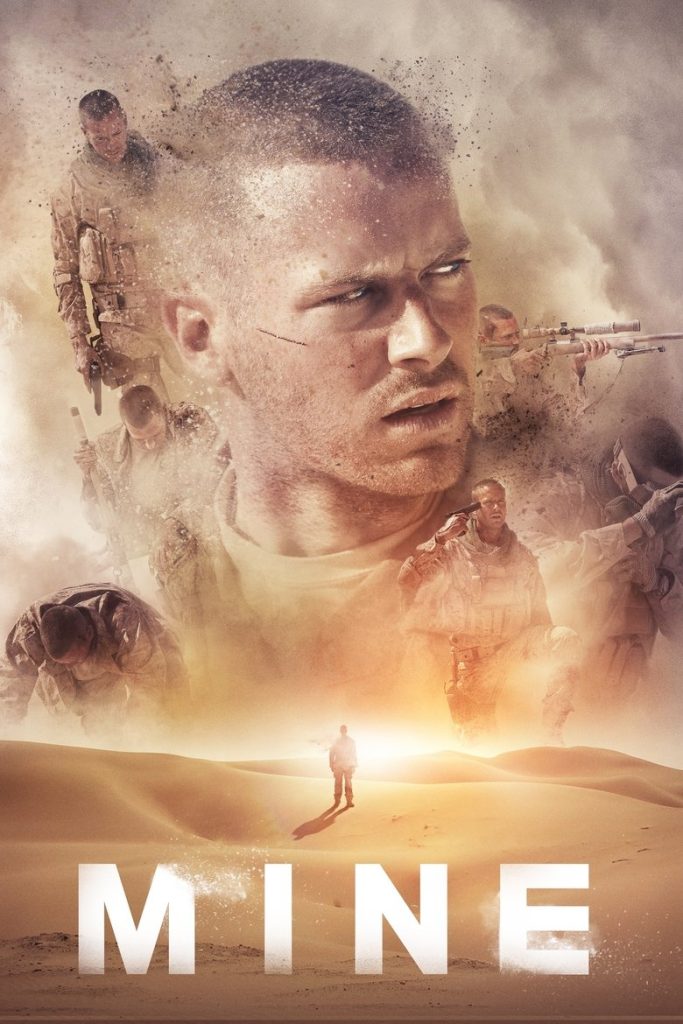
Story overview
A soldier survives a failed assassination attempt but becomes stranded alone in a vast desert. He must endure extreme heat, dehydration, and isolation while confronting psychological distress and physical dangers to stay alive.
Parent Guide
Intense survival thriller with war elements featuring psychological distress, violence, and peril in desert conditions. Not suitable for young children.
Content breakdown
War violence including assassination attempt, gunfire, explosions. Survival peril with landmines, dehydration, extreme environmental dangers. Some blood and injury shown.
Psychological distress, hallucinations, isolation themes. Tense survival situations with life-threatening danger. Some disturbing imagery related to war and injury.
Occasional mild profanity. No strong or frequent offensive language.
No sexual content or nudity.
No substance use depicted.
High emotional intensity from survival struggle, isolation, psychological distress, and life-threatening situations. Themes of desperation and resilience.
Parent tips
This war thriller focuses on survival in harsh desert conditions with intense psychological elements. Contains scenes of peril, violence, and emotional distress. Best for mature teens who can handle tense situations and themes of isolation.
Parent chat guide
Parent follow-up questions
—
—
- How would you try to survive in the desert?
- What do you think was hardest for the soldier?
- Why is it important to stay calm in scary situations?
- How does isolation affect people's mental state?
- What survival techniques were most effective?
- How does this film portray the psychological effects of war?
- What would you do differently in that situation?
🎭 Story Kernel
At its core, 'Mine' explores the psychological disintegration of a soldier trapped by his own choices. The landmine becomes a physical manifestation of guilt—Mike's inability to move forward after his fatal error in Afghanistan. His hallucinations of his dead comrade Tommy represent survivor's guilt made tangible. The film suggests that sometimes the most dangerous prisons are the ones we construct in our own minds, where past mistakes become inescapable traps. The desert setting serves as both literal and metaphorical purgatory, forcing Mike to confront what he's been running from since that fateful mission.
🎬 Visual Aesthetics
The film's visual language masterfully mirrors Mike's psychological state through oppressive wide shots that emphasize his isolation in the vast desert. The color palette shifts from harsh, bleached daytime scenes to cooler, more intimate tones during hallucinations, visually distinguishing reality from mental breakdown. The camera frequently adopts Mike's ground-level perspective, making viewers feel the claustrophobia of his immobilized position. Clever use of shallow focus blurs the horizon, keeping us trapped in Mike's immediate, desperate reality. The single, unblinking shot of the landmine becomes a recurring visual anchor—a constant reminder of the invisible threat.
🔍 Details & Easter Eggs
💡 Behind the Scenes
Armie Hammer performed most scenes lying completely still for hours, with the production using a specialized rig to rotate the camera around him rather than moving the actor. The Moroccan desert location reached 120°F during shooting, with the crew building temporary shade structures between takes. Director Fabio Guaglione insisted on practical effects for the landmine, using a mechanical prop that could actually depress slightly when stepped on. Hammer studied accounts of soldiers with PTSD to authentically portray Mike's deteriorating mental state.
Where to watch
Choose region:
- fuboTV
- Peacock Premium
- Peacock Premium Plus
- The Roku Channel
- Fandango at Home Free
- Tubi TV
- Amazon Video
- Apple TV Store
- Google Play Movies
- YouTube
- Fandango At Home
Trailer
Trailer playback is unavailable in your region.