
Miracle in Cell No. 7 (2019)
Story overview
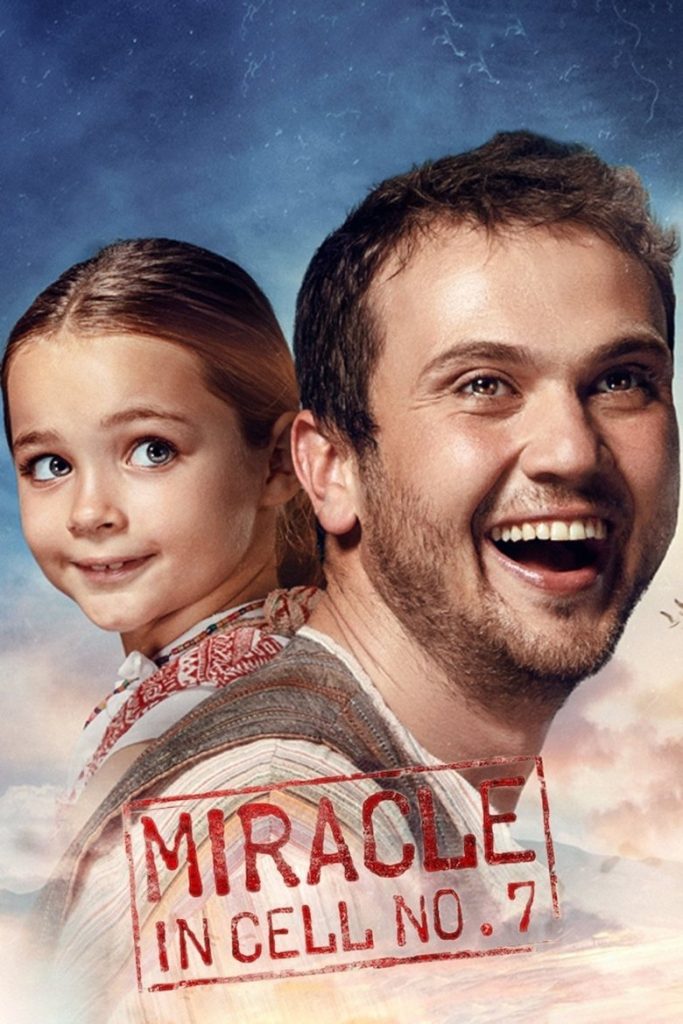
Miracle in Cell No. 7 is a 2019 drama about a mentally challenged man who is wrongfully imprisoned for a crime he didn't commit. While in prison, he forms an unlikely bond with his hardened cellmates, who help him reconnect with his young daughter. The film explores themes of injustice, friendship, and the power of love in difficult circumstances. It's an emotional story that balances heartwarming moments with serious dramatic elements.
Parent Guide
A serious drama about wrongful imprisonment and friendship with emotional intensity and mature themes. Best for mature middle schoolers and up with parental guidance.
Content breakdown
Some tense situations and institutional settings, but no graphic violence shown.
Prison setting, emotional distress scenes, and themes of injustice may be unsettling for sensitive viewers.
Occasional mild language consistent with dramatic prison settings.
No sexual content or nudity present.
No substance use depicted.
High emotional content including separation, injustice, and dramatic relationships.
Parent tips
This film deals with mature themes including wrongful imprisonment, injustice in the legal system, and the challenges faced by a mentally challenged protagonist. While there are heartwarming moments of friendship and family bonds, the overall tone is serious and emotionally intense. The TV-14 rating suggests content may be inappropriate for children under 14, though some mature 12-13 year olds might handle it with guidance.
Parents should be prepared to discuss the legal system, disability representation, and emotional resilience with their children. The film contains scenes of emotional distress and institutional settings that might be unsettling for younger viewers. Consider watching it together with middle school and high school aged children to provide context and support during emotional moments.
Parent chat guide
During viewing, pause if needed to check in: 'How are you feeling about what's happening?' or 'What do you think about how the characters are treating each other?' The prison setting and emotional scenes might need processing.
After watching, discuss: 'What did you think about the friendships in the movie?' and 'How did the movie make you feel about fairness and justice?' These questions can help children process the emotional content and thematic elements.
Parent follow-up questions
- What did you like about the little girl in the movie?
- How did the friends help each other?
- What made you feel happy in the movie?
- What was your favorite part?
- How do you help your friends when they're sad?
- Why do you think the friends decided to help the main character?
- How did the characters show they cared about each other?
- What was fair or unfair in the story?
- How did the little girl feel when she couldn't see her dad?
- What would you do if you saw someone being treated unfairly?
- What does the movie show about how people with disabilities are sometimes treated?
- How did the prison setting affect the characters' relationships?
- What do you think about the legal system in the story?
- How did the characters show resilience in difficult situations?
- What themes about family and friendship stood out to you?
- How does the film comment on social justice and institutional systems?
- What did you think about the portrayal of mental disability in the film?
- How did the film balance emotional moments with serious themes?
- What did the relationships in prison reveal about human connection?
- How did the ending make you think about justice and redemption?
🎭 Story Kernel
At its core, 'Miracle in Cell No. 7' explores how unconditional love can create pockets of humanity within dehumanizing systems. While framed as a wrongful conviction drama, the film's true engine is the father-daughter relationship between Lee Yong-gu and Ye-sung. Their bond—built on simple games, shared songs, and pure devotion—becomes the moral compass that transforms hardened criminals into protectors. The prison cell becomes a sanctuary where paternal love rewrites social hierarchies, proving that emotional truth can override legal truth. The film's tragedy isn't just the flawed justice system, but society's failure to recognize cognitive differences as anything but threats.
🎬 Visual Aesthetics
The film employs a deliberate visual dichotomy: the prison's cold, blue-grey concrete world contrasts sharply with Ye-sung's warm, sun-drenched memories. Director Lee Hwan-kyung uses tight close-ups during emotional prison scenes, creating intimacy within confinement. The recurring visual motif of the kite—first as a drawing, later as an actual object—serves as Ye-sung's symbolic connection to her father. Flashbacks feature saturated colors and soft lighting, while present-day prison scenes use harsh fluorescent tones. The courtroom sequences are shot with wide angles emphasizing institutional power dwarfing individual humanity.
🔍 Details & Easter Eggs
💡 Behind the Scenes
The film is a remake of the 2013 Turkish drama '7. Koğuştaki Mucize,' adapted for Korean audiences while maintaining the core father-daughter dynamic. Actor Ryu Seung-ryong studied individuals with developmental disabilities for months to portray Lee Yong-gu authentically. The prison set was constructed specifically for the film and designed to feel both claustrophobic yet capable of transformation through the inmates' actions. Child actress Kal So-won's natural chemistry with Ryu was so genuine that several emotional scenes used first takes.
Where to watch
Choose region:
- Netflix
- Netflix Standard with Ads
- Apple TV
- Google Play Movies
- YouTube
Trailer
Trailer playback is unavailable in your region.