
Miracle Landing on the Hudson (2014)
Story overview
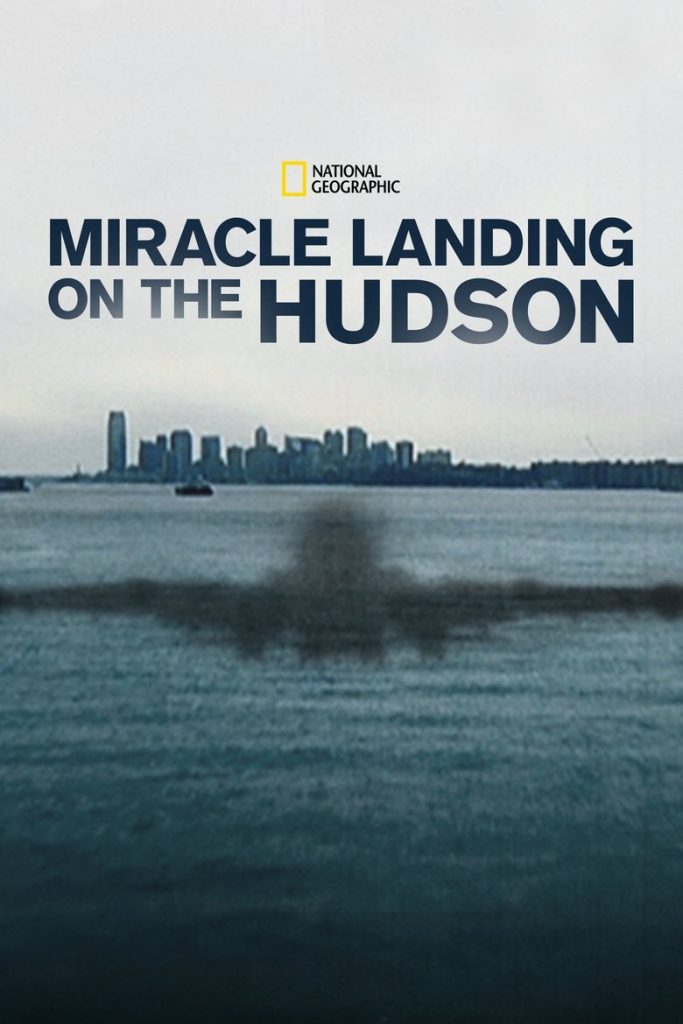
This documentary recounts the real-life emergency of US Airways Flight 1549 in 2009, when a bird strike disabled both engines shortly after takeoff. It focuses on Captain Chesley 'Sully' Sullenberger's decision to land the plane on the Hudson River, the evacuation process, and the successful rescue of all 155 people aboard. The film uses reenactments, interviews, and archival footage to depict the event's tension and the crew's professionalism.
Parent Guide
A documentary about a real-life aviation emergency with educational value, featuring reenactments that are tense but not graphic. Suitable for children aged 8+ with parental guidance for younger viewers due to mild peril.
Content breakdown
Depicts the plane's emergency landing and evacuation, with scenes of passengers in life jackets and water, but no violence or injuries shown. The peril is presented in a factual, non-sensational manner.
Reenactments of the plane descending and landing on water may be tense or scary for sensitive children, but the focus is on the successful outcome. No disturbing imagery or graphic content.
No profanity or strong language; the documentary uses formal, informative language appropriate for all ages.
No sexual content or nudity; all scenes are focused on the emergency and rescue.
No depiction of alcohol, drugs, or smoking.
The situation is intense due to the life-threatening scenario, but it's handled calmly with an emphasis on heroism and survival. Emotional moments are uplifting rather than distressing.
Parent tips
This documentary is suitable for children aged 8 and up, as it presents a true story of crisis management and heroism without graphic content. It can be educational for discussing aviation safety, teamwork, and emergency procedures. Parents may want to watch with younger children to reassure them during intense scenes, as the reenactments of the plane's descent and evacuation might be mildly scary. The film emphasizes positive outcomes and human resilience, making it a good conversation starter about handling stressful situations calmly.
Parent chat guide
Parent follow-up questions
- What did the pilot do to help everyone?
- How did people get off the plane safely?
- Can you draw a picture of the rescue boats?
- Why did the pilot choose to land in the river?
- What steps did the crew take during the evacuation?
- How do you think the passengers felt during the landing?
- What factors made this landing so challenging?
- How does training prepare pilots for emergencies?
- What role did teamwork play in the rescue?
- Analyze the decision-making process behind the Hudson landing.
- Discuss the psychological impact of such an event on survivors.
- How does this incident reflect on aviation safety protocols?
🎭 Story Kernel
The film transcends the disaster genre by exploring what happens after survival is secured. It's not about the bird strike or the technical feat of landing on water—those are just the inciting incidents. The real drama unfolds in the frigid Hudson River and on the rescue boats, where ordinary people become heroes through small, decisive actions. The core theme is collective competence: how protocol, training, and human decency create a chain of survival when every second counts. The characters are driven not by grand ambitions but by immediate necessity—the pilot by muscle memory of procedures, the flight attendants by passenger safety drills, the ferry captains by maritime tradition of rescue. It's a celebration of systems working as intended and individuals rising to fill their roles.
🎬 Visual Aesthetics
The cinematography masterfully contrasts claustrophobic tension with expansive relief. Inside the descending plane, tight close-ups on faces, shaking hands on controls, and the ominous view of approaching water through the cockpit window create visceral dread. The color palette shifts dramatically—from the sterile blues and grays of the cabin to the shocking, almost surreal orange of life vests against the icy river. The water landing itself is shot with terrifying restraint: no dramatic music swell, just the horrifying silence of impact followed by chaotic realism. Rescue sequences use wider shots to emphasize scale—tiny rafts in a vast river, a growing armada of boats converging—visually reinforcing the theme of collective response.
🔍 Details & Easter Eggs
💡 Behind the Scenes
Director Clint Eastwood insisted on shooting the water sequences in the actual Hudson River during winter to capture authentic conditions, resulting in cast and crew enduring freezing temperatures. Tom Hanks, who plays Captain Sully, spent months training with real pilots and even took flight lessons to understand the physicality of cockpit operations. The FAA investigation scenes used the actual NTSB hearing transcripts verbatim. Notably, the film employed real ferry boat operators from January 15, 2009 as extras during rescue sequences, blurring the line between recreation and documentary.
Where to watch
Choose region:
- Disney Plus