
Misery (1990)
Story overview
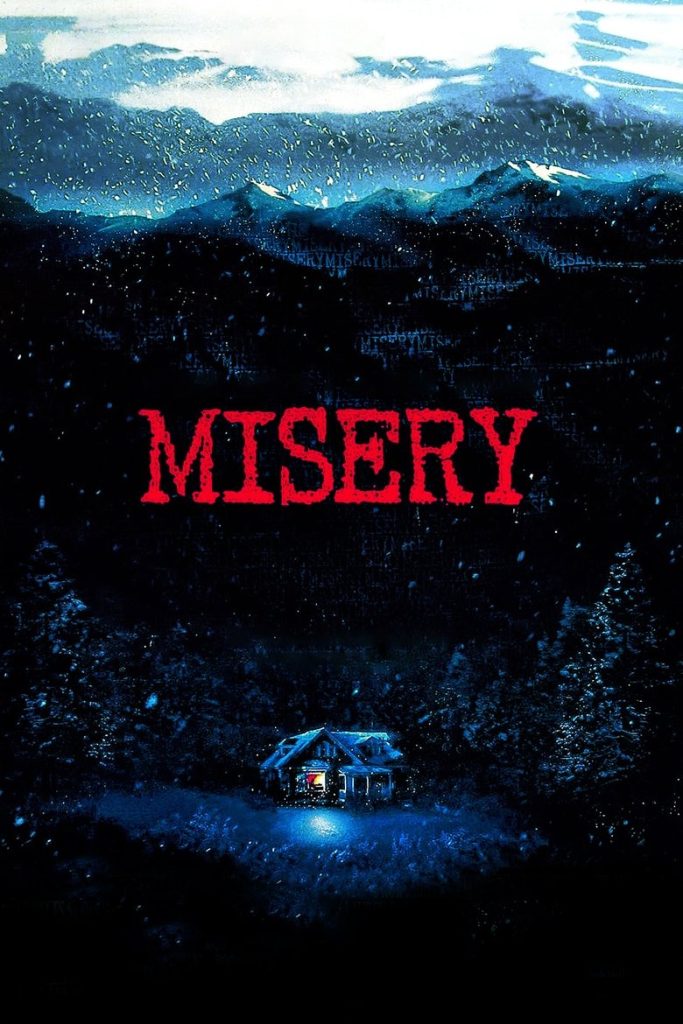
Misery is a psychological thriller about a famous novelist who survives a car accident and is rescued by his self-proclaimed "number one fan." She takes him to her remote home to care for him, but her obsession quickly turns dangerous as she holds him captive. The film explores themes of obsession, control, and survival in an intense, confined setting.
Parent Guide
Intense psychological thriller with themes of obsession and captivity. Not suitable for children.
Content breakdown
Contains scenes of physical violence including captivity and injury. Some graphic moments.
Psychological terror, manipulation, and intense suspense throughout. Themes of obsession and control.
Some strong language used in tense situations.
Minimal sexual content, primarily implied through dialogue.
No notable substance use depicted.
High tension, fear, and psychological manipulation create sustained emotional intensity.
Parent tips
This R-rated thriller contains intense psychological terror and some violent scenes that make it unsuitable for younger viewers. The central relationship involves captivity and manipulation that could be disturbing. Parents should consider their child's sensitivity to suspense and themes of obsession before viewing.
Parent chat guide
Parent follow-up questions
- How did the characters help each other?
- What made you feel safe or scared in the movie?
- How do good friends treat each other?
- Why do you think the character kept the other person in the house?
- How did the trapped character try to solve his problem?
- What would you do if someone wanted to help you but made you uncomfortable?
- What makes someone's admiration turn into something harmful?
- How did the characters show courage in difficult situations?
- What are healthy ways to express fandom or admiration for someone?
- How does the film explore the power dynamics between the characters?
- What psychological factors might lead someone to become overly controlling?
- How does isolation affect decision-making and perception in stressful situations?
🎭 Story Kernel
At its core, 'Misery' is less about a crazed fan and more about the terrifying power dynamics between creator and consumer. Paul Sheldon isn't just imprisoned by Annie Wilkes—he's trapped by the expectations of his audience, who demand he write what they want to read rather than what he wants to create. Annie represents the ultimate consumer who believes ownership of the art extends to ownership of the artist. Her violent insistence that Paul resurrect the character she loves mirrors how audiences can become hostile when creators deviate from established formulas. The film explores how creative freedom becomes a hostage situation when the line between appreciation and entitlement disappears.
🎬 Visual Aesthetics
Rob Reiner's direction masterfully uses claustrophobic framing to mirror Paul's imprisonment. The camera rarely leaves the house, creating a suffocating atmosphere that makes viewers feel as trapped as the protagonist. Warm, domestic colors initially make Annie's home seem safe, but this palette becomes increasingly sinister as her madness reveals itself. The infamous 'hobbling' scene is shot with clinical detachment—no dramatic angles or quick cuts—making the violence feel more real and terrifying. Symbolically, the typewriter becomes both Paul's prison and his eventual weapon, representing how his art both entraps and saves him.
🔍 Details & Easter Eggs
💡 Behind the Scenes
Kathy Bates won the Academy Award for Best Actress for her role as Annie Wilkes, making her the first woman to win an Oscar for a horror film performance. James Caan hated the hobbling scene so much that he insisted on doing it in one take to avoid multiple attempts. The film was shot almost entirely on soundstages to maintain complete control over the claustrophobic atmosphere, with only brief exterior shots of the Colorado mountains to establish isolation. Stephen King, who wrote the novel, has said Annie Wilkes was inspired by his own fears about fan expectations after achieving massive success.
Where to watch
Choose region:
- HBO Max Amazon Channel
- Peacock Premium
- Peacock Premium Plus
- Amazon Video
- Apple TV
- Google Play Movies
- YouTube
- Fandango At Home
Trailer
Trailer playback is unavailable in your region.