
Miss Granny (2014)
Story overview
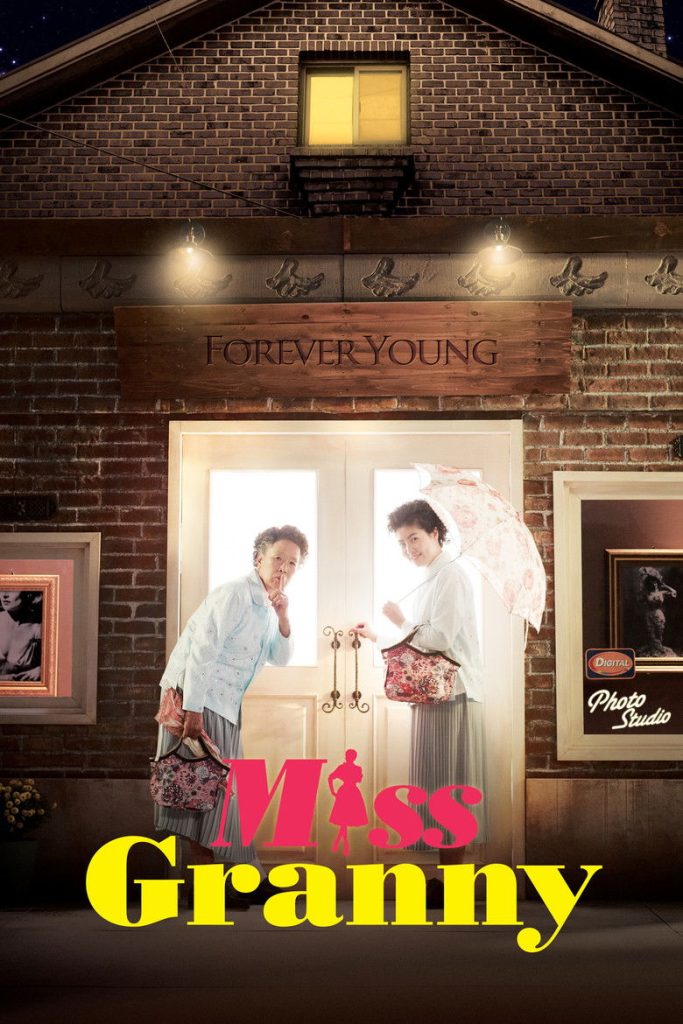
Miss Granny is a 2014 South Korean comedy-drama film about an elderly woman who magically transforms into her 20-year-old self after visiting a mysterious photo studio. She seizes this opportunity to pursue dreams she missed in her youth, including joining a band and exploring new relationships. The film explores themes of aging, family dynamics, and second chances through humor and heartfelt moments.
Parent Guide
A lighthearted comedy-drama with magical elements and family themes suitable for most families with older children.
Content breakdown
No violence or physical peril depicted.
Magical transformation premise might be slightly unsettling for very young viewers.
General conversational language with no strong profanity.
No sexual content or nudity.
No depiction of substance use.
Some emotional moments related to family relationships and aging.
Parent tips
This PG-13 film contains mild thematic elements that may require parental guidance for younger viewers. The magical transformation premise and exploration of aging could prompt questions from children about growing older and family relationships. The film's musical elements and comedic tone make it generally accessible, but parents should be prepared to discuss the emotional aspects of the story.
Parent chat guide
Parent follow-up questions
- What was your favorite song in the movie?
- How did the grandma change in the story?
- What made you laugh the most?
- Why do you think the grandma wanted to be young again?
- How did the family members treat each other differently?
- What dreams would you pursue if you could be any age?
- What does the film say about aging and society's view of older people?
- How did the transformation affect the family relationships?
- What would you do differently if you got a second chance at youth?
- How does the film explore the theme of missed opportunities?
- What commentary does the movie make about generational differences?
- How realistic do you find the portrayal of family dynamics across ages?
🎭 Story Kernel
At its core, 'Miss Granny' explores the societal invisibility of elderly women and the rediscovery of self-worth through a fantastical second chance. The film critiques how modern Korean society often dismisses older women as burdens, while simultaneously romanticizing youth. Oh Mal-soon's transformation into Oh Doo-ri isn't just about physical rejuvenation—it's about reclaiming agency, dreams deferred by patriarchal expectations, and the painful realization that her family has grown accustomed to her self-sacrifice. The driving force isn't the magic photo studio itself, but Mal-soon's desperate need to be seen and valued beyond her utilitarian role as grandmother and mother.
🎬 Visual Aesthetics
The film employs a distinct visual dichotomy between Mal-soon's two lives. Her elderly existence is framed in warm, muted earth tones within cramped domestic spaces, with static shots emphasizing her confinement. As Doo-ri, the palette shifts to vibrant primaries, with dynamic tracking shots through Seoul's youthful spaces. The magical transformation scene uses practical effects with subtle digital enhancement, maintaining tactile authenticity. Most striking is how the cinematography subtly changes when characters interact with Doo-ri versus Mal-soon—the camera literally looks at her differently, mirroring society's ageist gaze.
🔍 Details & Easter Eggs
💡 Behind the Scenes
Shim Eun-kyung spent months studying the physicality of elderly women, including visiting senior centers and practicing with weights to mimic joint stiffness. The iconic transformation scene required 8 hours of makeup application for Na Moon-hee as elderly Mal-soon. Director Hwang Dong-hyuk intentionally cast relatively unknown actors for the band members to maintain authentic chemistry. The film's massive success spawned remakes in 10 countries, including China, Japan, and Vietnam, each adapting the core premise to local cultural attitudes toward aging women.
Where to watch
Choose region:
- Netflix
- Netflix Standard with Ads
- Amazon Video
- Google Play Movies
- YouTube
Trailer
Trailer playback is unavailable in your region.