
Mission Pluto (2015)
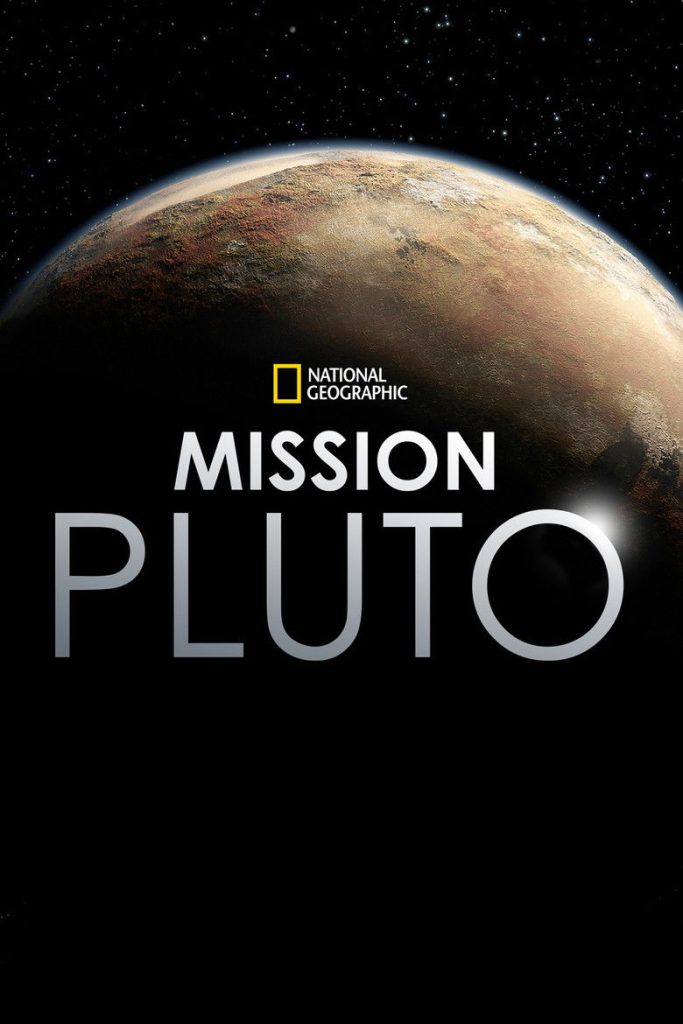
Story overview
Mission Pluto is a 2015 documentary that follows NASA's historic New Horizons mission to capture the first clear images and data of the dwarf planet Pluto. The film features scientists and experts discussing the significance of this space exploration achievement, with stunning visuals of Pluto's surface and scientific discoveries.
Parent Guide
A family-friendly educational documentary about space exploration with no concerning content. Suitable for all ages interested in science.
Content breakdown
No violence or peril depicted. The documentary focuses on scientific achievement and space imagery.
Nothing scary or disturbing. Contains beautiful space imagery and scientific discussion.
No inappropriate language. Uses scientific and educational terminology.
No sexual content or nudity.
No substance use depicted.
Mild excitement about scientific discovery. Some scenes show scientists celebrating mission success.
Parent tips
This educational documentary is appropriate for most children, especially those interested in space. It presents scientific concepts in an accessible way without concerning content. Consider watching together to discuss space exploration and scientific discovery.
Parent chat guide
Parent follow-up questions
- What colors did you see in space?
- Did you like seeing Pluto?
- What was your favorite picture?
- What did you learn about Pluto?
- Why do scientists want to study Pluto?
- How do you think the spacecraft took pictures so far away?
- What surprised you most about Pluto's appearance?
- Why is Pluto now called a dwarf planet?
- What challenges do scientists face when exploring distant planets?
- How does this mission contribute to our understanding of the solar system?
- What technological advancements made this Pluto mission possible?
- What might future space missions to the outer solar system discover?
🎭 Story Kernel
Mission Pluto is less about retrieving a mythical artifact and more about the gravitational pull of obsession. The film's core tension isn't between the crew and the dangers of space, but between Captain Vance's scientific ambition and his crew's humanity. Each character is driven by a different version of escape: Vance from Earth's limitations, Dr. Chen from a failed past experiment, and pilot Reyes from financial ruin. Their mission to Pluto's frozen surface becomes a mirror for their own frozen emotional states, culminating in a climax where sacrificing the 'Heart of Pluto' crystal is the only way to save their souls. The movie argues that some discoveries cost too much to bring home.
🎬 Visual Aesthetics
The film employs a stark, desaturated color palette dominated by blues, grays, and the oppressive black of space, making the sudden, glowing amber of the Pluto crystal feel violently intrusive. Cinematography uses tight, claustrophobic shots inside the ship to amplify tension, contrasting with wide, static shots of the alien landscape that emphasize human insignificance. The action is brutally physical and slow-motion in key moments, like the explosive decompression sequence, mimicking the thick resistance of spacesuits and vacuum. Recurring visual motifs include circular viewports framing characters' isolated faces and the slow fracture patterns in ice mirroring the cracking relationships within the crew.
🔍 Details & Easter Eggs
💡 Behind the Scenes
The Pluto surface sequences were filmed in a practical set built inside a refrigerated warehouse, with actors performing in genuine cold conditions to capture authentic physical reactions. Lead actor playing Captain Vance performed many of his own wire stunts for the zero-gravity scenes. The production consulted with actual planetary scientists to design the fictional geology of Pluto, basing the crystalline structures on real hypotheses about subsurface oceans. Notably, the film's score incorporates sonified data from NASA's New Horizons probe's flyby, weaving real space exploration into its fictional narrative.
Where to watch
Choose region:
- Disney Plus