
Mohabbatein (2000)
Story overview
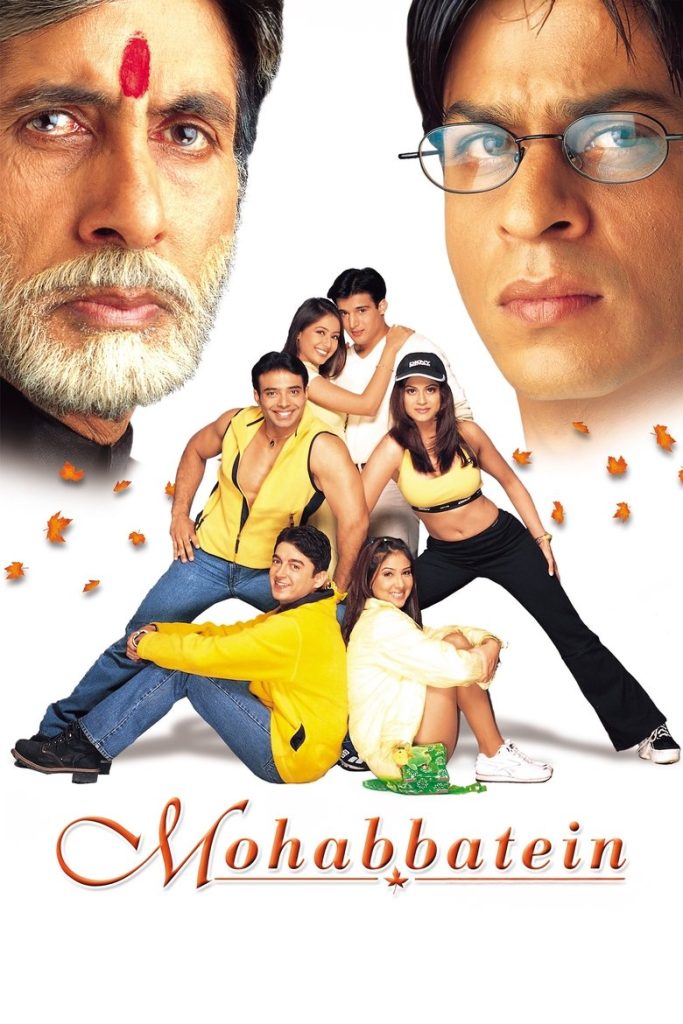
Mohabbatein is a 2000 Indian romantic drama film that explores themes of love, tradition, and generational conflict. The story centers around a strict headmaster at a boarding school who forbids romance among students, and a new music teacher who challenges his rigid beliefs by encouraging young love. Through multiple interconnected love stories, the film examines the power of love to overcome obstacles and transform lives. It blends emotional drama with musical sequences typical of Bollywood cinema.
Parent Guide
Family-friendly Bollywood romance with positive messages about love and courage. Contains emotional themes but no objectionable content.
Content breakdown
No physical violence or perilous situations.
Some emotional scenes involving heartbreak, parental disapproval, and tense confrontations may be mildly upsetting to sensitive viewers.
No profanity or strong language.
Romantic themes including kissing, holding hands, and declarations of love. No nudity or explicit content.
No depiction of alcohol, tobacco, or drug use.
Significant emotional themes including forbidden love, defiance of authority, and dramatic confrontations. Multiple emotional climaxes throughout the film.
Parent tips
Mohabbatein is a family-friendly Bollywood drama with positive messages about love, courage, and following one's heart. The film contains no violence, substance use, or strong language, making it appropriate for most children. Parents should be aware that the film deals with emotional themes including parental disapproval, heartbreak, and defiance of authority, which may require discussion with younger viewers.
The film's runtime (approximately 3 hours) and subtitled format (if watching in Hindi) may challenge younger children's attention spans. The musical numbers and vibrant cinematography will likely engage children who enjoy musicals, while the multiple storylines provide opportunities to discuss different types of relationships and ethical dilemmas.
Parent chat guide
Consider discussing how the film portrays respectful disagreement with authority figures, and the balance between following rules and following one's heart. The multiple love stories allow conversations about different relationship dynamics and how people express care for one another. Since the film is not rated, previewing it yourself will help you determine if the emotional content is suitable for your particular child.
Parent follow-up questions
- What was your favorite song in the movie?
- How did the characters show they cared about each other?
- What made you happy or sad in the story?
- Which character would you want to be friends with?
- What colors did you notice in the movie?
- Why do you think the headmaster didn't want students to fall in love?
- How did the music teacher help the students?
- What does it mean to be brave in love?
- How did the characters solve their problems?
- What lesson did the headmaster learn by the end?
- How does the film show different types of love (romantic, parental, friendship)?
- What are the pros and cons of following strict rules versus following your heart?
- How do cultural traditions affect the characters' choices?
- What makes a relationship healthy or unhealthy in the movie?
- How do the characters handle disappointment or rejection?
- How does the film critique traditional authority structures?
- What does the film suggest about the balance between individual desires and social expectations?
- How are gender roles portrayed in the different relationships?
- What cinematic techniques (music, color, editing) enhance the emotional impact?
- How does this Bollywood film compare to Western romantic dramas in its approach to love stories?
🎭 Story Kernel
At its core, 'Mohabbatein' is a clash between rigid tradition and youthful idealism, framed as a battle for the soul of Gurukul Academy. The film explores how love, often portrayed as a spontaneous, emotional force, is wielded as a deliberate weapon against institutionalized repression. Narayan Shankar's trauma-driven authoritarianism is not just a villainous trait but a tragic flaw born from personal loss, making his eventual surrender not a defeat of principles, but a cathartic healing of his own emotional paralysis. The three parallel love stories serve as test cases, proving that genuine connection can reform even the most broken systems from within, suggesting that education's highest purpose is to teach the heart, not just discipline the mind.
🎬 Visual Aesthetics
The film employs a stark visual dichotomy. Gurukul is often shot in wide, cold, symmetrical frames and a muted, grey-blue palette, emphasizing order and sterility. In contrast, the lovers' world bursts with warm, saturated colors—vibrant reds and golds—and uses softer focus and more dynamic, flowing camera movements during musical sequences, visually manifesting the emotional warmth fighting the institutional cold. The recurring motif of water, from rain to fountains, symbolizes purification and the fluid, uncontrollable nature of feeling. The climactic confrontation uses tight close-ups on Amitabh Bachchan and Shah Rukh Khan, making their ideological duel intensely personal and claustrophobic.
🔍 Details & Easter Eggs
💡 Behind the Scenes
The iconic 'Gurukul' campus was filmed at the real-life St. Paul's School in Darjeeling and Welham Boys' School in Dehradun. Aishwarya Rai was originally considered for a lead role before the final casting. The film marked the first on-screen collaboration between Amitabh Bachchan and Shah Rukh Khan, with Bachchan reportedly praising Khan's dedication during the intense climactic confrontation scenes. Director Aditya Chopra deliberately used slower film stock to achieve a richer, more classic cinematic look, distancing the visual tone from the brighter aesthetics of typical 90s Bollywood.
Where to watch
Choose region:
- Netflix
- Netflix Standard with Ads
- Apple TV
- Google Play Movies
- YouTube
Trailer
Trailer playback is unavailable in your region.