
Mommy Dead and Dearest (2017)
Story overview
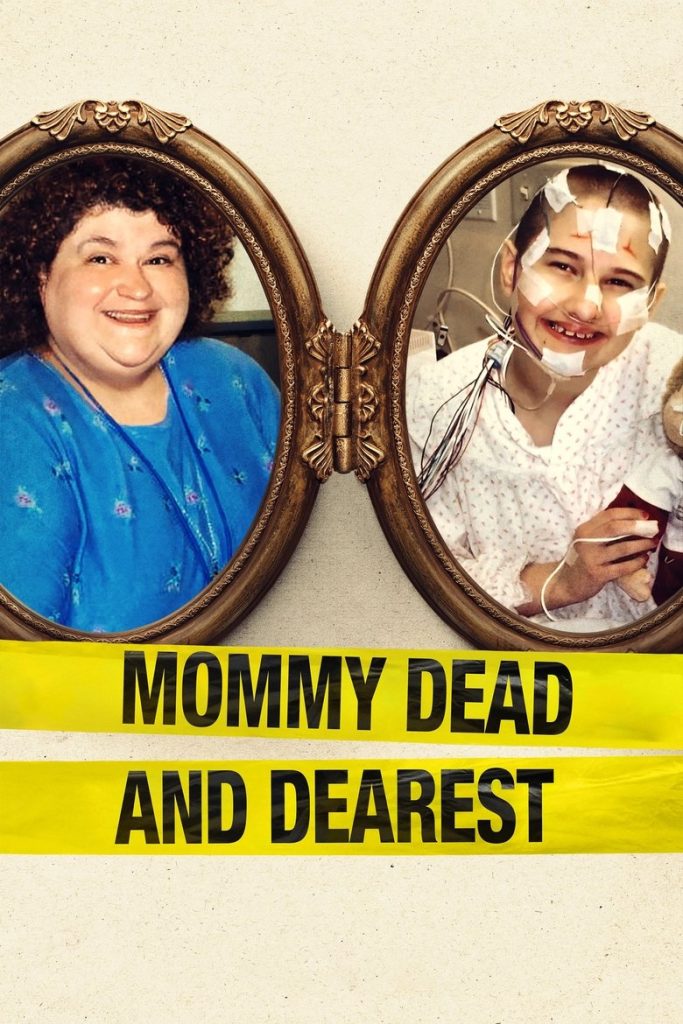
Mommy Dead and Dearest is a 2017 true crime documentary that examines a disturbing mother-daughter relationship that ended in tragedy. The film explores psychological manipulation, medical abuse, and a murder case through interviews and archival footage. It presents a complex story about deception, family dynamics, and the legal system.
Parent Guide
This true crime documentary contains mature themes and disturbing content about family dysfunction, psychological manipulation, and murder. It's best suited for older teens and adults who can process complex psychological concepts.
Content breakdown
Discusses murder and criminal acts, but doesn't show graphic violence. Includes descriptions of harmful events and dangerous situations.
Contains psychologically disturbing content about abuse, manipulation, and family trauma. Themes of deception and medical harm may be unsettling.
May include occasional strong language typical of documentary interviews discussing emotional topics.
No sexual content or nudity present in this documentary.
No substance use depicted or discussed.
High emotional intensity due to themes of family betrayal, psychological abuse, and tragic outcomes. May provoke strong emotional responses.
Parent tips
This documentary deals with mature themes including psychological abuse, medical deception, and murder. The content is emotionally intense and may be disturbing for younger viewers due to its exploration of family dysfunction and criminal behavior. Parents should be aware that the TV-MA rating indicates material specifically designed for adults and may be unsuitable for children under 17.
Parent chat guide
Parent follow-up questions
- What did you think about the people in the movie?
- How do you think the people felt?
- What makes a family happy and safe?
- Who can you talk to if you feel worried?
- What are some nice things families do together?
- What did you learn about families from this movie?
- How can people show they care about each other?
- Why is it important to tell the truth?
- What should you do if someone makes you feel uncomfortable?
- Who are trusted adults you can talk to about problems?
- What did you think about how the family relationships were shown?
- How does this documentary make you think about trust in families?
- What are healthy ways to handle family disagreements?
- Why do you think documentaries tell stories like this?
- How can you tell if information in a documentary is reliable?
- What psychological dynamics did you notice in the family relationships?
- How does this case make you think about medical ethics and consent?
- What societal factors might contribute to situations like this?
- How do documentaries balance storytelling with factual reporting?
- What are appropriate boundaries in parent-child relationships?
🎭 Story Kernel
At its core, 'Mommy Dead and Dearest' explores the devastating psychological prison of Munchausen by proxy syndrome, where Dee Dee Blanchard's need for control and validation through her daughter Gypsy's fabricated illnesses becomes a symbiotic pathology. The film reveals how both mother and daughter were trapped in their roles—Dee Dee as the perpetually suffering caregiver, Gypsy as the eternally sick child—until the only perceived escape was violent annihilation. It's less about the murder itself and more about how love, when twisted by mental illness, can become a form of psychological torture that leaves no visible scars but destroys identities completely.
🎬 Visual Aesthetics
The documentary employs a stark visual dichotomy between the pastel-colored, dollhouse perfection of the Blanchard home and the grim, institutional aesthetics of prison interviews and crime scene footage. Director Erin Lee Carr uses intimate close-ups during interviews that feel uncomfortably revealing, contrasting with the cheerful home videos that now play as horrifying evidence. The color palette shifts from sickly sweet pinks and yellows in family footage to cold blues and grays in present-day sequences, visually mirroring the transition from manufactured childhood to harsh reality. The camera often lingers on Gypsy's expressive face, creating a haunting study of someone who learned to perform illness before she learned to be herself.
🔍 Details & Easter Eggs
💡 Behind the Scenes
The documentary gained unprecedented access through Gypsy's cooperation from prison, with director Erin Lee Carr conducting interviews over several months. Much of the home video footage came from Dee Dee's own extensive documentation of Gypsy's 'illnesses,' creating an eerie archive of the abuse. The production team worked closely with mental health experts to accurately portray Munchausen by proxy syndrome, consulting with specialists who had studied similar cases. Notably, the film includes actual text messages between Gypsy and Nicholas Godejohn that were used as evidence in the murder trial.
Where to watch
Choose region:
- HBO Max
- HBO Max Amazon Channel
- Apple TV
- Google Play Movies
- YouTube
- Fandango At Home
Trailer
Trailer playback is unavailable in your region.