
Monsters 103 Mercies Dragon Damnation (2024)
Story overview
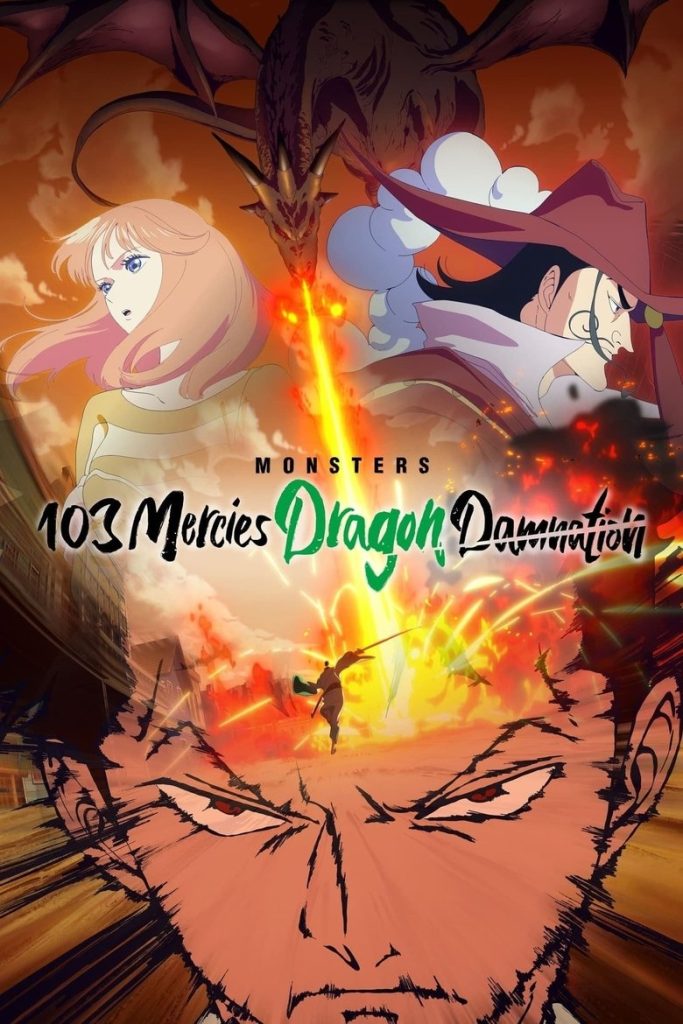
This animated adventure follows a reluctant samurai who encounters a young waitress whose village was devastated by a dragon. Despite his desire to avoid conflict, circumstances force him to confront the dragon threat alongside her. The story explores themes of responsibility, courage, and protecting others in a fantasy world filled with danger.
Parent Guide
This action-packed anime contains significant fantasy violence and peril that makes it most suitable for mature viewers. The TV-MA rating reflects intense content compressed into a short runtime.
Content breakdown
Contains fantasy combat with swords, dragon attacks, destruction of a village, and life-threatening situations. Characters face significant peril throughout.
Dragon attacks and village destruction may be frightening. Themes of loss and danger create tense atmosphere.
May contain some mild exclamations or expressions typical of action anime.
No sexual content or nudity indicated.
No substance use indicated.
Characters experience loss, danger, and moral dilemmas. Reluctant hero theme creates emotional tension.
Parent tips
This TV-MA rated anime contains significant action violence and peril that may be too intense for younger viewers. The dragon attack and combat scenes involve fantasy violence with potential destruction and threats to characters. Parents should preview the content to determine appropriateness for their children, as the 26-minute runtime packs intense moments into a short timeframe.
Consider the emotional maturity of your child when deciding whether to watch together. The themes of loss and destruction might be disturbing for sensitive viewers, while the heroic elements could appeal to older children interested in action-adventure stories.
Parent chat guide
After watching, ask about how the characters showed courage and what they thought about the samurai's choices. Discuss the difference between fantasy violence and real-world conflict, and explore how stories can show characters protecting others even when they're initially reluctant.
Parent follow-up questions
- What was your favorite part of the story?
- How did the characters help each other?
- What do you think dragons look like?
- Was there anything that made you feel worried?
- What would you do if you met a friendly dragon?
- Why do you think the samurai didn't want trouble at first?
- How did the characters show bravery?
- What does it mean to protect someone?
- How do you think the waitress felt about her hometown?
- What makes a good hero in a story?
- What motivated the samurai to get involved despite his reluctance?
- How does this story handle themes of responsibility?
- What different ways do characters show courage in the face of danger?
- How do fantasy stories like this differ from real-world problems?
- What lessons about helping others can we take from this story?
- How does the samurai's character development reflect themes of duty versus personal choice?
- What commentary might this story make about facing unavoidable challenges?
- How does the animation style contribute to the emotional impact of the story?
- What makes fantasy violence in media different from realistic violence?
- How do stories about protecting others resonate with real-world values?
🎭 Story Kernel
The film explores the subversion of heroism and the weight of true honor. Ryuma, a wandering samurai driven by a 'warrior's soul' rather than fame, arrives in a town haunted by a past dragon attack. The narrative centers on the contrast between Ryuma’s genuine integrity and the performative, predatory heroism of Cyrano. It is fundamentally a story about the sanctity of a debt—specifically Ryuma's gratitude toward Flare for a meal—and the realization that a hero’s reputation is often built on deeds they consider mundane. By the end, the movie expresses that true greatness is found in the silent execution of duty, as Ryuma unknowingly becomes the very legend he was searching for, bridging the gap between a starving wanderer and a god of the blade.
🎬 Visual Aesthetics
Director Sunghoo Park utilizes high-octane choreography and fluid character acting to elevate the 1994 source material. The visual style emphasizes the 'one-cut' philosophy of traditional samurai cinema, where tension builds through stillness before exploding into dynamic motion. The cinematography uses wide shots to establish the dragon's overwhelming scale against the smallness of the town, creating a sense of impending doom. Symbolism is heavy in the depiction of the Dragon Horn, which glows with an unnatural light to represent the corruption of the antagonists. The final confrontation is a visual crescendo, employing sweeping camera movements and sharp, ink-like line work during the decisive strike to illustrate the sheer power and precision of Ryuma’s technique, effectively blending modern shonen aesthetics with classic ronin tropes.
🔍 Details & Easter Eggs
💡 Behind the Scenes
This ONA is an adaptation of Eiichiro Oda's 1994 one-shot manga, created years before the serialization of One Piece. Produced by E&H Production, the studio founded by director Sunghoo Park, the film is officially canon to the One Piece universe. It provides the definitive backstory for Shimotsuki Ryuma, the legendary samurai whose corpse and shadow later appeared in the Thriller Bark arc. The production is notable for being one of the few instances where Oda's early 'Wanted!' collection works received a high-budget, modern animation treatment, maintaining the creator's distinct character designs while updating the action sequences.
Where to watch
Choose region:
- Netflix
- Amazon Prime Video
- Netflix Standard with Ads
- Amazon Prime Video with Ads
Trailer
Trailer playback is unavailable in your region.