
Monsters, Inc. (2001)
Story overview
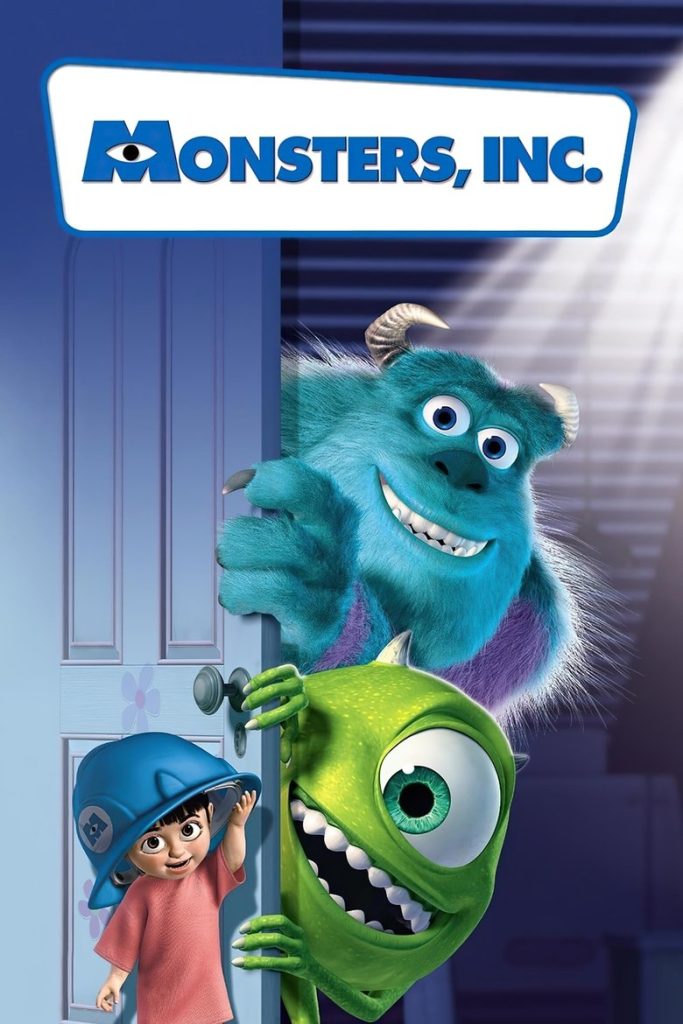
Monsters, Inc. is a heartwarming animated film about two monster friends who work at a factory that collects children's screams for energy. When a young human girl accidentally enters their monster world, the two main characters must protect her while trying to return her home safely. The story explores themes of friendship, overcoming fears, and challenging assumptions about what makes someone scary or dangerous. Through colorful animation and humor, it delivers a positive message about looking beyond appearances.
Parent Guide
A family-friendly animated film with positive messages about friendship and overcoming fears, suitable for most children with some consideration for younger or sensitive viewers.
Content breakdown
Contains cartoon-style chase scenes and workplace accidents in a factory setting. No actual harm comes to characters, and situations are resolved humorously.
Monster designs might be initially intimidating for very young children. Factory machinery and loud noises could be overwhelming for sensitive viewers. The overall tone is humorous and reassuring.
No offensive language. Contains playful monster-related expressions and workplace banter appropriate for family viewing.
No sexual content or nudity. Characters are animated monsters and humans in appropriate attire.
No depiction of substance use. Characters work in an energy factory processing screams and laughter.
Contains moments of concern when characters are in perilous situations, but these are balanced with humor and positive resolutions. Separation anxiety themes when characters are apart.
Parent tips
This G-rated film is generally appropriate for most children, though some younger viewers might find the monster designs initially intimidating. The factory setting includes loud noises and energetic chase scenes that could be overwhelming for sensitive children. The central relationship between the monsters and the little girl provides excellent opportunities to discuss friendship across differences and how appearances can be deceiving. Parents should note that while the monsters are meant to be scary in their professional roles, they're portrayed as having fears and vulnerabilities themselves.
Parent chat guide
Parent follow-up questions
- Which monster was your favorite?
- What was the funniest part of the movie?
- How did the monsters help the little girl?
- What sounds did you hear in the factory?
- Would you want to visit Monstropolis?
- Why were the monsters afraid of humans at first?
- How did Sulley and Mike's friendship help them solve problems?
- What did the monsters learn about children by the end?
- How did the factory change from the beginning to the end?
- What makes someone a good friend in the movie?
- What assumptions did the monsters have about humans, and how were they proven wrong?
- How does the movie show that systems can change for the better?
- What responsibilities did Sulley and Mike take on when they found the little girl?
- How did the characters balance their jobs with doing what was right?
- What does the movie suggest about where fear comes from?
- How does the film use humor to address serious themes like prejudice and fear?
- What commentary does the movie make about energy sources and their ethical implications?
- How do the workplace dynamics at Monsters, Inc. reflect real-world organizational challenges?
- What does the relationship development between monsters and humans say about overcoming cultural barriers?
- How does the film balance entertainment with messages about empathy and change?
🎭 Story Kernel
At its core, 'Monsters, Inc.' is a brilliant deconstruction of energy economics and manufactured fear. The monsters' entire civilization is built on harvesting children's screams as a power source, creating a system where fear becomes currency. What drives Sulley and Mike isn't just friendship or career ambition—it's their gradual realization that their entire world operates on a flawed, unsustainable model. The film's true conflict isn't monster vs. human, but truth vs. institutionalized deception. When Boo's laughter proves more powerful than screams, it reveals how societies cling to harmful systems simply because 'that's how it's always been done,' and how genuine connection can dismantle even the most entrenched industrial complexes.
🎬 Visual Aesthetics
Pixar masterfully uses visual language to distinguish monster and human worlds. The monster city of Monstropolis glows with sickly green and industrial blues, all sharp angles and cold metal—a visual representation of their fear-based economy. In contrast, Boo's bedroom is bathed in warm yellows and soft pinks, with rounded edges and plush textures. The door chase sequence employs dynamic camera movements that mimic classic monster movies while subverting them—we're rooting for the monsters to escape human detection. The changing color palette when Sulley interacts with Boo subtly shifts from cold to warm tones, visually charting his emotional transformation from professional scarer to protective father figure.
🔍 Details & Easter Eggs
💡 Behind the Scenes
John Goodman and Billy Crystal's improvisational chemistry shaped their characters significantly—many of Mike's one-liners were Crystal's ad-libs. The door warehouse contains over 200,000 individually modeled doors, each with unique details. Originally, Boo was going to be able to speak in full sentences, but the filmmakers realized her limited vocabulary ('Kitty!') made her more authentic and emotionally resonant. The character designs evolved dramatically—early concepts had Sulley as a more traditional, frightening monster with multiple eyes and limbs before settling on his iconic blue-and-purple furry look that balanced scariness with approachability.
Where to watch
Choose region:
- Disney Plus
- Amazon Video
- Apple TV
- Google Play Movies
- YouTube
- Fandango At Home
Trailer
Trailer playback is unavailable in your region.