
Monty Python’s The Meaning of Life (1983)
Story overview
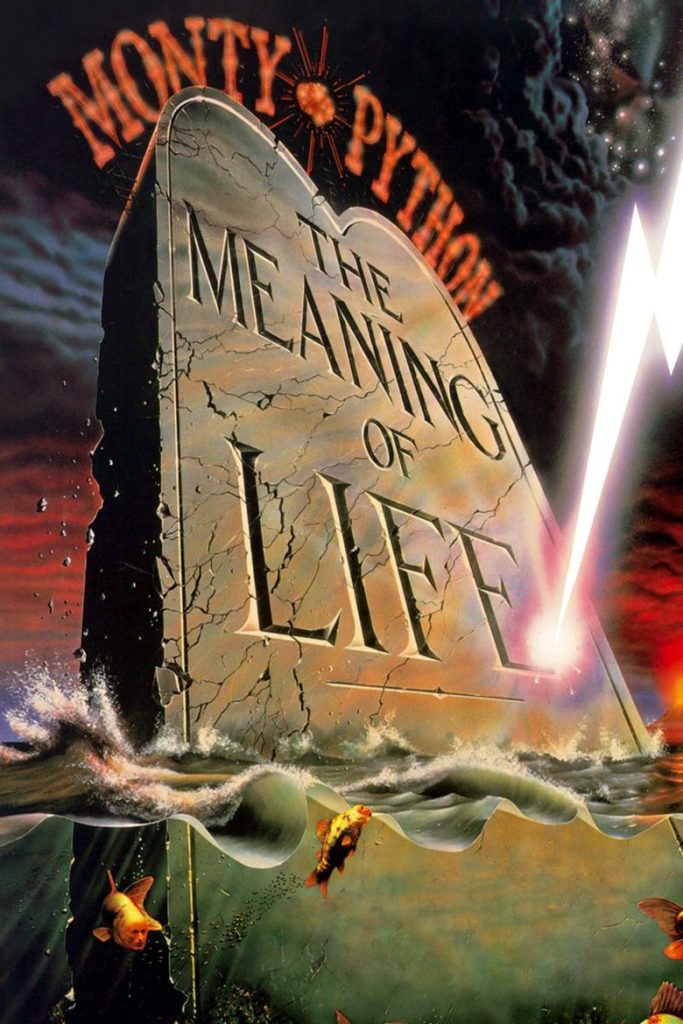
This 1983 British comedy film from the Monty Python troupe uses absurdist humor to explore various stages and aspects of human life through disconnected sketches. The film satirizes topics like corporate culture, healthcare, religion, education, and mortality with surreal and often grotesque scenarios. Notable segments include office workers transforming into pirates, doctors attempting to harvest organs from living patients, and an elaborate musical number about the universe. The humor is intellectual, dark, and frequently relies on shock value rather than traditional narrative structure.
Parent Guide
This film is rated R for good reason - it contains strong sexual content, graphic medical humor, and mature themes throughout. While intellectually sophisticated, the content is inappropriate for children and younger teens. The humor often relies on shock value and grotesque imagery that could disturb sensitive viewers.
Content breakdown
Includes cartoonish violence (pirates fighting), graphic medical scenarios (organ harvesting from living patients), and a man exploding from overeating. While not realistic, the medical scenes are particularly graphic and could disturb viewers with medical anxieties.
Contains disturbing imagery including graphic medical procedures, grotesque bodily functions (extreme vomiting), and surreal death scenes. The 'Mr. Creosote' restaurant scene features extreme gluttony and explosive vomiting that many find disgusting rather than scary.
Some mild profanity and sexual references in dialogue. The language is less concerning than the visual content and thematic elements.
Contains full frontal nudity (both male and female), sexual situations, and explicit discussions of sex and reproduction. The 'Every Sperm is Sacred' musical number features overt sexual references and imagery.
Some social drinking in restaurant/party scenes. Not a major focus of the film.
The film maintains a consistently absurd, satirical tone that distances viewers from emotional engagement. However, the medical scenes and discussions of mortality could trigger anxiety in sensitive viewers, particularly those with health concerns.
Parent tips
This film contains mature content including graphic medical humor, sexual references, and grotesque bodily functions. The humor is sophisticated and often targets adult institutions, making much of it inaccessible to younger viewers. Parents should be aware of the R rating and consider whether their children can distinguish between satire and reality. The film's disjointed structure may confuse younger audiences, and the dark humor could be disturbing without proper context.
Parent chat guide
Parent follow-up questions
—
—
- What made certain scenes funny or confusing?
- Can you explain what 'satire' means after watching this?
- How would you react if you saw something like the hospital scene in real life?
- What societal institutions is the film criticizing in each segment?
- How does the film use shock value to make its points?
- What's the difference between dark humor and offensive content?
- How does this compare to modern satire you've seen?
🎭 Story Kernel
The film dismantles life's grand narrative by presenting it as a series of disconnected, absurd sketches rather than a coherent journey. It's not about finding meaning but exposing the arbitrary rituals and biological processes we treat as profound. Characters are driven by societal programming—from birth to death—following scripts they never wrote. The movie argues that life's 'meaning' is just a collection of ridiculous moments strung together by our desperate need for narrative coherence. The final 'meaning of life' revelation is deliberately trivial, suggesting that any profound answer would be just another human invention.
🎬 Visual Aesthetics
The film employs a deliberately cheap, theatrical aesthetic that contrasts with its philosophical ambitions. Bright, flat lighting and obvious studio sets create a Brechtian distance, reminding viewers they're watching constructed artifice. The musical numbers use garish colors and exaggerated choreography to satirize Hollywood spectacles. Most striking is the clinical, unflinching camera work during the grotesque sequences—like Mr. Creosote's explosion or the liver donation surgery—which treats bodily functions with detached objectivity. This visual style mirrors the film's thesis: life is both ridiculous and mechanical.
🔍 Details & Easter Eggs
💡 Behind the Scenes
The infamous Mr. Creosote explosion scene used 40 gallons of fake vomit containing oatmeal, sardines, and baked beans, requiring 14 takes. Terry Gilliam's 'Crimson Permanent Assurance' short was originally conceived as a brief sketch but grew into a 16-minute standalone film, nearly causing production delays. The 'Christmas in Heaven' musical number features cameos from several British celebrities of the era, including a barely recognizable Mick Jagger in the dancing crowd.
Where to watch
Choose region:
- Netflix
- Netflix Standard with Ads
- Amazon Video
- Apple TV Store
- Google Play Movies
- YouTube
- Fandango At Home
Trailer
Trailer playback is unavailable in your region.