
Mosul (2019)
Story overview
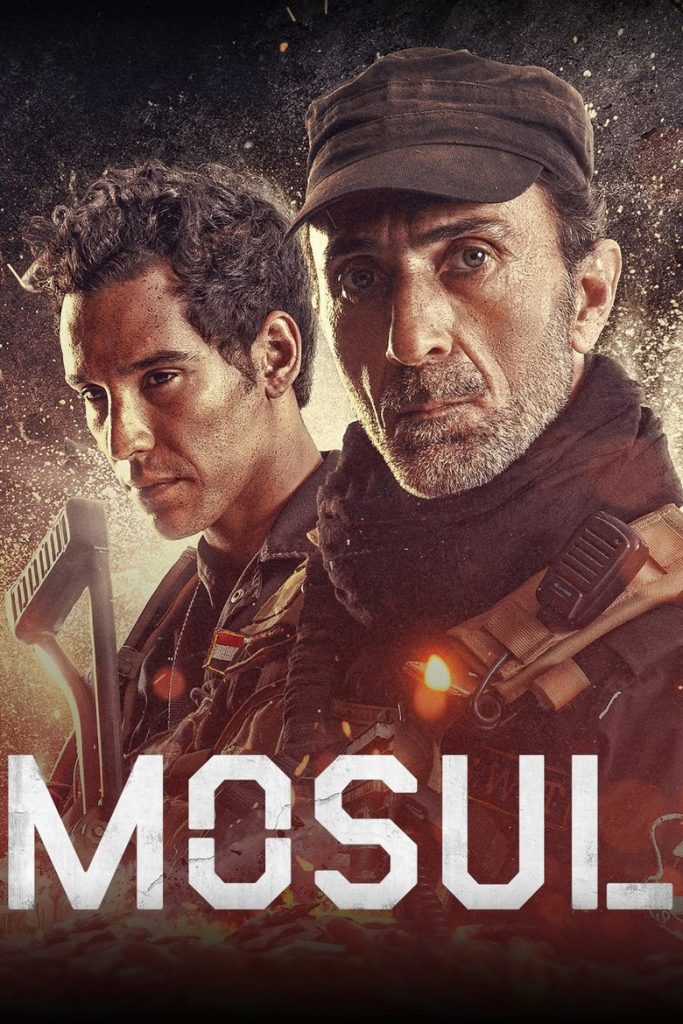
Mosul is a 2019 war drama based on true events, following the Nineveh SWAT team's guerrilla fight against ISIS to reclaim their Iraqi city. It depicts intense combat, urban warfare, and the personal sacrifices of these local police officers.
Parent Guide
A gritty, realistic war film with intense combat sequences and mature themes. Recommended for mature audiences only.
Content breakdown
Frequent graphic war violence including shootings, explosions, hand-to-hand combat, blood, injuries, and death. Urban warfare scenes show destruction and peril.
Disturbing scenes of war-torn environments, civilian suffering, and tense life-or-death situations. Realistic portrayal of conflict may be unsettling.
Some strong language in subtitles (English translation from Arabic), including profanity related to combat situations.
No sexual content or nudity present in the film.
Brief scenes may show smoking or references to substance use in war context, but not a focus.
High emotional intensity throughout with themes of loss, sacrifice, trauma, and desperation. Characters face moral dilemmas and personal tragedy.
Parent tips
This film is TV-MA for strong violence, language, and mature themes. It's best for mature teens and adults due to graphic war scenes and emotional intensity. Not suitable for young children.
Parent chat guide
Parent follow-up questions
—
—
- What do you think it means to protect your home?
- How do you think the characters felt during the fighting?
- How does this film show the human cost of war?
- What does 'based on true events' add to the story?
- How are the characters' motivations portrayed?
🎭 Story Kernel
At its core, 'Mosul' explores how identity and purpose are forged in the crucible of absolute necessity. The film isn't about heroism in the traditional sense; it's about the brutal pragmatism of survival. The Nineveh SWAT team isn't driven by ideology or national pride, but by a visceral, almost primal need to protect their home and exact revenge for personal losses. Their mission—to eliminate ISIS collaborators—becomes a grim, cyclical ritual that replaces the normalcy they've lost. The movie asks: when your world has been reduced to rubble, what rules remain? The answer is a stark, tribal code where loyalty to your immediate group is the only law, and justice is a bullet. It's less a war film and more a study of a society in traumatic metamorphosis.
🎬 Visual Aesthetics
The film's visual language is one of immersive, unglamorous grit. Director Matthew Michael Carnahan and cinematographer Mauro Fiore employ a handheld, documentary-style immediacy, placing the viewer in the middle of the chaotic street battles. There's no sweeping, heroic score—just the deafening cacophony of gunfire, crumbling concrete, and shouted commands. The color palette is desaturated, dominated by the grays of rubble, the beige of dust, and the muted tones of fatigues, punctuated only by sudden flares of muzzle flash and blood. This aesthetic rejects Hollywood spectacle; the action is messy, exhausting, and tactical. Shots are often tight and claustrophobic, mirroring the characters' trapped existence within their ruined city, making the rare wide shot of the devastated skyline feel profoundly lonely.
🔍 Details & Easter Eggs
💡 Behind the Scenes
The film's authenticity is rooted in its source: it's based on a 2017 New Yorker article by Luke Mogelson. The cast is almost entirely composed of Arab actors, with many, like Suhail Dabbach (Jasem), being Iraqi. To achieve its visceral realism, it was shot in Morocco, meticulously recreating the devastated neighborhoods of Mosul. Notably, the actors underwent weapons training with real former special forces operators to accurately portray the tactical movements and weary professionalism of the actual Nineveh SWAT unit. Director Carnahan prioritized the Arabic language script and local consultants to avoid a Western gaze, aiming to tell the story from squarely within the perspective of the men who lived it.
Where to watch
Choose region:
- Netflix
- Netflix Standard with Ads
Trailer
Trailer playback is unavailable in your region.