
Moulin Rouge! (2001)
Story overview
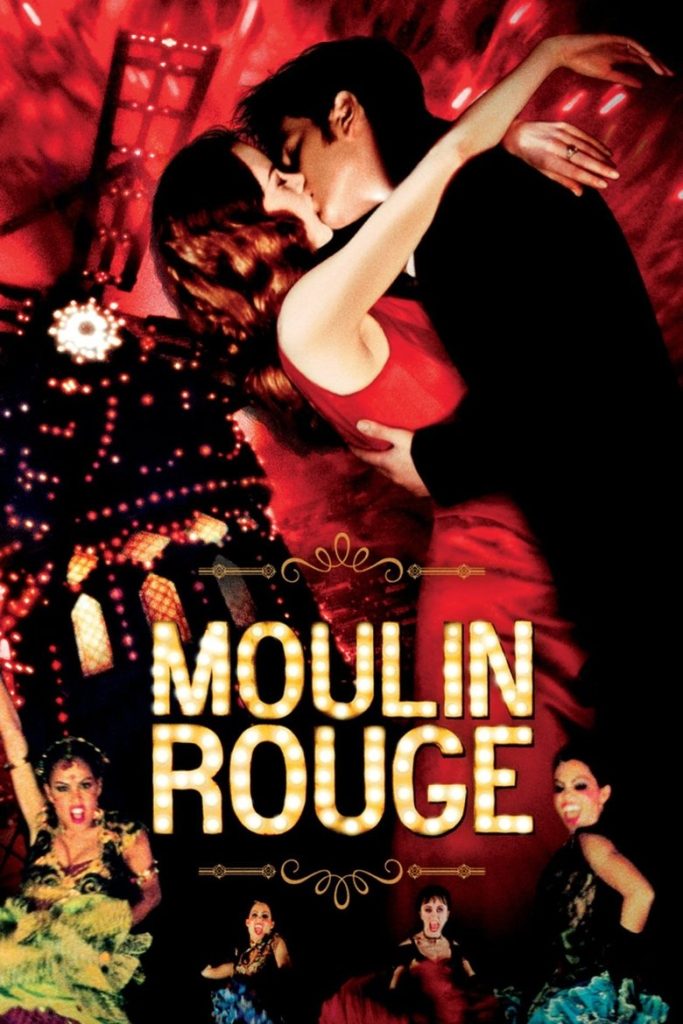
Moulin Rouge! is a 2001 musical romance drama set in 1899 Paris. It follows a young writer who falls in love with a beautiful courtesan and star performer at the Moulin Rouge cabaret. Their passionate romance unfolds through elaborate musical numbers and dramatic storytelling, exploring themes of love, art, and sacrifice. The film is known for its vibrant visuals, modern pop song covers, and theatrical style.
Parent Guide
A visually spectacular musical romance with mature themes suitable for teens and adults.
Content breakdown
Some dramatic confrontations and brief moments of peril, but no graphic violence.
Emotional intensity and dramatic plot developments may be upsetting to sensitive viewers.
Occasional mild language consistent with PG-13 rating.
Suggestive dance sequences, romantic situations, and cabaret setting with courtesan characters.
Depictions of alcohol consumption and smoking in social settings.
High emotional drama throughout with passionate romance and tragic elements.
Parent tips
This PG-13 rated film contains mature themes including sexual content, suggestive dance sequences, and romantic relationships in a cabaret setting. Parents should be aware of scenes depicting alcohol consumption, smoking, and brief moments of peril. The emotional intensity is high throughout, with dramatic plot developments that may be confusing or upsetting to younger viewers.
Consider watching with teens to discuss the historical context of Parisian nightlife and the film's portrayal of love and artistic expression. The musical format and fast-paced editing might engage older children, but the mature content makes it more suitable for adolescents.
Parent chat guide
For younger viewers who may have seen parts, focus on the friendship and creative aspects rather than romantic elements. With teens, you might discuss the film's commentary on society, class differences, and the nature of performance versus reality.
Parent follow-up questions
- What was your favorite song in the movie?
- Did you like the colorful costumes and dancing?
- How did the characters show they were friends?
- What was the prettiest scene you remember?
- How did the music make you feel?
- What did you think about the different songs they sang?
- How did the characters express their feelings through music?
- What made the Moulin Rouge a special place in the story?
- How did the characters help each other?
- What was exciting about the performances?
- How did the modern songs work in a historical setting?
- What challenges did the main characters face in their relationship?
- How did the visual style affect the storytelling?
- What did the film show about following your dreams?
- How were friendship and loyalty important in the story?
- How does the film comment on the relationship between art and commerce?
- What does the story suggest about idealistic versus practical love?
- How effective were the anachronistic musical choices in conveying emotions?
- What social commentary does the film make about entertainment and morality?
- How does the editing and cinematography create the film's unique emotional tone?
🎭 Story Kernel
At its core, 'Moulin Rouge!' explores the collision between artistic idealism and commercial reality. Christian represents pure, romantic artistry, believing love and beauty can transcend all. The Duke embodies capitalism's cold transactional nature, viewing art and love as commodities to be purchased. Satine is torn between these worlds—her heart yearns for Christian's romanticism while her survival depends on the Duke's patronage. The film argues that true art requires sacrifice, ultimately showing how Christian's grief transforms his naive romanticism into profound artistic expression through his writing of their story.
🎬 Visual Aesthetics
Luhrmann's visual language creates a hyper-real Paris where emotion dictates reality. The rapid-fire editing mirrors the frantic pace of bohemian life, while the saturated reds and golds of the Moulin Rouge contrast with Christian's blue-toned melancholy. The 'El Tango de Roxanne' sequence masterfully uses split-screen to externalize Christian's jealousy, with the passionate tango visually paralleling his tortured imagination. The camera frequently swoops and swirls during musical numbers, creating a dizzying, intoxicating effect that mirrors the characters' emotional states. The final 'Come What May' duet uses stark white lighting to strip away the spectacle, revealing the raw truth beneath.
🔍 Details & Easter Eggs
💡 Behind the Scenes
Nicole Kidman performed her own singing despite having no formal musical training, and broke a rib during the 'Diamond Dogs' rehearsal. The entire film was shot in Sydney, Australia, with the Moulin Rouge exterior built at Fox Studios. Ewan McGregor's audition consisted of singing 'Your Song' a cappella for Baz Luhrmann. The famous green fairy was achieved using a dancer painted green and enhanced with digital effects, rather than pure CGI. The film's chaotic editing style was inspired by MTV music videos of the 1990s.
Where to watch
Choose region:
- Netflix
- Netflix Standard with Ads
- Amazon Video
- Apple TV
- Google Play Movies
- YouTube
- Fandango At Home
Trailer
Trailer playback is unavailable in your region.