
Mr. Nobody Against Putin (2025)
Story overview
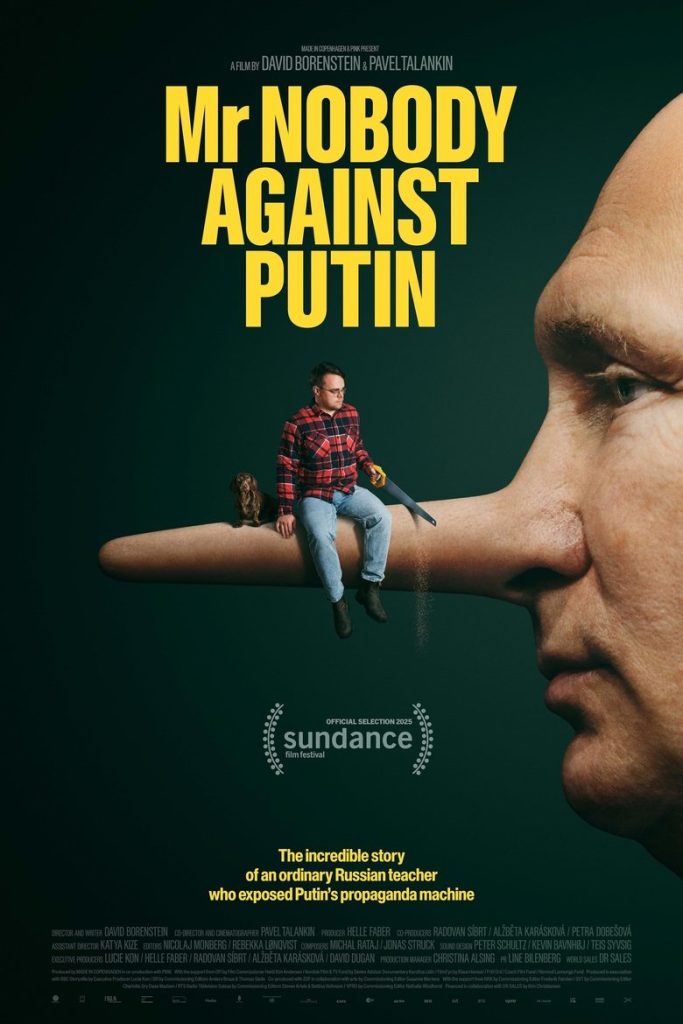
This 2025 documentary follows a Russian teacher who secretly films the transformation of his rural school into a military recruitment center during Russia's invasion of Ukraine. The film explores ethical dilemmas, propaganda in education, and the personal risks of dissent in wartime Russia.
Parent Guide
Documentary about wartime education and propaganda with emotional intensity but minimal explicit content.
Content breakdown
References to war and military recruitment, but no combat footage or graphic violence shown. Psychological peril from covert filming and potential consequences.
Disturbing themes of children being recruited for war, schools used for propaganda, and ethical conflicts. Tense situations involving secret filming.
No offensive language noted (documentary in Danish with subtitles).
No sexual content or nudity.
No substance use depicted.
High emotional intensity from themes of war, propaganda, ethical dilemmas, and personal risk. Documentary format makes real-world implications particularly impactful.
Parent tips
This documentary deals with war, propaganda, and ethical conflicts in a school setting. It shows covert filming of military recruitment activities involving children. The content is emotionally intense but not graphically violent. Best for mature children who can discuss complex real-world issues.
Parent chat guide
Parent follow-up questions
—
- What is a documentary?
- Why was the teacher filming secretly?
- What does 'propaganda' mean in simple terms?
- How does war change what children learn in school?
- What risks did the teacher face by filming?
- Why might governments use schools for recruitment?
- What ethical choices did the teacher make?
- How does this documentary show the intersection of education and propaganda?
- What does this reveal about dissent in authoritarian systems?
- How does the film handle the ethical dilemma of covert documentation?
- What parallels exist between this situation and other historical examples of educational manipulation?
🎭 Story Kernel
The film explores the anatomy of dissent in the digital age, focusing on Roman, a former participant in Russia's state-sponsored disinformation machine who pivots to become an anonymous whistleblower. It is a profound meditation on the fragility of truth and the personal cost of integrity within an autocracy. The narrative tracks Roman’s evolution from a cynical troll to a desperate activist, illustrating how the internet—once a tool for state control—can be reclaimed as a weapon of resistance. It isn't just about political opposition; it’s about the psychological liberation of a man who refuses to be a silent nobody in a system designed to erase individuality. The film captures the terrifying realization that in a world of fake news, the truth is the most dangerous asset one can possess, turning a personal journey into a high-stakes geopolitical struggle.
🎬 Visual Aesthetics
Borenstein employs a screen-life aesthetic that mirrors the protagonist's digital existence, blending traditional documentary cinematography with raw, unpolished screen captures and clandestine recordings. This approach creates a sense of voyeuristic urgency, trapping the viewer within the same claustrophobic digital interfaces that Roman inhabits. The visual palette is often cold and utilitarian, reflecting the stark reality of life in modern Russia. Symbolically, the flickering light of the computer screen serves as both a beacon of hope and a source of isolation, emphasizing the lonely nature of digital warfare. The transition from domestic intimacy to the chaotic, handheld footage of the Ukraine invasion provides a jarring, visceral shift in scale, moving the film from a psychological thriller into a historical tragedy. The camera often lingers on Roman's face, capturing the physical toll of his invisible war.
🔍 Details & Easter Eggs
💡 Behind the Scenes
Director David Borenstein, known for his work on Dream Empire, brings a sociological lens to the film, having spent years documenting the intersection of performance and power. The production faced significant security challenges, as filming an anti-Putin activist during the onset of the war placed both the subject and the crew at immense risk. The documentary premiered at the prestigious CPH:DOX festival in 2024, where it was noted for its timely and terrifyingly intimate portrayal of the Russian information landscape. Borenstein’s background in anthropology allows him to capture the cultural nuances of Russian digital dissent with rare precision.
Where to watch
Choose region:
- Kino Film Collection
- Amazon Video
- Apple TV Store
- Fandango At Home
Trailer
Trailer playback is unavailable in your region.