
Mulan (1998)
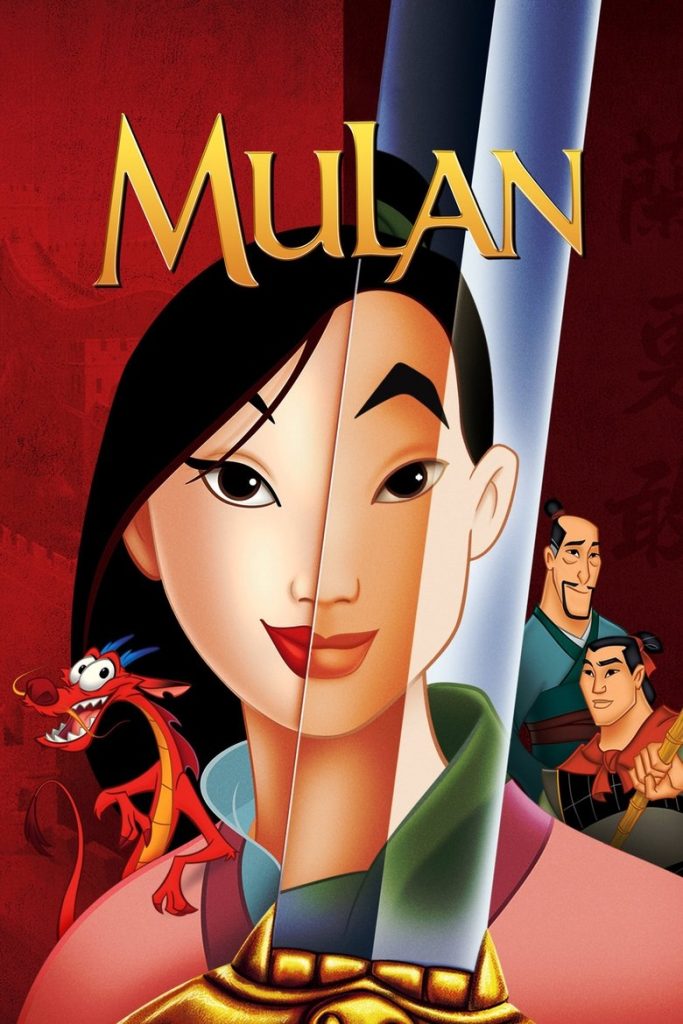
Story overview
Mulan is an animated family adventure about a young woman who disguises herself as a man to take her elderly father's place in the Chinese army. Through courage and determination, she proves herself in military training and battles against invading forces. The film explores themes of honor, family loyalty, and breaking gender stereotypes while celebrating Chinese culture and traditions.
Parent Guide
A family-friendly animated adventure with positive messages about courage and breaking stereotypes, suitable for most children with some mild action elements.
Content breakdown
Contains stylized martial arts combat, sword fighting, and battle scenes without graphic violence. Some scenes show characters in peril during military conflicts.
Some intense moments during battles and a few scenes with supernatural elements might be momentarily frightening for very young children.
No offensive language or profanity.
No sexual content or nudity.
No depiction of alcohol, drugs, or tobacco use.
Contains themes of family separation, deception, and wartime stress, but handled in an age-appropriate manner with positive resolution.
Parent tips
Mulan is generally appropriate for most children, featuring positive messages about courage, family, and self-discovery. The G rating indicates content suitable for all ages, though some battle scenes and moments of peril might be intense for very young viewers. Parents should be aware that the film includes martial arts-style combat, some destruction, and themes of deception and war that could prompt questions from sensitive children.
Parent chat guide
Parent follow-up questions
- What was your favorite part of the movie?
- How did Mulan help her family?
- What made Mulan brave?
- Did you like the music in the movie?
- What would you do to help your family?
- Why did Mulan pretend to be a boy?
- What does honor mean to you?
- How did Mulan show she was clever?
- What did you learn about Chinese culture from the movie?
- How do you think Mulan felt when she had to keep her secret?
- What does the movie say about gender expectations?
- How does Mulan balance family duty with personal identity?
- What leadership qualities does Mulan demonstrate?
- How does the film portray the importance of honesty?
- What cultural traditions shown in the movie are different from ours?
- How does the film challenge traditional gender roles?
- What does the story reveal about the pressure of family expectations?
- How does Mulan's journey reflect themes of self-discovery?
- What commentary does the film offer on war and leadership?
- How does the animation style contribute to the cultural storytelling?
🎭 Story Kernel
At its core, Mulan explores the tension between individual authenticity and societal expectation. Mulan isn't driven by a simple desire to fight; she's driven by the suffocating weight of a system that values her only as a bride to bring honor through marriage. Her deception is an act of desperate self-preservation, a rejection of a destiny that would erase her true self. The film argues that true honor comes not from blind obedience to roles, but from the courage to be who you are, even when it means standing alone. Her victory isn't just military; it's the validation of her intrinsic worth beyond her gender.
🎬 Visual Aesthetics
The film's visual language masterfully contrasts confinement and freedom. Early scenes in the village use tight framing and warm, earthy tones, visually boxing Mulan in. Once she joins the army, the palette shifts to expansive landscapes and cooler blues, mirroring her newfound (though fraught) liberty. The action choreography is deliberately clumsy at first—Mulan struggles with the physicality of masculinity—but evolves into graceful, almost dance-like wuxia-inspired combat as she integrates her feminine intuition (using the fan, the ribbon) with warrior skill. This visual arc charts her journey from performing masculinity to transcending gender entirely through unique prowess.
🔍 Details & Easter Eggs
💡 Behind the Scenes
Ming-Na Wen, who voiced Mulan, was the only principal cast member of Asian descent in the original 1998 film, a point of later criticism. The Hun army's leader, Shan Yu, was designed to be deliberately and unnaturally large and pale to appear more monstrous and less human to audiences. The song 'I'll Make a Man Out of You' was almost cut; lyricist David Zippel initially struggled to write it, fearing it would come off as misogynistic, but reframed it as a montage about rigorous training.
Where to watch
Choose region:
- Disney Plus
- Amazon Video
- Apple TV
- Google Play Movies
- YouTube
- Fandango At Home
Trailer
Trailer playback is unavailable in your region.