
Mulan (2020)
Story overview
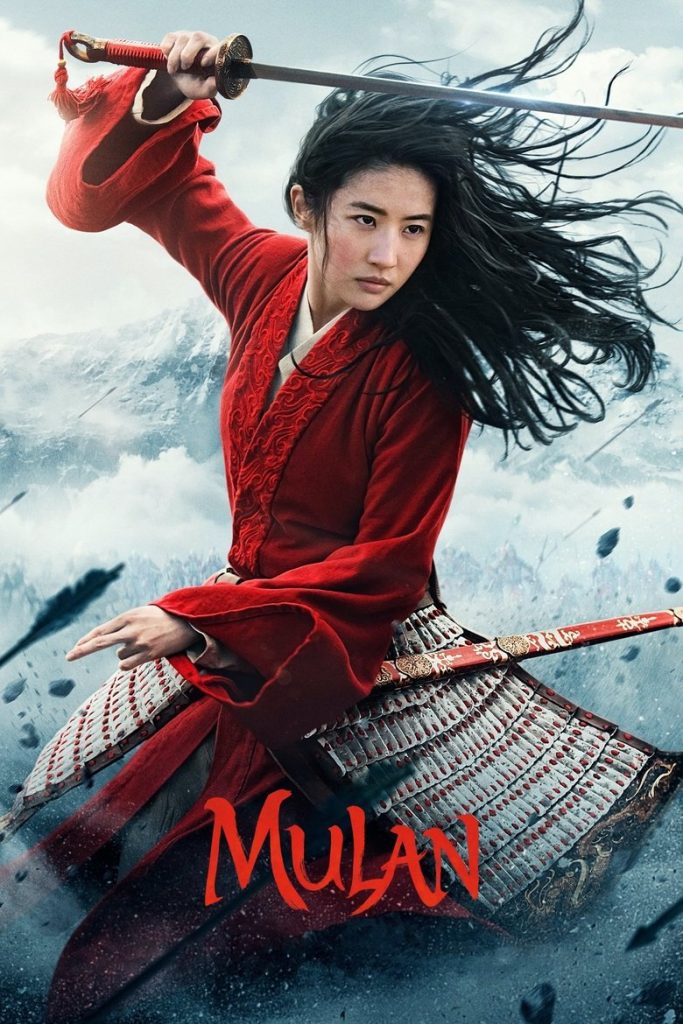
Mulan (2020) is a live-action adaptation of Disney's animated classic, telling the story of a young woman who disguises herself as a man to take her ailing father's place in the Imperial Chinese Army. Set against a backdrop of war with invading Huns, the film explores themes of honor, family duty, gender expectations, and self-discovery. Unlike the animated version, this film takes a more serious, warrior-focused approach with martial arts action and mythological elements, removing musical numbers and comedic sidekicks.
Parent Guide
A visually stunning but intense adaptation that replaces musical numbers with serious martial arts action and war themes. More appropriate for older children who can handle battle sequences and thematic complexity.
Content breakdown
Multiple battle scenes with sword fighting, archery, and martial arts combat. Soldiers are shown injured or killed (though not graphically). A village is attacked and burned. Characters face life-threatening situations including avalanches and supernatural threats.
The witch character (Xianniang) has shape-shifting abilities that might be unsettling. Battle scenes with large-scale destruction. Tense moments where characters are in peril. Some supernatural elements involving ancestral spirits.
No profanity or offensive language noted.
No sexual content or nudity. Some mild romantic tension but no physical intimacy shown.
No substance use depicted.
Themes of family separation, wartime sacrifice, and pressure to conform to gender expectations. Mulan faces rejection and must prove herself repeatedly. Father-daughter relationship carries emotional weight. Characters experience fear, determination, and personal growth.
Parent tips
This PG-13 rated film contains intense battle sequences, martial arts violence, and some frightening supernatural elements. Best for mature children 10+ who can handle war themes. Key discussion points include: gender roles in historical contexts, the meaning of courage and honor, cultural representation, and family sacrifice. The film lacks the musical lightness of the animated version, making it more intense overall.
Parent chat guide
Parent follow-up questions
- Who was your favorite character?
- What colors did you see in the movie?
- Did you see any animals?
- Why did Mulan have to dress like a man?
- What does 'honor' mean to Mulan's family?
- How did Mulan help her friends in the army?
- How does the film show the difference between bravery and recklessness?
- What cultural traditions did you notice in the movie?
- How does Mulan's story challenge traditional gender roles?
- How does the film balance historical context with fantasy elements?
- What does the film suggest about the relationship between individual identity and societal expectations?
- How does this adaptation compare to the animated version in terms of cultural authenticity?
🎭 Story Kernel
At its heart, Mulan is about the tension between societal duty and personal authenticity. The protagonist's journey isn't just about saving China; it's about rejecting the rigid definitions of worth imposed by her culture. Mulan doesn't succeed by becoming a 'better man' than her peers, but by leveraging her unique perspective and intelligence—qualities that were dismissed in her as a woman. The film critiques a system that values tradition over talent, showing how Mulan's 'deception' is actually her greatest strength. Her victory comes not from brute force alone, but from clever strategy and resilience, ultimately redefining what it means to bring honor to one's family.
🎬 Visual Aesthetics
The 1998 animated film employs a striking color palette that mirrors Mulan's internal state. Early scenes in her village are washed in muted blues and grays, reflecting her constrained life. The Imperial City and training camp introduce harsh reds and golds—colors of war and masculine rigidity. The animation style shifts during action sequences, particularly the avalanche scene, using sweeping, dramatic lines to convey scale and chaos. Symbolism is visual: Mulan's hair, cut short, is a literal shedding of her prescribed identity. The matchmaker's scene uses exaggerated, almost grotesque character designs to critique the absurdity of the marriage ritual Mulan is expected to perform.
🔍 Details & Easter Eggs
💡 Behind the Scenes
Lea Salonga, who sang for Mulan, also provided the singing voice for Princess Jasmine in Aladdin. The film's production involved extensive research into Chinese culture and art, with influences from Chinese painting styles evident in the landscape backgrounds. Eddie Murphy's role as Mushu was initially written as a dramatic, traditional dragon guardian; his improvisational comedy reshaped the character into the fan-favorite sidekick. The Hun invaders were designed to appear more monstrous and less human to clearly distinguish them as antagonists.
Where to watch
Choose region:
- Disney Plus
- YouTube TV
- Philo
- VIX
- Amazon Video
- Google Play Movies
- YouTube
- Fandango At Home
- Apple TV Store
Trailer
Trailer playback is unavailable in your region.