Muzzle: City of Wolves (2025)
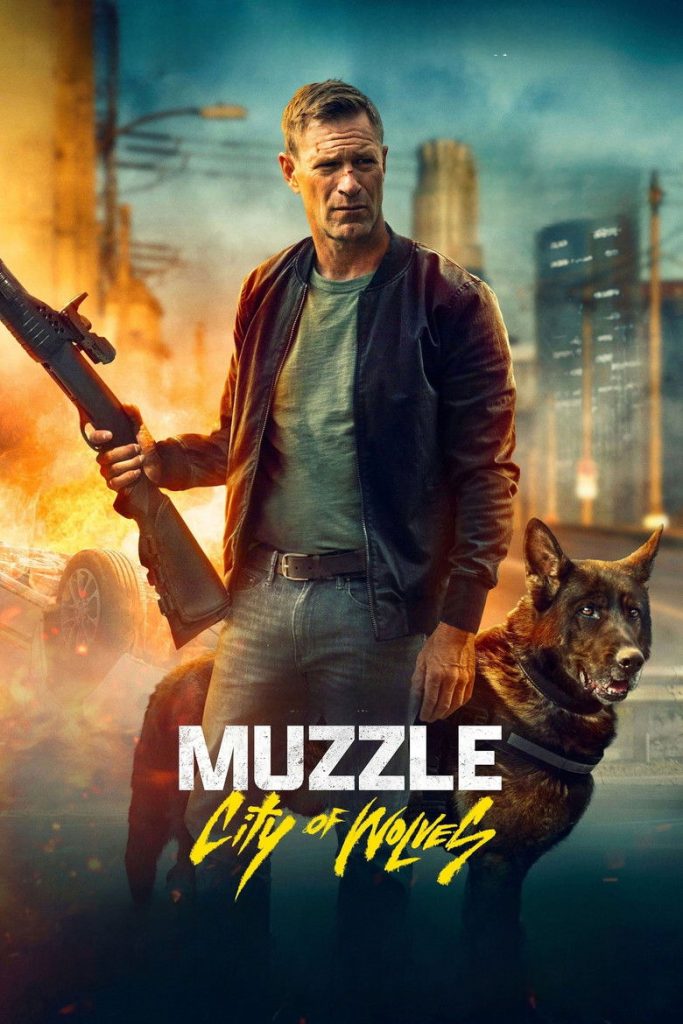
Story overview
Muzzle: City of Wolves follows LAPD officer Jake Rosser as he tries to maintain a peaceful family life with his retired K-9 partner. When a violent gang targets his family, Jake must partner with a new K-9 officer to pursue justice and protect his loved ones. The film explores themes of family protection, justice, and the bond between police officers and their canine partners in a tense urban setting.
Parent Guide
An action thriller with moderate to strong violence and intense family endangerment themes, best suited for teens with parental guidance.
Content breakdown
Contains gang attacks, police pursuits, physical confrontations, and family endangerment scenarios
Themes of family being targeted and home invasion could be disturbing, though specifics are unknown
No information provided; assuming typical action movie dialogue may include mild language
No information suggests sexual content; focus appears to be on action and family themes
No information provided about substance use; assuming none present given the family-oriented premise
Family endangerment and pursuit of justice create tense emotional situations
Parent tips
This action thriller contains moderate to strong violence including gang attacks, police pursuits, and physical confrontations that could be intense for younger viewers. The film deals with themes of family endangerment and revenge that may be emotionally challenging. While there's no information about sexual content, language, or substance use, the violent premise suggests this is best for older children and teens with parental guidance.
Parent chat guide
Parent follow-up questions
- Did you like the police dog in the movie?
- How did the family help each other stay safe?
- What was your favorite part with the animals?
- How do police officers help people in our neighborhood?
- What makes someone a good friend like the dog was?
- What did you think about how the police officer protected his family?
- How do you think the dog helped solve problems in the movie?
- What does it mean to be brave when someone is in danger?
- How can people work together like the officer and his dog did?
- What would you do if you saw someone being treated unfairly?
- What did you think about the movie's message about justice?
- How did the characters show loyalty to each other?
- What are some real ways police officers and dogs work together?
- How do movies sometimes make violence look different than real life?
- What responsibilities come with trying to protect others?
- How does the film explore the theme of family protection versus personal justice?
- What did you think about the portrayal of police work and canine partnerships?
- How do action movies sometimes simplify complex moral situations?
- What are the real-world consequences of vigilante justice?
- How does media representation of violence affect our perception of safety?
🎭 Story Kernel
The film explores the symbiotic relationship between man and beast, specifically focusing on the shared trauma of a broken LAPD K-9 officer and a 'damaged' dog. It moves beyond a standard police procedural to examine the isolation of grief and the primal necessity of companionship in a hostile urban environment. Jake Rosser’s journey is one of reclamation; he isn't just looking for his partner's killer, but for a way to function in a world that feels increasingly feral. The 'muzzle' of the title serves as a metaphor for the suppression of Rosser’s own violent instincts and the societal constraints placed on those who operate on the fringes of the law. It is a story about finding a mirror in a creature that reflects one’s own scars and using that connection to navigate a city that has lost its moral compass.
🎬 Visual Aesthetics
Director John Stalberg Jr. and cinematographer Matthew Irving employ a desaturated, gritty palette that emphasizes the 'concrete jungle' aesthetic. The visuals favor tight, claustrophobic framing that mirrors Rosser’s internal state of agitation and PTSD. There is a recurring motif of shadows and low-light environments, particularly in the scenes involving the underground drug labs and the sprawling encampments. The camera often stays at the eye level of the dogs, grounding the viewer in their sensory world. This perspective shift highlights the animalistic nature of the urban conflict, where the line between the hunter and the hunted is blurred by the harsh, unflattering glow of streetlights and neon. The visual language consistently reinforces the theme of urban decay, presenting the city as a labyrinthine trap for both the human and animal protagonists.
🔍 Details & Easter Eggs
💡 Behind the Scenes
Director John Stalberg Jr., known for the cult hit 'High School,' pivoted to a significantly darker tone for this production. To prepare for the role, Aaron Eckhart underwent intensive training with real K-9 handlers to ensure his interactions and commands were authentic. Interestingly, while the film is set in Los Angeles, it was primarily shot on location in Louisville, Kentucky, which provided the specific architectural decay required for the film's noir atmosphere. The production prioritized the use of real dogs over CGI to maintain a visceral emotional connection, emphasizing the physical reality of the K-9 unit's dangerous work.
Where to watch
Choose region:
- Amazon Video
- Apple TV
- Fandango At Home
- Plex
Trailer
Trailer playback is unavailable in your region.