
My Beautiful Broken Brain (2014)
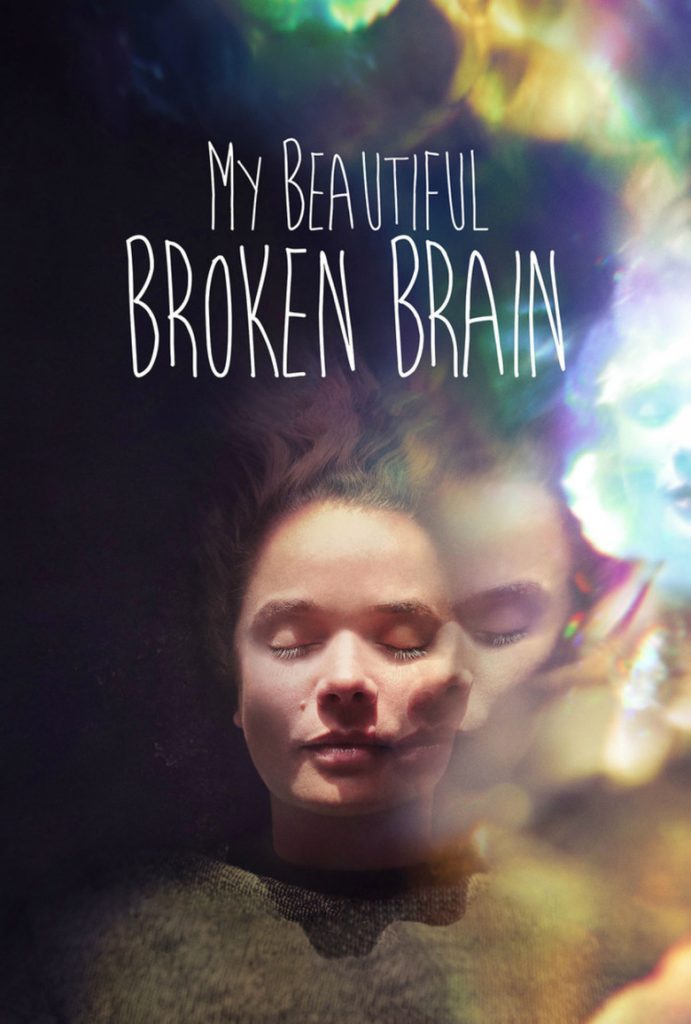
Story overview
My Beautiful Broken Brain is a documentary that follows Lotje Sodderland's personal journey after surviving a hemorrhagic stroke. The film explores her recovery and adaptation to life with altered sensory perception and cognitive challenges, offering an intimate look at brain function and resilience.
Parent Guide
A thoughtful documentary about brain injury recovery suitable for mature teens with parental guidance.
Content breakdown
Medical procedures shown, discussions of life-threatening stroke, hospital scenes
Distressing scenes of medical crisis, emotional trauma of losing language abilities, disorientation
No offensive language noted
No sexual content or nudity
No substance use depicted
High emotional intensity dealing with medical trauma, loss of identity, and recovery challenges
Parent tips
This documentary deals with medical trauma and recovery, which may be intense for younger viewers. It includes scenes of hospital stays, emotional distress, and discussions of brain injury. Consider watching with older children to discuss themes of resilience and healthcare.
Parent chat guide
Parent follow-up questions
—
- What do you think it would be like to suddenly not remember words?
- How do you think doctors help people who get hurt in their brain?
- What surprised you most about how the brain can recover from injury?
- How do you think technology helps people communicate when they have brain injuries?
- What ethical questions does this documentary raise about medical experimentation?
- How does this film change your understanding of consciousness and perception?
🎭 Story Kernel
This documentary isn't about recovering from a stroke; it's about the radical redefinition of self that follows neurological catastrophe. Director Lotje Sodderland doesn't seek to return to her 'old' brain but documents the emergence of a new consciousness. The driving force isn't medical recovery but existential discovery—what does it mean to be 'you' when your primary tool for experiencing reality (your brain) becomes foreign territory? The film argues that identity isn't fixed but fluid, forged in the crucible of trauma and sensory rewiring. It's less a medical journey than a philosophical one, questioning whether we ever truly know our own minds until they break.
🎬 Visual Aesthetics
The film's visual language mirrors Lotje's fractured perception. Early sequences use disorienting, abstract visuals—blurred lights, distorted faces, fragmented scenes—that directly simulate her post-stroke aphasia and sensory overload. As her understanding evolves, so does the cinematography: clearer compositions emerge alongside experimental overlays of text, sound waves, and neural imagery. The color palette shifts from clinical whites and grays of hospital scenes to warmer, more saturated tones during moments of connection and breakthrough. The camera often adopts her subjective viewpoint, making us experience her confusion and wonder firsthand, while MRI scans and brain imagery serve as both medical record and metaphysical map.
🔍 Details & Easter Eggs
💡 Behind the Scenes
Lotje Sodderland began filming herself just days after her stroke using her iPhone, creating raw, immediate footage that forms the documentary's emotional core. Director Sophie Robinson (who co-created the film) wasn't originally a filmmaker but a friend who recognized the project's potential. The film incorporates actual medical scans of Lotje's brain, and much of the sound design was created by manipulating recordings of her own neural activity. It was partially funded through a Kickstarter campaign, with supporters including notable neuroscientists fascinated by its first-person account of brain injury.
Where to watch
Choose region:
- Netflix
- Netflix Standard with Ads
Trailer
Trailer playback is unavailable in your region.