
My Best Friend Anne Frank (2021)
Story overview
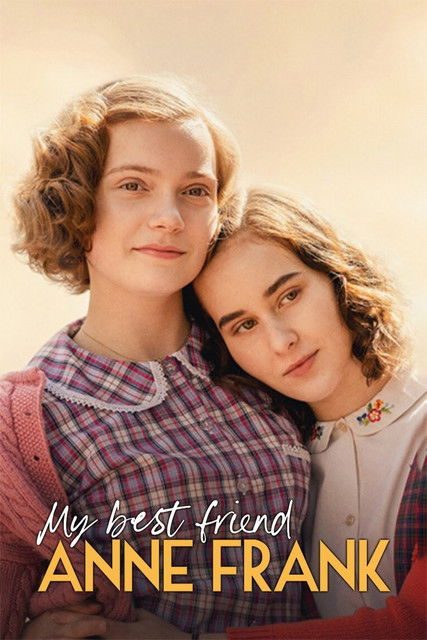
This historical drama portrays the true friendship between Anne Frank and Hannah Goslar during World War II, from their childhood in Nazi-occupied Amsterdam to their emotional reunion in a concentration camp. The film focuses on their bond, resilience, and the impact of the Holocaust on their lives.
Parent Guide
A poignant historical drama about friendship during the Holocaust, suitable for mature children with parental guidance due to emotional themes.
Content breakdown
Implied violence and peril related to the Holocaust: characters face persecution, separation from families, and life in concentration camps. No graphic violence shown, but the threat is constant.
Themes of war, persecution, and the Holocaust may be disturbing. Scenes in concentration camps and separation from loved ones could be emotionally intense.
No strong language noted. The film is in Dutch with English subtitles.
No sexual content or nudity.
No substance use depicted.
High emotional intensity due to themes of friendship, loss, and survival during the Holocaust. The reunion scene and overall historical context are particularly moving.
Parent tips
This film deals with the Holocaust and includes themes of persecution, separation, and loss. It may be emotionally intense for younger viewers. Consider watching with children to provide context and support. The film is in Dutch with subtitles, which may require reading assistance for younger viewers.
Parent chat guide
Parent follow-up questions
- What does it mean to be a good friend?
- How did the girls help each other?
- Why were the girls separated?
- What was life like during the war?
- How did they stay friends even when apart?
- What was the Holocaust?
- Why is it important to remember stories like Anne Frank's?
- How did people show courage during this time?
- What historical factors led to the Holocaust?
- How does this film portray resilience and hope?
- What lessons can we learn from this period of history?
🎭 Story Kernel
The film isn't just another Holocaust narrative—it's a dissection of how innocence is weaponized against itself. The core tension lies in Miep Gies's dual role: as Anne's protector and as the unwilling architect of her posthumous myth. Her guilt isn't about survival, but about packaging trauma into digestible hope. The movie asks: when we memorialize tragedy, do we honor the victims or comfort the living? Anne's diary entries become less a voice from the grave and more a curated performance, with Miep as both stage manager and haunted audience.
🎬 Visual Aesthetics
The cinematography employs a chilling duality: the Annex is shot with warm, golden-hour tones, creating a false sense of safety, while flash-forwards to the empty rooms use stark, desaturated grays. Camera movements are deliberately restrictive—tight close-ups on faces during moments of fear, mimicking the physical confinement. Symbolism is subtle but brutal: the recurring shot of the chestnut tree outside Anne's window slowly loses its leaves across seasons, mirroring the erosion of hope without ever showing the tree's final fate.
🔍 Details & Easter Eggs
💡 Behind the Scenes
The actress playing Miep Gies spent weeks studying the real Gies's 1994 interview tapes to mimic her specific Dutch-English cadence. Filming occurred in a meticulously reconstructed Annex built inside a Prague studio, using dimensions from historical blueprints. Director's cameo: the voice reading the diary entries in the final montage belongs to the filmmaker, a choice made to avoid romanticizing any single performer's interpretation of Anne.
Where to watch
Choose region:
- Netflix
- Netflix Standard with Ads
Trailer
Trailer playback is unavailable in your region.