
My Dinner with Andre (1981)
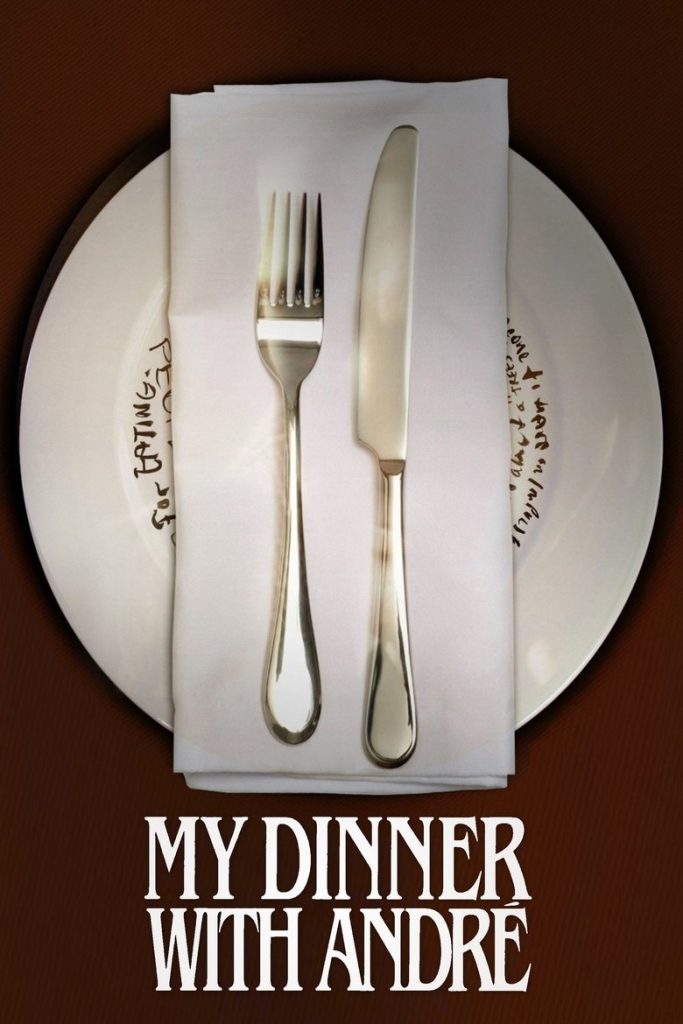
Story overview
My Dinner with Andre is a 1981 drama directed by Louis Malle, featuring a conversation between two old friends, Andre and Wallace, over dinner. The film explores their contrasting worldviews as Andre shares his philosophical and spiritual experiences, leading to reflections on life, art, and human connection. Rated PG, it's a dialogue-driven film with minimal action, focusing on intellectual and emotional themes.
Parent Guide
A thoughtful, dialogue-heavy drama with no action or violence, focusing on philosophical discussions. Best for mature children and teens who can engage with abstract ideas.
Content breakdown
No violence, peril, or physical conflict. The tension is purely intellectual and emotional.
Some discussions touch on existential themes like the meaning of life and personal crises, which might be unsettling for very young or sensitive viewers.
No offensive or strong language. The dialogue is intellectual and polite.
No sexual content, nudity, or romantic themes.
Characters drink wine during dinner, depicted in a social, non-glamorized context.
Emotional intensity comes from deep philosophical debates and personal reflections, which may be engaging for older viewers but boring or confusing for younger ones.
Parent tips
This film is suitable for older children and teens due to its mature themes and slow pace. It's best viewed with guidance for younger viewers to help them understand the philosophical discussions. Consider watching it as a family to spark conversations about life perspectives and personal growth.
Parent chat guide
Parent follow-up questions
—
- What did you think about the two friends talking for so long?
- How do you think they felt about each other's stories?
- Why do you think Andre and Wallace had such different ideas about life?
- What can we learn from listening to people with different experiences?
- How does the film explore themes of existentialism and personal fulfillment?
- In what ways do art and conversation help us understand ourselves and others?
🎭 Story Kernel
The movie is a profound meditation on the nature of reality and how one chooses to engage with it. It expresses the central human tension between seeking transcendent, often destabilizing, experiences (Andre) and finding meaning in the comfort, stability, and intellectual frameworks of ordinary life (Wally). The characters are driven by fear: Andre's fear of spiritual numbness and inauthenticity, and Wally's fear of the chaos and loss of control that Andre's path represents. Their dinner conversation is a battle of worldviews, not to defeat the other, but to see if their disparate philosophies can even coexist in the same room.
🎬 Visual Aesthetics
The visual language is one of stark, unadorned realism, making the verbal duel the film's only action. The camera is largely static, framing the two men in medium shots and close-ups within the claustrophobic, warmly lit booth of an upscale restaurant. This creates a theatrical, almost laboratory-like setting, isolating the conversation from the world they debate. The color palette is dominated by rich browns, reds, and golds, evoking a cocoon of bourgeois comfort that Andre's stories violently puncture. There are no cutaways or flashbacks; the entire visual world is the restaurant, forcing the audience to become the third, silent diner at the table.
🔍 Details & Easter Eggs
💡 Behind the Scenes
The film is essentially a dramatized version of real conversations between playwright Wallace Shawn and director Andre Gregory. Much of the dialogue was developed through improvisation based on their actual discussions. It was shot in just two weeks at a now-closed restaurant called the Cafe des Artistes in New York. The film's minimal budget meant the crew was tiny, contributing to the intimate, unpolished feel. Louis Malle, the director, famously said his main job was to 'stay out of the way' of the conversation.
Where to watch
Choose region:
- HBO Max
- HBO Max Amazon Channel
- Criterion Channel
- Tubi TV
- Amazon Video
- Apple TV Store
- Fandango At Home
Trailer
Trailer playback is unavailable in your region.